
Understand the jackpot before you play
 Available in US
See how jackpot funding, eligibility, bonus terms and payouts can affect the experience—and why a large prize does not automatically mean better value.
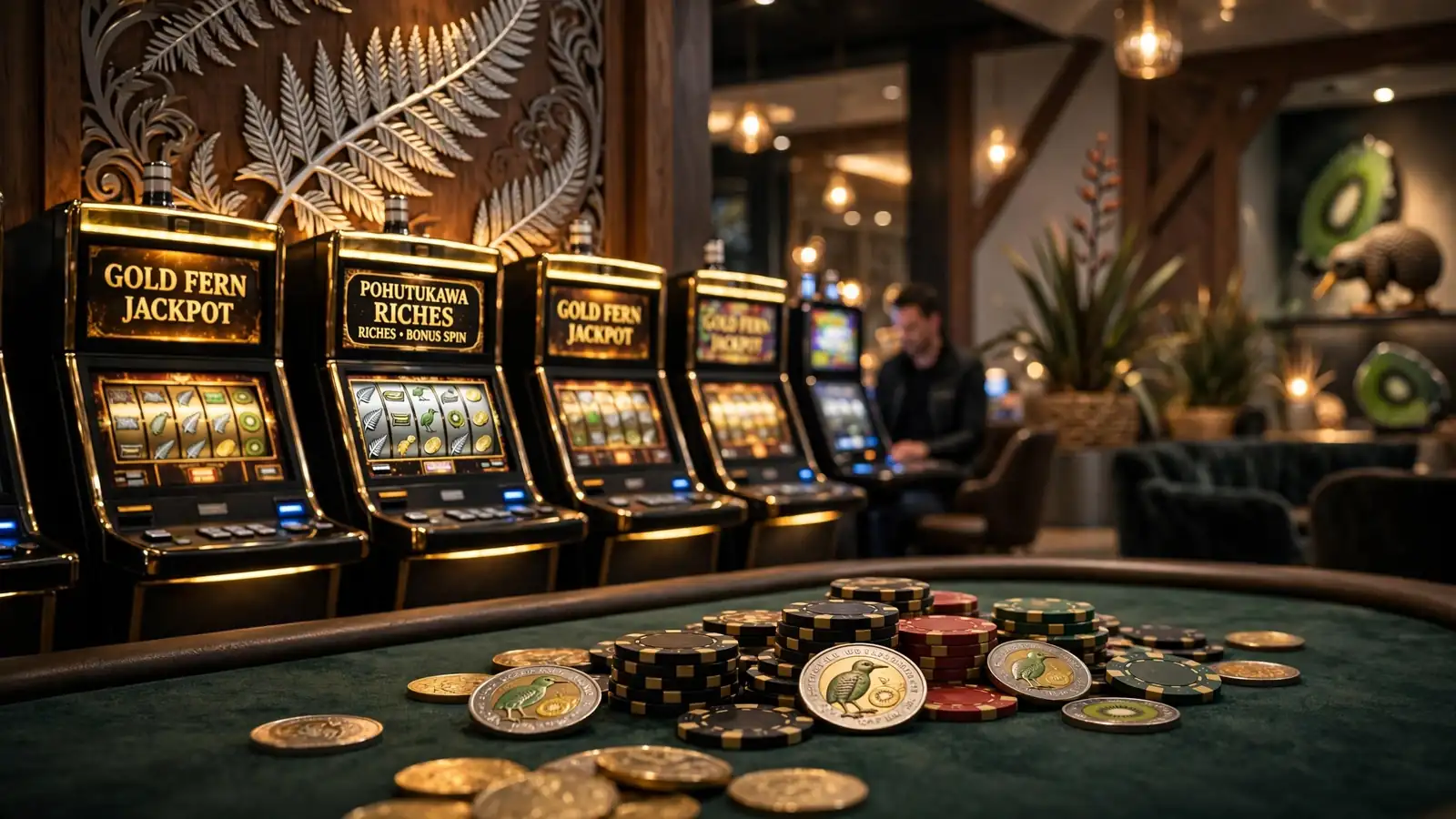
How Jackpot Slots Work in New Zealand
18+ only.
The rules around jackpot slots in New Zealand depend on more than the game displayed on a screen. The legal position of the provider matters, particularly where a prize is linked across casinos. A network progressive jackpot may be offered only by an operator licensed in New Zealand. That restriction places the licence, not the game’s branding or the location of its software provider, at the centre of the market framework.
The Gambling Act applies to gambling organised or conducted in or from New Zealand. It does not permit online casinos to be based domestically. A separate regime, established by the Online Casino Gambling Act 2026, creates the country’s first domestic licensing system for online casino gambling. The distinction is important: a New Zealand licensing regime is being introduced, but it does not mean that online casinos can simply set up and operate from within the country.
The new Act took effect on 1 May 2026. It provides a transition period that runs until 1 December 2026, during which online casinos that were already serving people in New Zealand before the start date may continue operating. The full licensed regime is expected to be operational in 2027, rather than being complete from the first day of the transition. The timing matters when interpreting claims about what a “licensed” casino can offer: the market is moving through a staged change, not switching all at once from one settled system to another.
When looking for jackpot slots in New Zealand in 2026, it helps to check the specific details available for each operator. This list gives a concise reference point based only on those details.
-
Play Grand
- License
- Malta Gaming Authority, licence no. MGA/B2C/370/2017
Play Grand is listed with a Malta Gaming Authority licence, number MGA/B2C/370/2017.
-
Lamabet
- Payout speed
- 1-3 business days
Lamabet lists a payout speed of 1–3 business days.
-
7Bit Casino
- License
- Tobique Gaming Commission, licence no. 0000091
7Bit Casino is listed with a Tobique Gaming Commission licence, number 0000091.
-
BitStarz
- License
- Curaçao Gaming Authority, licence no. OGL/2024/165/0185
BitStarz is listed with a Curaçao Gaming Authority licence, number OGL/2024/165/0185.
-
N1 Casino
- License
- Malta Gaming Authority, licence no. MGA/B2C/394/2017
N1 Casino is listed with a Malta Gaming Authority licence, number MGA/B2C/394/2017.
-
Zotabet
- License
- 07017519840
- Payout speed
- 1-3 business days
Zotabet lists licence number 07017519840 and a payout speed of 1–3 business days.
-
Ricky Casino
- License
- Tobique Gaming Commission, licence no. 0000002
Ricky Casino is listed with a Tobique Gaming Commission licence, number 0000002.
-
Neospin
- License
- Tobique Gaming Commission, licence no. 0000064
Neospin is listed with a Tobique Gaming Commission licence, number 0000064.
-
Wintino
- Payout speed
- 1-3 business days
Wintino lists a payout speed of 1–3 business days.
The Act allows for as many as 15 licensed online casinos to serve New Zealand players. That is a permitted ceiling, not a statement that every potential place is filled or that every casino appearing online holds a New Zealand licence. The market’s legal framework and the visible availability of a website are different things. A site can be accessible without being supervised by a New Zealand regulator.
Before the 2026 Act, online casino gambling supplied from outside the country was not licensed or overseen by a New Zealand regulator. During that period, a customer wagering with an offshore website did not have domestic government recourse. The Gambling Act’s broad reach over gambling organised or conducted in or from New Zealand should not be confused with a local licensing system for every overseas website. Those are separate legal questions.
For jackpot products, the licensing distinction has a direct consequence. A network progressive brings in a prize pool shared across participating casinos, so the operator’s status is not a cosmetic detail. Under the stated New Zealand rule, such a jackpot may be offered only through operators licensed here. A casino slot showing a progressive prize should therefore not be treated as evidence, by itself, that the provider is operating under local authorisation. The presentation of a game and the legal basis for offering it are not the same thing.

This is where industry language can blur what matters. “Available in New Zealand” can mean only that a website can be reached from the country. It does not necessarily mean that the casino holds a New Zealand licence, that its activity is supervised locally, or that a network jackpot it displays falls within the local licensing framework. The distinction is plain. Access is not authorisation.
The regulatory change also has a broader boundary. New Zealand’s earlier gambling law does not allow domestic online casinos, while the 2026 Act establishes a route to licensing providers that serve the market. Existing providers are treated under transitional provisions until the stated transition ends. The full regime is not expected to be in place until 2027, and unlicensed operation is expected to become an offence around the middle of that year. Those dates describe a staged implementation; they should not be collapsed into a claim that the final system is already fully operational.
The Gambling Commission has a separate role in New Zealand’s gambling landscape: it reviews casino licensing applications and appeals concerning gaming machines and other non-casino gambling activities. That remit should not be mistaken for a blanket endorsement of every online casino or every jackpot game. Regulatory responsibilities have defined limits, and a casino’s legal status depends on the applicable rules and its position within them.
In practical terms, “jackpot slots in New Zealand” can refer to games that look similar while sitting in different legal circumstances. Local law governs gambling organised or conducted in or from the country; the newer online casino law sets out domestic licensing and transitional arrangements; and network progressives are restricted to locally licensed operators. Keeping those strands separate makes the market easier to understand without treating a visible jackpot as proof of regulatory status.
Local, Network and Tiered Jackpots: Where the Prize Comes From
A progressive jackpot is a prize pool that changes as participating bets are placed. The key distinction is not the artwork on the reels or the size of the displayed amount, but the way the game’s jackpot is organised: locally, across a network, or in tiers. Those structures determine where contributions accumulate and what the jackpot label refers to.
I find it useful to separate the visible meter from the system behind it. A number on screen is the current presentation of a pool; it does not, by itself, explain how many casinos contribute to that pool or whether the game offers one prize level or several. The architecture answers those questions.
Local: a pool attached to one casino
A local progressive is organised around a single casino’s pool. Bets on the participating game at that casino contribute a small fraction to its jackpot. The pool grows as play continues, then falls when the progressive prize is awarded and begins building again.

“Local” describes the reach of the pool, not necessarily the physical location of the player or the machine. In an online setting, the important point is that the jackpot is not being described as a shared pool across a wider network of casinos. The game may look similar to a networked title, but the source of the prize is different.
This distinction matters when interpreting a jackpot display. A local meter relates to the bets feeding that particular pool. It should not be read as evidence that players at other casinos are adding to it. The name or theme of a slot cannot establish the pool’s reach either; that information comes from how the game is configured and presented.
Network: contributions from participating casinos
A network progressive connects a jackpot pool across participating casinos. Each bet made on the relevant game contributes a small fraction to the shared pool, so the prize grows through play across those participants rather than through activity at one casino alone.
The practical effect is that the displayed jackpot represents a common pool. It is not simply one casino’s accumulated contributions shown under a broader label. Participating casinos feed into the same prize structure, and the shared contribution model is what distinguishes a network progressive from a local one.
A familiar mistake is to treat “network” as a description of the game’s popularity or reach in general. It is more specific than that: it describes how the jackpot pool is connected. Nor does the label tell a player which casinos participate, or what share of each bet is allocated to the pool. Those are details of the particular game and its terms, not facts that can be inferred from the word alone.
Local
Organised around a single casino's pool.
Network
Connects a jackpot pool across participating casinos.
Tiered
Multiple jackpot levels instead of a single pool.
In New Zealand, the architecture also sits within a specific operating framework: network progressive jackpots may be offered only by operators licensed in the country. That does not change the basic mechanics of a shared pool, but it does make the distinction between a network label and the operator’s status important.
Tiered: more than one prize level
A tier-based progressive has multiple jackpot levels rather than a single pool presented as one prize. The tiers can be understood as separate prize destinations within the same jackpot structure. A game might display a sequence of levels, each with its own label and value, instead of showing only one progressive amount.
The word “tiered” does not mean that every level is necessarily built in the same way. A tier structure describes the organisation of prizes; it does not, on its own, say whether a particular tier is local or networked. It also does not establish how a player qualifies for any given level. Those details depend on the individual game’s rules.
That distinction is useful because jackpot terminology often compresses several ideas into one screen. A game can have a tiered structure, while the underlying pool arrangements determine how contributions are accumulated. The architecture needs to be read as a description of the prize system, not as a promise that every tier behaves identically.
Reading the structure, not the headline
When I assess a jackpot slot, I first separate three questions: is the pool local or shared across participating casinos; does the game have one progressive prize or several tiers; and what does the game’s own information say about the contribution arrangement? A large headline figure does not answer those questions. Neither does a casino’s promotional wording.
The same logic applies to searches for crypto jackpot slots or older major jackpot games. A payment method, a release date, or a prominent prize label does not define the jackpot architecture. The relevant description is whether the pool is local, networked, tier-based, or a combination of those structures. The distinction is mechanical, not promotional.
For anyone aged 18 or over, the clearest reading is the one that treats the jackpot meter as an output of a defined pool. With a local progressive, contributions build a casino-specific pool. With a network progressive, bets across participating casinos feed a shared pool. With a tiered progressive, the game presents multiple jackpot levels. The same slot theme can obscure those differences. The structure is what counts.
What It Takes to Qualify for a Progressive Jackpot
18+ only. On a progressive slot, a spin can be eligible for ordinary wins without being eligible for every jackpot tier. The distinction matters: the game may appear to be running normally while a particular condition for its largest prize has not been met. In my experience, the useful question is not simply whether a title has a jackpot, but what the game rules require for the specific prize being pursued.
- Identify the required stake configuration
- Verify if the rule applies to all progressive tiers
- Confirm the minimum stake required for the game
- Check the paytable or help panel for specific conditions
A specialist review reports that qualifying for a progressive jackpot typically requires a maximum bet. That should be treated as a condition to verify for the individual game, not as a rule that applies identically across all pokies. A maximum stake may mean selecting the highest permitted coin value, activating every available line, or meeting another bet setting described in the game rules. The precise meaning depends on the title. A player who stakes less may still play the base game, but the jackpot feature may be excluded for that spin.
That is a costly detail to discover after playing. The interface can make the maximum bet look like one simple button, while the eligibility rule may depend on several settings at once. Before wagering, the paytable or help panel is the place to establish which stake configuration qualifies, whether the rule applies to all progressive tiers, and whether it changes between game modes. A displayed jackpot amount alone does not answer those questions.
Older games and the Grand tier
Some older progressive titles from Playtech and Microgaming attach a maximum-bet requirement specifically to the Grand jackpot. In those games, a lower stake may leave other parts of the slot available while shutting out eligibility for the top tier. That is not the same as saying every jackpot in the game is unavailable; it is the Grand condition that needs particular attention.
The wording in the rules is important. A game may distinguish between the minimum stake needed to activate a feature and the maximum stake needed to qualify for a named tier. Those are different thresholds, serving different purposes. The first concerns access to a feature; the second concerns eligibility for a particular prize. Where the rule is unclear, the safe interpretation is not to assume that a normal-looking spin counts toward the largest jackpot.
I have seen how easily this becomes a misunderstanding: the player sees the progressive display, places a bet, and assumes that the display means every stake is in the running. It does not. Eligibility is determined by the game’s conditions, not by the visibility of the prize meter.
Minimum stakes can be high
The maximum-bet condition is only one side of the decision. A specialist review reports that some progressive slots have minimum bets of NZ$10 or more. That figure applies to some titles, not to the whole category. It is enough, however, to show why checking the bet panel before starting matters: a game may require a larger stake simply to begin a spin, before any separate maximum-bet condition is considered.
The practical distinction is between the game’s minimum stake and the stake that qualifies for a jackpot tier. A title could have a minimum below its qualifying bet, or its minimum could itself be substantial. Either way, the amount shown in the bet controls should be checked against the jackpot rules rather than inferred from the game’s name or artwork.
This is where promotional language can blur the issue. “Eligible to win” sounds broad; the rules may define eligibility more narrowly. A jackpot can be part of the slot’s presentation without every permitted stake qualifying for it. Read the conditions for the tier, not just the general description.
A qualifying spin is not a strategy
Meeting a maximum-bet condition does not make a jackpot predictable or turn a losing sequence into evidence that a win is near. It only establishes whether that spin meets the stated eligibility rule. There is no reliable way to force a progressive jackpot to appear by increasing stakes, and raising a bet after losses does not improve the logic of the condition.
That distinction is central to understanding how to qualify for a jackpot on a slot machine. “How to win” is often framed as though there were a technique beyond following the game’s rules. For a progressive jackpot, the verifiable part is eligibility: the right title, the relevant tier, and the stake required by its terms. The outcome remains uncertain.
Before a session, the useful checks are limited and concrete: find the jackpot rules, identify any maximum-bet requirement, distinguish the Grand tier from other prizes, and confirm the minimum stake. If those terms do not fit the intended budget, the game is not suitable for that session. No workaround.
Online Progressives: RTP, Contributions and the Live Lobby
The displayed return on a progressive pokie needs to be read differently from the return on a standard slot. Progressive titles have a lower base-game RTP: figures in the 91–93% range are cited, commonly around 1–3 percentage points below standard slots. That gap reflects the fact that part of the game’s return is allocated to the jackpot rather than paid through ordinary spins.
The distinction matters. A player can see the jackpot contribution counted in a game’s long-run RTP, but that does not mean the contribution comes back steadily as small wins. The extra return is realised only if the jackpot is hit. Until then, the base game is doing the day-to-day paying, and its RTP does not include a personal share of the pool arriving on schedule.
That is where “high return” can become a misleading label. The overall figure combines two different things: routine game outcomes and a rare jackpot event. On a short session, the jackpot component may contribute nothing to the result. Over the theoretical long run, it belongs in the calculation; at the level of an individual session, it may remain entirely theoretical. The distinction is not cosmetic.
I have found it useful to separate the two figures in my head: what the base game returns, and what is assigned to the progressive prize. A large headline pool can make the second figure feel tangible, but it does not change the fact that the jackpot must be won before that extra return reaches a player. No smooth uplift. No guaranteed compensation for a quiet run.
A specialist review has reported that when a progressive prize passes NZ$200,000, the effective RTP for a session can briefly rise. That is a conditional observation, not a standing property of every game or every session. It does not turn a high pool into a reliable edge: the calculation depends on the jackpot’s size and the chance of winning it, while the actual outcome remains uncertain. The number on the lobby tile is not a forecast.
The lobby is also a moving catalogue, not a permanent specification sheet. A specialist review reports that progressive titles and jackpot eligibility can change quarterly. A title visible previously may not still be available, and the conditions shown in a past description may not match the current game listing. A snapshot can go stale. Verify the live lobby before depositing, and distinguish between a game being listed and its jackpot being available under the displayed conditions.
That check is part of understanding the return, not just finding a preferred title. The game information should make clear which RTP applies and whether the progressive feature is active. If the lobby shows a jackpot amount but leaves the applicable game details unclear, the figure alone cannot answer what the session’s economics look like. Availability, the base-game return and the jackpot contribution belong in the same assessment.
For progressive jackpot slots online, the practical comparison is therefore not simply one headline percentage against another. It is the base-game RTP, the contribution included in the theoretical long-run return, and the chance that the jackpot component will actually be realised. A single RTP figure can conceal that split.
18+ only.
Bitcoin and Progressive Slots: What the Available Facts Establish
Bitcoin and progressive pokies involve two separate parts of an online casino: the payment method used to fund play, and the system that links a jackpot across participating casinos. One does not establish the other. A game may be connected to a shared prize pool without that connection saying anything about how a player can deposit or withdraw.
In New Zealand, the relevant boundary for network progressives is the operator’s licensing status: only operators licensed in the country may offer those network jackpots. That rule concerns who can provide the linked jackpot, not whether the casino accepts Bitcoin. Payment support is a separate operator-level condition, rather than a feature that can be inferred from a game’s progressive label.
I have seen these distinctions blur in product descriptions. A reference to a “Bitcoin jackpot” can sound as though Bitcoin is part of the game itself, when it may simply be shorthand for a casino that accepts cryptocurrency and also lists progressive titles. The jackpot mechanism and the cashier are different systems. A shared prize pool does not reveal which currencies the cashier supports, and a Bitcoin payment option would not establish that a particular game is eligible for a network jackpot.
The practical consequence is that bitcoin progressive jackpot slots cannot be identified from the game category alone. The operator’s payment information would need to establish whether Bitcoin is accepted, while the operator’s licensing status determines whether it may offer a network progressive in New Zealand. Those are independent checks; neither substitutes for the other.
The distinction matters because a title’s presence in a lobby is not a complete description of the terms under which it can be played. Payment availability, game access and jackpot eligibility belong to separate parts of the service. Treating them as one promise can lead to a mistaken assumption about what a casino actually offers.
Payment vs Feature
Bitcoin is a payment method, whereas a progressive jackpot is a game feature. One does not establish the other.
For a careful description, Bitcoin should be discussed as a payment method, and a progressive jackpot as a game feature. The New Zealand licensing rule applies to network jackpots; it should not be stretched into a claim about cryptocurrency support. Equally, mentioning Bitcoin alongside a jackpot title is not proof that the title accepts Bitcoin wagers or that the casino offers the game to every account.
Separate systems. Separate checks.
Free Jackpot Spins: Wagering, Deadlines and Cash-Out Terms
Free spins can produce a balance on screen without making that balance immediately withdrawable. I treat the spin itself and the resulting winnings as separate parts of an offer: the promotional terms determine whether those winnings can be converted into cash, and what must happen first.
A specialist review reports a separate wagering requirement of 30× for free-spin winnings. That figure is not a universal rule; the terms attached to a particular promotion are what matter. They should state which winnings are included in the calculation, whether eligible play is restricted to particular games, and when the requirement is considered complete. Without those details, a headline promising jackpot spins for free says little about the cash value of a result.
No-deposit free spins can carry conditions too. A casino may attach terms to winnings even when no initial deposit is needed to claim the spins. Some casinos also require a deposit before winnings from such an offer can be withdrawn. In practical terms, “no deposit” can describe the entry point, not the full route to cash-out.
Time limits deserve the same attention. Terms may require winnings to be wagered, and any resulting balance withdrawn, before a stated deadline. If the period expires first, the offer may no longer be usable on its original terms. The deadline and the point from which it runs should be clear in the promotion’s conditions.
A specialist review also reports that free-spin offers may cap the amount that can be cashed out. This can matter even if play has met the wagering requirement: the balance eligible for withdrawal may still be limited by the offer. The cap, any deposit condition, and the deadline all affect the final outcome.
DO
- Check the specific wagering requirements for free spins
- Review the terms for cash-out limits and deadlines
- Verify the number of spins offered vs the actual rules
DON'T
- Assume all winnings from free spins are immediately withdrawable
- Ignore the potential for a cap on cashed-out amounts
- Assume a no-deposit offer has no withdrawal conditions
I have seen promotional wording draw attention to the number of spins while leaving the practical conditions further down the page. The useful comparison is not simply how many spins are offered, but what rules govern the winnings they produce. Terms first. Spins second.
These conditions concern promotional winnings, not the jackpot mechanics of a slot. They should be checked before accepting an offer, including any game restrictions and rules that could void winnings. Gambling is for people aged 18 and over only.
Named Jackpot Games and What Their Labels Do—and Don’t—Tell You
18+ only.
A name can identify a title, but it does not tell the whole story of how that game works. “Mega” and “fortune” are promotional language, not a description of the prize conditions. Nor does a jackpot label, by itself, establish whether a particular title is available in a casino’s lobby or what is required to qualify for its prize.
The names that may appear in discussions of jackpot pokies include:
- Mega Moolah
- Divine Fortune
- Hall of Gods
- Major Millions
- Mega Fortune
- Wheel of Wishes
Those titles are starting points for checking a game, not substitutes for its current information. The same title name does not tell me which version is being offered, whether it is available at a particular casino, or whether the displayed jackpot conditions apply to the session. Those details belong to the game and operator information shown at the time of play.
This distinction matters because the label can do more work in an advert than in the actual rules. A prominent jackpot name draws attention to the potential prize; it does not explain every condition attached to entry. The game’s information panel and the casino’s terms are where the operative details sit. A memorable title is not a rulebook.
Availability is not fixed. A specialist review reports that progressive titles and their jackpot eligibility can change quarterly. That makes the live lobby more useful than an old list or a saved description: a title may no longer be offered, or the conditions shown previously may no longer match the current listing. I treat the live information as the relevant version and check it before depositing.
The names also should not be treated as a ranking. A recognisable title does not, by itself, establish better odds, higher value or a more suitable game. The label is a clue to what to inspect, not evidence of what a player will receive.
In practical terms, a jackpot slots game should be judged by its current title information and conditions, not by the scale of its name. That keeps the distinction clear: the branding identifies the product; the displayed rules determine how it operates. A small distinction. An important one.
Real Jackpot Wins—and the Practicalities After a Hit
Two New Zealand wins show what a headline jackpot can mean in real money. In 2016, a player in New Zealand hit Mega Moolah for NZ$10,144,395.82. An Auckland player later won approximately NZ$3.2 million on the same game. These are reported wins, not a promise about what a future session might pay.
I have seen how a jackpot figure can dominate the conversation. The number is immediate and easy to understand; the arrangements that follow are less visible. A win may be credited as a large balance, but that does not necessarily mean the entire amount can be withdrawn at once. The operator’s payment terms matter as much as the figure displayed when the jackpot lands.
A specialist review describes large jackpot withdrawals being restricted by payout limits, with the balance paid in instalments over several months. That is a reported arrangement, not a rule that can be assumed to apply to every casino or every prize. The written terms determine whether a limit applies and how payments are scheduled. A substantial win can therefore become a series of payments rather than one transfer.
That distinction is easy to miss in stories about jackpot slot machine winners. A reported prize records the value of the win; it does not, by itself, explain the payment method, timing, or any conditions attached to withdrawing it. Nor does a previous Mega Moolah result tell anything reliable about when another jackpot will be won. Past outcomes are not a timetable.
For anyone assessing casino jackpot slots played for real money, the practical point is plain: the jackpot amount and the amount available immediately are not always the same thing. The game result establishes the prize; withdrawal terms govern how it reaches the winner. Those are separate steps.
The New Zealand wins are striking on their own. The payment detail deserves the same attention as the headline, especially where a prize may be divided over time. A large number on screen is not the whole transaction.
18+ only.
Choosing a Jackpot Slot Without Mistaking the Jackpot for Value
A large prize figure is a headline, not a measure of what a pokie returns during ordinary play. I have seen the two ideas blurred in promotional copy: the jackpot is prominent, while the game’s return percentage sits in the details. They answer different questions.
For context, slot RTP figures in New Zealand commonly sit between 94% and 97.5%. RTP is a theoretical return across extensive play, not a forecast for one session or a promise that a particular player will get a set amount back. A higher figure does not make a jackpot certain; a large advertised prize does not make a lower-return game better value.
That distinction matters when comparing games described as the best jackpot slots. There is no sound ranking based on the prize display alone. The headline can change, while the underlying game and its stated RTP are separate considerations. Nor does a high RTP say how often a jackpot will be won.
I treat “best” as a claim that needs a measure attached to it. If the measure is the biggest possible prize, that says nothing by itself about the chance of receiving it or the game’s ordinary return. If the measure is RTP, the prize headline does not establish that figure. Keep the two columns separate. No shortcut.

The practical comparison is therefore between the game’s published return information and the attraction of its top prize, without treating one as proof of the other. A jackpot can make a game more exciting to some players; it cannot, on its own, establish value.
18+ only. Gambling can be harmful.
Cash Jackpot Payouts: Limits and Processing Time
18+ only.
A jackpot displayed as cash is not necessarily transferred as one payment. A specialist review reports that large jackpot withdrawals can be limited, with the balance paid in instalments over several months. That is a report about possible payout terms, not a rule that applies to every casino or every win. The specific withdrawal conditions matter.
I have found that payout language can blur two different stages: the time taken to process a withdrawal and the schedule for receiving a large prize. Standard withdrawal processing in New Zealand is 2–3 business days. That figure does not mean a substantial jackpot will necessarily arrive in full within that period. Where an instalment arrangement applies, the initial processing time and the later payment schedule are separate matters.
Before treating a displayed jackpot as immediately available cash, the written payout terms need to be read for withdrawal caps and instalment conditions. A limit can affect how much is paid at once; it does not, by itself, establish the timing or size of each later payment. Those details depend on the relevant operator’s terms, so they should not be inferred from the headline prize or from the standard processing window.
This distinction is practical, not cosmetic. “Fast withdrawal” may describe the handling of a request, while saying little about when the full jackpot is received. For a large win, the amount credited first and the schedule for any remaining balance are the details that shape the actual cash outcome.
In short: processing is not settlement.
Are progressive jackpots worth the extra stake?
Not automatically: progressive slots typically have a base-game RTP of 91–93%, around 1–3% below standard slots. The jackpot contribution is included in long-run RTP, but that extra return is realized only if the jackpot is won.
Do I need to bet max to win a progressive?
Usually, yes: qualifying for a progressive jackpot typically requires the maximum bet. Some older Playtech and Microgaming titles specifically require it for the Grand-tier jackpot.
Why is the base RTP on progressives so low?
Progressive slots typically have a base-game RTP of 91–93%, around 1–3% lower than standard slots. The jackpot contribution is included in the long-run RTP, but its return comes only when the jackpot is won.
How do I qualify for the Mega Moolah jackpot?
Typically, you need to bet the maximum amount to qualify for a progressive jackpot. Check the live game’s rules and eligibility before playing, as jackpot availability and eligibility can change.
Has anyone in NZ actually won Mega Moolah?
Yes. A New Zealand player won NZ$10,144,395.82 in 2016, and an Auckland player won approximately $3.2 million.
Slots & Pokies in New Zealand: Online Casino Guide
Content created by the «casinoguidenz.com» team