
Separate the Bitcoin balance from the slot game
 Available in US
Bitcoin can fund or denominate play, but it does not define a slot’s mechanics, fairness or the checks involved in using a casino account.

Bitcoin Slot Machines: The Payment Rail Is Not the Game
A bitcoin slot machine is still a slot game. Bitcoin describes how value may be transferred or held; it does not, by itself, describe what happens when a spin is played. The distinction sounds obvious, but casino pages often place the payment method beside game imagery and promotional language until the two seem like one product. They are not.
I separate the question into two parts. First: what is known about the game itself? Second: what role does Bitcoin play in the account and its balance? A BTC symbol answers only part of the second question. It does not establish how a game works, whether its outcomes are fair, or what information is available to assess those matters.
That is the important limit behind phrases such as “Bitcoin pokies” or “BTC slot machines”. They can describe a way to fund or denominate play, not a special category of machine with different mechanics. The same game title might appear on a site that accepts Bitcoin and on one that does not. The payment option does not transform the game.
What the payment label tells you
A casino may use a crypto balance rather than showing a balance in New Zealand dollars. That affects how the account displays value and how the payment method is described. It does not tell us what rules govern a particular spin. A Bitcoin balance and a game’s internal operation are separate questions, even when they appear together on the same screen.
The distinction matters because a familiar-looking interface can create a false sense of certainty. A balance is visible; a payment symbol is visible; the spin button is visible. None of those details, on its own, verifies the game’s underlying mechanics. Nor does accepting Bitcoin establish that a game has been independently checked. The method of payment is not evidence of fairness.

The reverse is also true. A casino’s use of Bitcoin does not, by itself, prove that a game is unfair. It simply cannot answer the fairness question. A conclusion in either direction needs information about the game, not an assumption based on the currency used to play.
That is where advertising language can blur the line. “Bitcoin slot machine” sounds like a distinct product, when it may be a conventional online pokies title offered through a Bitcoin-enabled account. The phrase identifies a route into the casino’s games, not a technical description of the game. Marketing makes the association. It does not supply the proof.
Keep three things separate
In practice, I find it useful to keep three layers apart: the game, the account balance, and the payment rail. The game is the thing being played. The account balance is the value shown inside the casino. The payment rail is how cryptocurrency moves between a wallet and the casino. A page may discuss all three in the same paragraph, but that does not make them interchangeable.
A Bitcoin casino slot machine is therefore not necessarily a machine that operates “on the blockchain”. A Bitcoin payment does not show that a spin is recorded on a blockchain, or that the game’s outcome can be checked there. Those would be claims about how the game is built and operated. The payment label alone cannot support them.
Nor does the label settle how a displayed balance should be interpreted. A specialist review has noted that a balance held in a volatile coin can rise or fall in value. That is a value issue, not a game-mechanics issue: a change in the value of Bitcoin does not explain why a particular spin produced a particular result. The two risks sit beside each other, but they are not the same risk.
This matters especially when a site describes its games as “crypto slots”. The phrase may be shorthand for a casino that accepts cryptocurrency, rather than evidence that the slot itself has crypto-specific features. Without details about the particular title and its operation, the label should not be stretched into a claim about its design or fairness.
A narrower, more useful meaning
When a page says it offers Bitcoin slot machine games, the careful reading is that Bitcoin is associated with the casino account or payments. Whether a particular game has a feature, a particular operating method, or independently verifiable fairness is a separate matter. A payment option cannot fill in those blanks.
I would not treat a coin logo beside a game as a certificate. It is a payment signpost. Likewise, a game’s appearance in a Bitcoin casino does not make the game itself a Bitcoin product. The distinction is modest, but it prevents a payment claim from being mistaken for evidence about the thing being played.
That is the clean starting point for understanding online bitcoin slots: BTC may be the rail, while the slot remains the game. One does not verify the other.
New Zealand’s 2026 Rules: What Changes for Bitcoin Slots
For New Zealand players exploring Bitcoin slots in 2026, this list offers a concise reference to the operators featured on this page. Check each operator’s available terms and payment options before choosing where to play.
-
Play Grand
- License
- Malta Gaming Authority, licence no. MGA/B2C/370/2017
Play Grand is listed with a Malta Gaming Authority licence, number MGA/B2C/370/2017.
-
Lamabet
- Payout speed
- 1-3 business days
Lamabet is listed with a payout speed of 1–3 business days.
-
7Bit Casino
- License
- Tobique Gaming Commission, licence no. 0000091
7Bit Casino is listed with a Tobique Gaming Commission licence, number 0000091.
-
BitStarz
- License
- Curaçao Gaming Authority, licence no. OGL/2024/165/0185
BitStarz is listed with a Curaçao Gaming Authority licence, number OGL/2024/165/0185.
-
N1 Casino
- License
- Malta Gaming Authority, licence no. MGA/B2C/394/2017
N1 Casino is listed with a Malta Gaming Authority licence, number MGA/B2C/394/2017.
-
Zotabet
- License
- 07017519840
- Payout speed
- 1-3 business days
Zotabet is listed with licence number 07017519840 and a payout speed of 1–3 business days.
-
Ricky Casino
- License
- Tobique Gaming Commission, licence no. 0000002
Ricky Casino is listed with a Tobique Gaming Commission licence, number 0000002.
-
Neospin
- License
- Tobique Gaming Commission, licence no. 0000064
Neospin is listed with a Tobique Gaming Commission licence, number 0000064.
-
Wintino
- Payout speed
- 1-3 business days
Wintino is listed with a payout speed of 1–3 business days.
The legal change concerns who may offer online casino gambling to people in New Zealand, not whether a slot accepts Bitcoin. A crypto payment option does not put an offshore casino under New Zealand supervision, and it does not by itself alter the legal position of the game.
The dates need careful reading because accounts of the change disagree. One account says the Online Casino Gambling Act 2026 came into force on 1 May 2026, beginning a transition for operators already serving the market. A specialist review, meanwhile, says the Online Casino Gambling Bill 2026 passed its third reading on 23 April and takes effect on 1 December 2026. Those dates are not presented consistently: the first describes the Act’s commencement and transitional period, while the second gives the date associated with the new licensing requirement. They should not be collapsed into a single start date.
Under the transition described for the Act, offshore online casinos that were already offering services in New Zealand before 1 May 2026 may continue until 1 December 2026, subject to the transitional provisions. New offshore operators cannot enter the market from 1 May. The transition is not a permanent licence, nor does it mean that every site available during that period has local regulatory oversight.
A specialist review describes the new framework as allowing up to 15 domestic licences, with the Department of Internal Affairs administering the regime. It also reports that operators seeking to legally offer online casino gambling to people in New Zealand will need a licence from 1 December 2026. That is a rule directed at businesses. The licensing framework does not make it illegal for an individual Kiwi to visit an unlicensed offshore casino, and people in New Zealand are not currently prohibited from using cryptocurrency there.
That distinction matters when a site advertises “legal” Bitcoin slots. The word can refer to different things: the player’s ability to access a site, the operator’s authority to provide gambling services, or the payment method the site accepts. They are not interchangeable. An offshore casino taking Bitcoin is not thereby licensed by the Department of Internal Affairs. Offshore crypto casinos do not currently hold that domestic licence, and they do not provide the local regulatory oversight or consumer protections that a New Zealand licence would represent.
Do
- Use a personal wallet for transfers
- Verify the wallet address matches exactly
- Check the specific blockchain network requested
Don't
- Send directly from a crypto exchange
- Use an old saved address for new deposits
- Assume an offshore site is locally regulated
The domestic framework also sits against the older Gambling Act 2003, which does not allow online casinos to be based in New Zealand. The new Act creates a domestic licensing route for online casino gambling; it does not turn an offshore provider into a locally licensed business simply because it accepts customers from New Zealand. A licence issued elsewhere is not a New Zealand licence.
From the counter side, the practical mistake is treating payment acceptance as a legal signal. Bitcoin can make a deposit possible, but it says nothing about whether the operator is covered by the transition, whether it will qualify for a New Zealand licence, or what recourse is available if a dispute arises. Before the licensing regime is fully operational, an offshore site should not be described as domestically regulated on the strength of its crypto cashier or overseas credentials.
So, in 2026, the central change is aimed at operators: a domestic licensing framework is being introduced, with a transition for established providers ending on 1 December. The player position is different. Using Bitcoin at an offshore casino is not, on the stated rules, itself prohibited for individuals in New Zealand. That does not give the site local oversight. Different questions.
Free Spins and No-Deposit Offers: Read the Conditions, Not the Label
“Free” is a description of the entry point, not a full account of what a spin can do. A promotion may advertise free spins or a no-deposit offer, but the label alone does not establish that an offer is available to a particular player, that it applies to Bitcoin pokies, or that any resulting balance can be withdrawn as cash.

I have seen the wording do most of its work before the terms are opened. “No deposit” sounds like there is nothing to assess because no payment is required at the start. In practice, it describes one part of the offer: whether a deposit is needed to claim it. The remaining conditions determine how the spins are used and what happens to any winnings. Without those terms, the headline cannot support a reliable conclusion about the offer’s value.
For free spins, the first distinction is between the spin itself and its possible result. The spin may be provided without a direct charge, while a win from it may still be subject to conditions. Those can affect whether the resulting amount is withdrawable, whether further play is required, or whether the promotion is limited to particular games. This is a checklist of questions, not a claim that any specific operator applies these restrictions. The terms attached to the actual offer are what matter.
“Bitcoin free spin” can also blur two separate things: the promotional mechanic and the payment currency. A free spin does not, by itself, mean that it pays out in BTC, nor does a casino accepting Bitcoin establish that its free-spin promotion is denominated in Bitcoin. The offer wording should make clear what is credited, how winnings are recorded, and what withdrawal rules apply. If those points are unclear, the headline is not enough to treat the promotion as a usable benefit.
Understanding Free Offers
"Free" refers to the entry point, not the full outcome. A no-deposit offer describes whether a payment is required to claim it, but terms dictate how winnings are treated and whether they are withdrawable.
The same caution applies to searches for free Bitcoin slots or spins with no deposit. A game being accessible without a deposit is not necessarily the same as receiving promotional spins, and promotional spins are not necessarily the same as playing for real-money winnings. “Free” may refer to access or to a limited promotional entitlement; it does not settle what can be kept. That distinction is easy to miss when a page places the offer language beside a Bitcoin payment logo.
A useful reading order is straightforward: identify who can claim the offer, which games it covers, when it expires, how any winnings are treated, and what must happen before a withdrawal is allowed. Then check whether the stated currency and payment terms fit the intended use. The point is not to assume that every promotion is restrictive. It is to avoid treating an attractive label as a substitute for the conditions.
New Zealand adds a separate reason not to mistake marketing for assurance. Offshore crypto casinos do not have domestic New Zealand regulatory oversight or consumer protections. The Online Casino Gambling Act 2026 created a domestic framework, while existing offshore operators may continue during the transition only under its transitional provisions; that arrangement expires on 1 December 2026. The promotional wording does not change that regulatory position.
I would not count a free-spin headline as cash, or as evidence that a particular Bitcoin offer exists. Until the terms establish what is awarded and what can be done with any winnings, it remains an invitation to inspect the small print. The label is the opening line. The conditions are the deal.
Assessing Bitcoin Slot Options Without a ‘Best’ List
A “best” label compresses several different questions into one sales claim. For Bitcoin pokies, I separate the payment method from the operator’s legal position, account rules and treatment of balances. A site accepting BTC has established only that it supports a crypto payment route. That alone says nothing about domestic oversight or the quality of its terms.

The first check is jurisdiction. New Zealand’s Department of Internal Affairs administers the domestic licensing framework, but offshore crypto casinos do not thereby gain New Zealand regulatory oversight or local consumer protections. A specialist review reported that none of the casinos it examined were DIA-licensed; that is a report about the sites it covered, not a licence status that can be assumed for every operator or carried forward indefinitely. The transitional arrangement for eligible existing offshore operators ends on 1 December 2026. A brand’s own claim of being “international” is not a substitute for checking what status applies in New Zealand.
That distinction matters more than a polished cashier page. The framework concerns operators, while individual Kiwis are not prohibited from visiting offshore sites. But access is not the same as domestic protection. If a dispute arises with an offshore business, the relationship does not become locally supervised merely because the website accepts customers in New Zealand.
- Identify the operator's New Zealand regulatory status
- Read the account verification and identity requirements
- Establish what asset the balance represents
- Check how the site values volatile crypto balances
Next comes account verification. Crypto can reduce the amount of payment information shown in a transaction, but it does not make an account anonymous to the casino. A specialist review notes that crypto-friendly casinos may still ask for identity documents before a first withdrawal, after a larger cashout, or when a security check is triggered. The practical test is whether the account terms explain what can prompt verification and what documents may be requested. “No paperwork” is advertising language, not a reliable description of the cashout process.
I also look at how the site describes the balance. A BTC balance is not a fixed New Zealand-dollar amount. A specialist review points out that when funds are held in a volatile coin, their value can rise or fall. That movement can affect the value carried between deposit and withdrawal, independently of the result of any game. The useful comparison is therefore not just the displayed balance, but the currency in which it is held and whether the terms explain how balances are valued.
The same discipline applies to a “faucet” or a small crypto reward. The label does not establish that a genuine, usable credit is available, or explain what restrictions attach to it. A headline feature belongs in the assessment only after its conditions and eligibility are clear. Otherwise it is decoration.
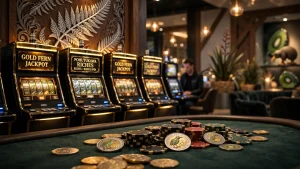
My checklist is deliberately plain: identify the operator’s New Zealand status, read the verification and account terms, establish what asset the balance represents, and distinguish claims from conditions. Then compare the actual service rather than a bonus headline. No universal winner. Just fewer assumptions.
Depositing and Withdrawing Bitcoin: Where the Time Goes
A Bitcoin payment has two separate stages: the casino’s handling of the request and the blockchain’s confirmation of the transaction. Treating them as one clock makes delays hard to diagnose. A deposit is credited after the network confirms it; a withdrawal has to be approved by the casino before it is sent out. The order matters.
For a deposit, the usual sequence is to select Bitcoin, open the casino’s deposit instructions, and copy the displayed wallet address. The amount is then sent from a personal wallet. A specialist review gives a Bitcoin deposit estimate of one to three blockchain confirmations, taking roughly 10–30 minutes. That is an estimate, not a service promise: the casino credits the funds only after the required confirmation is recorded.
The pre-send check is simple but consequential. The wallet address must match exactly, and the blockchain network must be the one specified in the instructions. A correct-looking address on the wrong network can still result in a payment the casino cannot credit. I would not send directly from a crypto exchange: use a personal wallet, where the transaction can be checked before it is broadcast. Start with the casino’s own current instructions, not an old address saved from a previous deposit.
Bitcoin Deposit Process
-
1
Get instructions
Select Bitcoin and copy the specific wallet address provided by the casino.
-
2
Send funds
Transfer the amount from your personal wallet, ensuring the network matches the casino's instructions.
-
3
Wait for confirmation
Wait for the required number of blockchain confirmations (typically 10–30 minutes) before the credit is applied.
A dedicated crypto wallet reduces the chance of mixing gambling funds with other activity. Enable two-factor authentication on the relevant accounts and set deposit limits before transferring funds. These are basic controls, not a guarantee against loss. Transaction fees are not fixed across every payment: they vary with network activity and the cryptocurrency used. The fee shown at the sending stage affects the cost of the transfer; it is separate from any casino processing time.
Withdrawals reverse the sequence, but not the responsibility. The withdrawal request is submitted with the chosen cryptocurrency, the receiving wallet address and the amount. The casino reviews and approves it first. Only then is the transaction sent to the wallet, where blockchain confirmation completes the transfer. A specialist review reports processing times of 5–30 minutes after approval at leading crypto casinos, but that figure covers the casino’s processing stage, not necessarily the time until the funds appear in a wallet. Approval can take longer than the network leg.
That distinction is useful when checking a pending payment. If a deposit has not appeared, the relevant question is whether it has reached the required confirmations. If a withdrawal has not arrived, it may still be awaiting casino approval or already be travelling through the network. A blockchain transaction record can show whether a withdrawal has been sent; before that point, the casino controls the queue.
The payment flow looks direct. The clock is not.

Bitcoin Slots: Balances, Limits and the Risks Behind the Convenience
A Bitcoin balance can look stable on a casino screen while its value in New Zealand dollars moves outside the site. The displayed amount is denominated in a crypto asset; its purchasing power depends on the exchange rate when it is valued or converted. If the coin’s price falls between deposit and withdrawal, the same BTC amount may be worth less in NZD. If it rises, it may be worth more. The slot result and the currency movement are separate risks.
A specialist review of crypto casinos reported minimum deposits equivalent to NZ$10–$30. That is a reported range, not a standing market rule: the amount can depend on the operator, the coin and its current value. A small entry amount does not make the balance low-risk. A modest BTC deposit can still change in NZD value while it sits unused or while a withdrawal is pending.
This is the part of a bitcoin slot account that promotional language tends to blur. “Instant” describes neither the value of the funds nor the entire cashout. A specialist review described deposits as crediting quickly after blockchain confirmation, but withdrawals as relying on both casino approval and blockchain processing. The balance may therefore remain exposed to price movement during the interval between requesting a withdrawal and receiving it.
The account’s unit of display matters. A casino may show a BTC amount, while household spending and budgeting are in NZD. Checking only the crypto figure can hide a change in its cash value; checking only a converted estimate can also create false precision if the conversion rate changes. I treat the balance as money at risk, not as a number insulated from the market.
Fees add another small but real difference between the amount sent and the amount ultimately available. Transaction charges vary with network activity and the cryptocurrency used. A balance can also be affected by an exchange rate changing independently of any game result. Neither is a win or loss at the pokies. Both affect what the deposited or withdrawn funds are worth.
Operational discipline matters because a payment mistake can compound the financial risk. Deposits should come from a personal wallet rather than directly from a crypto exchange. The wallet address and blockchain network must match the casino’s instructions exactly; sending the wrong asset or using the wrong network can create a separate recovery problem. A dedicated wallet, two-factor authentication and deposit limits help keep gambling funds distinct and controlled. Necessary precautions.
There is a wider trade-off behind the convenience. Crypto casinos operating offshore do not have domestic New Zealand regulatory oversight or consumer protections. A digital balance may be easy to view and transfer, but that does not make it equivalent to cash held in a locally supervised account. The value can fluctuate, and the route from account balance to spendable funds depends on processes beyond the slot game itself.
For anyone comparing new Bitcoin slot accounts, the useful question is not simply how little can be deposited. It is what asset the balance represents, how its NZD value may move, what fees apply, and how long the funds could remain in the account before withdrawal. Those details determine the practical value of the balance. A displayed figure is only one part of it.

Bitcoin Cash Slot Games: Check the Currency Before Sending
Bitcoin and Bitcoin Cash are separate cryptocurrencies. Their names are close enough to invite a costly assumption, but choosing one does not mean a deposit address for the other will accept it. A casino cashier may show both as payment options; each option has its own deposit instructions, and the asset selected must match the asset sent.
In payment reviews, the described process is to select a cryptocurrency, copy the casino’s deposit address and send that currency to it. The important detail is not just the address. The blockchain network must match the instructions too. A Bitcoin Cash address is not interchangeable with a Bitcoin address, and a familiar-looking string is not proof that a transfer is going to the right place.
This is where a bitcoin cash slot game can become a payment problem before it becomes a game choice. The game itself does not determine which coin the cashier accepts. A balance intended for Bitcoin Cash cannot be assumed to appear if Bitcoin was sent instead, or vice versa. The cashier’s displayed currency and network are the reference point; the wallet’s send screen needs to show the same combination.
I have seen the mistake happen when someone focuses on the ticker or the logo and treats the payment screen as a minor step. It is not. Sending the wrong asset or using the wrong network can leave a deposit uncredited, and recovery depends on the recipient’s procedures rather than on the player’s intention. No convenient label can correct a mismatch after the transaction is broadcast.
A personal wallet should be used for deposits, not a direct transfer from a crypto exchange. Before confirming, compare the selected coin and network against the casino’s instructions, then check the copied address carefully. A dedicated wallet, two-factor authentication and deposit limits reduce other account risks, though they cannot make a mismatched transfer safe. Network activity and the cryptocurrency used also affect transaction fees.
The phrase “Bitcoin Cash slots” describes a payment preference, not a guarantee that every online pokies site supports BCH or that its deposit route is compatible with every wallet. The cashier must explicitly offer Bitcoin Cash, and the instructions for that specific option must be followed. If the screen offers Bitcoin only, that is not an invitation to send Bitcoin Cash to its address.
One check. Before sending.
Bitcoin Slot Bonuses: What ‘Welcome’ and ‘No Deposit’ Leave Out
A “welcome bonus” sounds like extra cash added to an account. In practice, the label tells little about what can be withdrawn. The offer may be conditional: its terms can define which deposits qualify, which games count towards release, and what must happen before a bonus balance becomes cash available for withdrawal. The headline is the sales language. The conditions do the accounting.
For online BTC slots, the currency adds another layer. A bonus may be displayed in a crypto-denominated balance, but that does not make it equivalent to a fixed amount in New Zealand dollars. The value of cryptocurrency can move between the time a balance is credited and the time it is withdrawn. A clear offer should explain how the bonus is credited and how any qualifying balance is treated; vague wording leaves the practical value uncertain.
“No deposit” also needs careful reading. It describes a claimed entry condition, not proof that an offer is active, unconditional or withdrawable. Terms may still distinguish bonus funds from deposited funds and set requirements for withdrawing winnings associated with the bonus. Those rules matter more than the label. Without the full terms, there is no sound basis for treating a displayed amount as money already earned.
The useful checks are concrete: whether the offer is actually available to the account, whether a deposit is required, what activity qualifies, what restrictions apply to cashing out, and whether the promotion can be combined with other terms. The wording should make these points intelligible before an account is funded. If key conditions are difficult to locate, the advertised figure cannot carry the decision.
Identity checks can also intersect with a bonus cashout. A specialist review reports that some casinos may request KYC when a withdrawal crosses a large threshold or when anti-fraud controls are triggered. That is a possibility, not a promise that every account will be checked in the same way. Bonus-related winnings therefore should not be treated as immediately payable simply because an account balance shows them.
I have seen the headline do its job while the small print determines the outcome. “Extra” is not the same as “available.” A bonus is a set of conditions, not a cash guarantee.
Playing Bitcoin Slots Online: Identity Checks Still Happen
Paying with Bitcoin changes the route funds take; it does not necessarily remove account checks. A crypto-friendly casino may still ask for identity documents before approving a first withdrawal, when a cashout is large, or when a security review is triggered. The payment method and the account’s verification status are separate matters.
KYC, short for Know Your Customer, is the identity-check process described for licensed casinos. It can involve a valid government-issued ID and proof of address before the first withdrawal is approved. A specialist review also reports that crypto casinos may request checks around first cashouts, larger withdrawals or security concerns. That is a description of reported practice, not a guarantee about any particular offshore site.
This is where “instant” can become a misleading label. A withdrawal request may sit with the casino while it checks the account and decides whether to approve the payment. Only after approval is the Bitcoin sent to the nominated wallet; blockchain confirmation comes later. Casino processing and network settlement are separate stages, and one does not tell the whole story.
The distinction matters for bitcoin play slots online: a balance shown in an account is not the same as money already available in a personal wallet. A request can be delayed by document review even when the payment system itself is functioning. Conversely, approval does not mean the blockchain has already recorded the transfer.
For Kiwis, there is an additional boundary: offshore crypto casinos do not have domestic New Zealand regulatory oversight or consumer protections. Crypto payment does not change that position, nor does it make an offshore operator locally supervised. A check performed by a casino is the operator’s process, not New Zealand government recourse.
I treat a verification request as part of the cashout process, not as an odd exception that crypto ought to prevent. The practical point is simple: account approval first, network confirmation after.
Bitcoin Video Slots and the Limits of What Can Be Verified
Video describes a slot’s format; Bitcoin describes how funds move. The two labels do not establish one another. A game presented as a video slot may be funded with Bitcoin, but that payment option does not show how the game’s reels, features or outcomes work.
I have found it useful to separate what a cashier can demonstrate from what a game claim would require. A Bitcoin transaction can show that funds were sent and credited. It cannot, by itself, verify a particular game’s fairness, return rate, volatility or bonus features. Those are claims about the game or its testing, not about the currency used to pay.
That distinction matters because polished graphics and familiar slot language can make a title feel more transparent than it is. They are presentation, not evidence. Without substantiation specific to the game, it would be careless to treat a video-slot label as proof of how outcomes are generated.
There is one further complication: the amount displayed in a Bitcoin balance is exposed to the coin’s changing value. A specialist review has reported that a balance held in a volatile cryptocurrency can rise or fall in value. That movement is separate from any result inside the game. A winning spin does not settle what the Bitcoin will be worth when it is later converted or withdrawn.
So the responsible reading of “Bitcoin video slots” is narrow: a video-slot format paired with a Bitcoin payment route. Nothing more follows automatically. Game evidence and payment evidence answer different questions. No shortcut between them.
Are Bitcoin casino winnings taxable in New Zealand?
Generally, no. Recreational gambling winnings, including crypto casino winnings, are not subject to income tax in New Zealand.
Is it legal to play at offshore Bitcoin casinos in New Zealand?
Yes. New Zealand law targets operators, and individual players are not prohibited from using offshore sites. From 1 December 2026, operators wishing to legally offer online casino gambling to New Zealanders will need a licence.
Is crypto gambling legal in New Zealand?
Individuals in New Zealand are not prohibited from using cryptocurrency at offshore online casinos. Local casinos are not allowed to offer crypto games.
Slots & Pokies in New Zealand: Online Casino Guide
Content created by the «casinoguidenz.com» team