
Understand What Each Free Spin Can—and Can’t—Tell You
 Available in US
A practical guide to slot formats, demo play and the features that shape a spin, without treating free play as a promise of winnings.
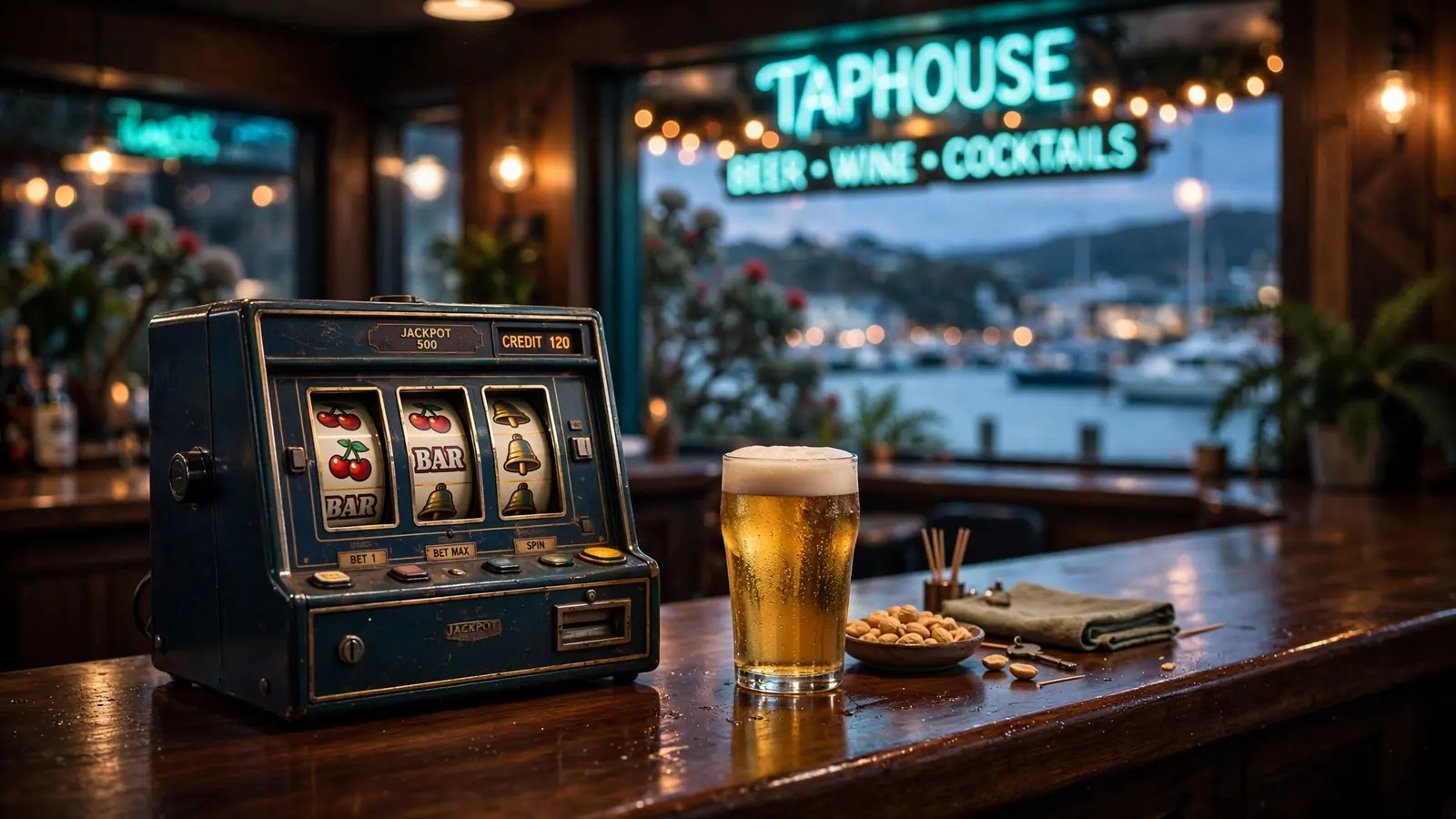
From Three-Reel Pokies to Megaways
The main difference between pokie formats is not the artwork on the screen. It is the structure that determines how symbols are arranged and how a win can be formed. A familiar three-reel layout, a feature-rich video pokie, a changing-reel Megaways game and a progressive jackpot title each give a spin a different shape.
The compact logic of classic pokies
Classic pokies use three reels. Their appeal is partly their restraint: the layout is easy to read, and the relationship between matching symbols and a result is generally more direct than in a modern video game. There is less visual activity to interpret between one spin and the next.
That simplicity does not mean every classic game behaves identically. The useful distinction is the format, not a promise about how a particular game will pay. Classic pokies typically produce smaller wins more often than high-volatility titles. That can make their rhythm feel steadier, though it does not turn any individual spin into a predictable result.
If you’re exploring free slot machines in New Zealand in 2026, this list offers a starting point for reviewing the operators featured on the page. Check each operator’s available information to decide what you’d like to look into further.
-
Play Grand
- License
- Malta Gaming Authority, licence no. MGA/B2C/370/2017
Play Grand is listed with a Malta Gaming Authority licence, number MGA/B2C/370/2017.
-
Lamabet
- Payout speed
- 1-3 business days
Lamabet lists a payout speed of 1–3 business days.
-
7Bit Casino
- License
- Tobique Gaming Commission, licence no. 0000091
7Bit Casino is listed with a Tobique Gaming Commission licence, number 0000091.
-
BitStarz
- License
- Curaçao Gaming Authority, licence no. OGL/2024/165/0185
BitStarz is listed with a Curaçao Gaming Authority licence, number OGL/2024/165/0185.
-
N1 Casino
- License
- Malta Gaming Authority, licence no. MGA/B2C/394/2017
N1 Casino is listed with a Malta Gaming Authority licence, number MGA/B2C/394/2017.
-
Zotabet
- License
- 07017519840
- Payout speed
- 1-3 business days
Zotabet lists licence number 07017519840 and a payout speed of 1–3 business days.
-
Ricky Casino
- License
- Tobique Gaming Commission, licence no. 0000002
Ricky Casino is listed with a Tobique Gaming Commission licence, number 0000002.
-
Neospin
- License
- Tobique Gaming Commission, licence no. 0000064
Neospin is listed with a Tobique Gaming Commission licence, number 0000064.
-
Wintino
- Payout speed
- 1-3 business days
Wintino lists a payout speed of 1–3 business days.
When I compare formats, I start with what the reels are doing rather than the theme or sound effects. Three reels give a clear, compact frame. The game may look old-fashioned, but the mechanic is still easy to assess: a small number of reel positions makes the arrangement legible at a glance.
Video pokies add features to the layout
Video pokies typically use five reels and add features such as wilds, scatters and free spins. These symbols can alter how a game presents winning combinations or trigger a feature round, so the experience is no longer defined only by matching symbols across a simple reel layout.
The extra reels and symbols provide more room for a game to build its own identity. One title may lean on wild symbols; another may use scatters to activate free spins. Those features are part of the game’s mechanics, not a guarantee that a spin will lead to a bonus or a payout.
This is where a free version can be useful for getting a sense of the presentation: the reels, symbols and feature prompts are visible without staking money. But a display that looks busy is not, by itself, evidence that a game offers better value. I separate the visible design from the underlying format. Flash is not a mechanic.
Megaways changes the reel shape
Megaways games make a different change: the number of symbols shown on each reel can vary from spin to spin. Instead of keeping a fixed arrangement of symbol positions, the game alters the reel configuration, which changes the number of possible winning ways available on that spin.
Some Megaways titles can reach 117,649 ways to win on a single spin. That figure describes the maximum number of ways in the relevant game configuration; it does not mean that every spin has that many ways, or that each way is a separate guaranteed chance to win. The changing reel heights are the defining mechanic.
This format can take longer to read than a classic three-reel game. The player is not looking at one fixed grid each time. Reel shapes shift, and the count of available ways shifts with them. The headline number can sound like a verdict on the game, but it is better understood as a description of its maximum configuration.
For free play, that difference matters in a practical way. A trial can show how the reels expand and how the game displays its available ways. The format is not simply “more reels”; it is a variable arrangement. I find that distinction more useful than treating a large ways-to-win figure as a quality rating.
Progressive jackpots pool contributions
Progressive jackpot games are defined by a shared prize pool. Every spin across casinos running the game feeds that pot. The jackpot is therefore connected to play across those casinos, rather than being only a feature of one isolated session.
That shared structure separates a progressive title from a game whose appeal is mainly its reel layout or bonus features. A progressive game may also use familiar video-pokie mechanics, but the defining point is the accumulating pool. The jackpot is not just a graphic displayed above the reels; its funding is linked to spins across the participating casinos.
The distinction is important when comparing games that appear similar on screen. Two titles may both have several reels and animated features, while only one is connected to a shared progressive pot. The visual presentation does not tell the whole story. The game’s stated format does.
Choose by mechanic, not by label
For free pokie games, these categories offer different things to observe. Classic games keep the reel layout compact. Video pokies layer symbols and features onto a five-reel format. Megaways titles make reel height variable. Progressive jackpot games connect spins to a shared pot across casinos running the game.
Those labels help explain what a game is built around; they do not rank games or settle whether one is suitable for a particular preference. “More ways” describes a changing configuration, while “progressive” describes pooled jackpot funding. Neither term means a better chance of a win.
I use the mechanic as the first filter. A preference for a straightforward reel display points toward a classic format; interest in changing configurations points toward Megaways; and the shared-pot feature is what distinguishes a progressive jackpot. The theme can come second. The mechanics tell more.

Browser Play or a Downloaded Client?
The difference is where the casino software runs. A web-based casino lets its games run without installing casino software on the local computer. A download-based casino requires a software client to be installed before games can be played and wagers placed. That distinction sounds technical, but it changes the first steps of using the service—and what “no download” actually means.
With browser play, the casino is opened as a website. The game is accessed there rather than through a casino client installed on the computer. That is the practical meaning behind searches for free pokies or video slots with no download: the games can be reached without first installing the casino’s software. “No download” describes the access method. It does not, by itself, describe whether a game is free, whether an account is needed, or what other conditions apply.
A downloaded casino works differently. The client is a separate piece of software that must be downloaded before the casino games can be played and wagers made. The game session takes place through that installed client, rather than solely through the casino website. This is the defining requirement; the word “download” does not mean that each individual pokie is necessarily saved as a separate file.
I have found that the wording around downloads can blur two different things: installing a casino client and downloading a particular game. For a download-based casino, the required installation is the client used to access and play its games. A search for free slot machine games to download may sound as if every game is available as a standalone program, but that is not what the general distinction establishes. The relevant question is whether the casino requires its own client.
Browser play removes that installation step. The computer does not need the casino’s downloaded client in order to access web-based casino games. For someone comparing ways to play free pokies online, this is a straightforward convenience: open the casino in a browser instead of first obtaining and installing a separate program. It is still browser access to a casino, not proof that every title is free to play or that every feature is available without conditions.
DO
- Use browser play to access games without installing software
- Use a browser to open the casino directly as a website
DON'T
- Assume "no download" means the game is free
- Treat "download" and "free" as interchangeable terms
The reverse is equally important. Downloading a client does not make a casino game free. A download-based casino requires that software for both playing and wagering, but the installation method does not determine the terms of play. “Free” and “download” answer different questions: one concerns whether a wager is involved; the other concerns how the casino’s games are accessed. Treating them as interchangeable is how a simple search for free play can turn into confusion about what is actually being offered.
There is also a practical difference in the order of operations. In a browser-based setup, the website is the route into the games, with no casino client to install first. In a download-based setup, installation of the client comes before play and wagering. That is the point at which the two models diverge. Neither label, on its own, tells the full story of a particular game or its conditions.
The phrase “play online” can therefore cover both arrangements. A game can be played through a website without installing casino software, or it can be reached through a client that has been downloaded to the computer. The appearance of a game in a browser does not turn a download-based casino into a web-based one if its client is still required to play and wager. Equally, a browser-based casino does not require a client merely because it offers casino games.
For the narrow question of access, the distinction is clean: web-based casinos do not require a local software download to play their games; download-based casinos require a client to play and wager. The rest of the decision belongs to separate questions about the game and the terms attached to it. Access method first. Everything else follows.
New Zealand’s Online Casino Licensing Transition
New Zealand’s rules have long drawn a line between an online casino operating from within the country and a person using a service hosted overseas. The Gambling Act 2003 prohibited online casinos from being based in New Zealand. Its focus was the operator’s business activity, not criminalising a player for placing a wager. That distinction matters: a ban on domestic operation did not, by itself, mean that every offshore site was locally licensed or supervised.
The position has since begun to change. The Online Casino Gambling Act 2026 established New Zealand’s first domestic licensing system for online casino gambling and came into force on 1 May 2026. The Department of Internal Affairs is responsible for administering the framework. This is a transition, not an instant switch to a fully functioning licensed market.
The Act provides a defined interim period. Online casinos that were already serving people in New Zealand before it came into force may continue doing so under transitional provisions until 1 December 2026. That permission is limited to qualifying existing operators; it is not a general invitation for new providers to start offering online casino services. The full licensed regime is expected to become operational in 2027, while unlicensed operation is expected to become an offence around the middle of that year.
That timing can be easy to misread. A website remaining accessible during the transition does not, on that basis alone, hold a New Zealand licence. Nor does a reference to a future licensing system mean that the full set of domestic safeguards is already in place. Before the 2026 legislation, offshore online casino services were outside New Zealand regulatory supervision. Customers using them had no domestic government channel for resolving a dispute with the operator. The law’s transition provisions change the status of some existing providers temporarily, but the licensing framework is not yet fully operational.
In the period before the new law, the practical distinction was therefore about where the operator was based and which regulator, if any, supervised the service—not simply whether a site would load in New Zealand. The Gambling Act 2003 addressed operators running online casinos from inside the country. It did not make offshore services locally regulated by default. For a reader looking at free pokies, the same distinction applies: a free-play screen says something about the game mode, not about the legal status or oversight of the casino supplying it.
Government planning material describes an initial cap of up to 15 online casino licences. That is a proposed limit within the developing regime, not a count of licences already available to choose from. A licence, once issued under the system, will be a matter for the domestic regulator and its rules. Until the full regime is in operation, promotional language about licensing should not be treated as proof that an operator has been approved by the Department of Internal Affairs.
I have seen the wording around “regulated” used as if it were a feature that a website can simply claim for itself. The important distinction is formal authorisation under the New Zealand system, rather than a general assurance or an overseas status presented without context. During the transition, dates matter: the law is in force, some established services can continue temporarily, and the fully operational licensing market is expected later.
Free access does not itself establish that a provider is licensed, and the existence of a new framework does not mean every online casino has already passed through it. The transition has boundaries. That is the point.
What Demo Mode Can—and Cannot—Show
Demo mode is best treated as a way to inspect a pokie’s mechanics without placing a cash wager. It lets a player see how the game behaves: how its controls work, what appears on screen and how its features operate when they are triggered. That can make free slot machine play useful for getting a feel for a title before deciding whether its pace and presentation are appealing.
I use a demo as a product check, not a preview of a future result. It can show the sequence of a feature and how the game communicates what is happening. It cannot establish what a later session will produce. The distinction matters because a polished animation can make a feature feel more substantial than it is; the demo reveals the sequence, not a promise about its outcome.
A practical test is to play long enough to understand the basic flow rather than judge the game by a brief run. The point is not to find a pattern or prove that a win is waiting. It is to learn whether the rules and on-screen information are clear, and whether the game’s mechanics make sense without relying on its promotional language. “Exciting” describes the presentation. The actual mechanics are what the demo can show.
Free slot machines to play online can therefore be useful for comparing how different games feel to operate, even when no cash is involved. One may make its features easy to follow; another may have more moving parts to understand. Those are observations about the game’s design, not evidence that one is more likely to pay. Free play is an inspection tool.
There is a firm limit when a game includes a progressive jackpot. In demo mode, the jackpot does not pay. A displayed jackpot or a simulated feature cannot be treated as a cash prize, and a demo result does not create a claim to real winnings. That is the part that is easy to miss when the screen reproduces the atmosphere of a live game. The appearance may be familiar. The payout is not real.
This also changes what a demo can tell someone about a jackpot feature. It can show how the feature is presented within the game, but it cannot demonstrate receiving the progressive prize. A session that appears to reach a jackpot event in free mode is still a simulation for play purposes. No cash payout follows from it.
The same restraint applies to any apparent success in a free session. A run of wins may make the game seem generous; a quiet run may make it seem unpromising. Neither is a reliable verdict on what cash play would do. The value of the demo is narrower: understanding the mechanics and deciding whether the experience is clear and enjoyable without risking money.
In practice, I separate two questions. First: can the game’s mechanics be understood from its free mode? Second: does the free mode pay a progressive jackpot? The first may be yes; the second is no. Keeping those answers apart prevents a simulated event from being mistaken for a financial result.
Demo play has a defined job. It can familiarise players with a game’s operation and show how its features are presented. It cannot turn a progressive jackpot into a free cash opportunity, or settle what a later paid session might bring. Useful for inspection. Not a payout test.
What a Slot Spin Is Actually Based On
A spin on a virtual pokie is decided by pseudorandom number generator software. The screen may show reels slowing, symbols passing and a result landing in sequence, but that animation is the presentation of the outcome, not evidence that the game is waiting for a particular symbol to appear. The software determines the result; the visual sequence makes it legible.
That distinction matters in a free slot machine session as much as in paid play. A run of near-misses, a stretch without a payout or a recent win does not make the next spin more likely to produce a particular result. Each spin is independent. The game is not keeping a debt ledger, and it is not “due” a win.
I have seen players read patterns into short sequences because that is what people naturally do when outcomes are displayed one after another. A result that feels overdue can seem persuasive, especially after a long quiet spell. But the previous spin does not change the basis of the next one. A free-play session can make the sequence easier to observe without changing that underlying principle.
Understanding Randomness
Each spin is independent and decided by pseudorandom number generator software. A run of near-misses or a quiet spell does not mean a win is due or that the software has changed its behaviour.
The word “random” can also be misunderstood. It does not mean that a game must distribute wins evenly across a short session, or that every player will see a representative sample of its outcomes. A brief run can look unusually generous or unusually barren. Neither appearance proves that the software has changed its behaviour or that a different result is about to follow.
This is why a free slot machines session can be useful for learning the rhythm of play, but not for predicting an outcome. It shows how the game presents spins and results. It cannot turn a sequence of past results into a reliable signal for the next one. That is the boundary.
From the other side of the counter, the practical mistake was rarely a complicated theory about software. It was a simple belief that persistence would eventually force the game to pay. Independence rules that out: continuing to spin does not make a particular result inevitable. A longer session produces more spins, not a promise that the next one will compensate for earlier ones.
The same reasoning applies when a game appears to be repeating a pattern. A cluster of similar results is still a sequence of separate outcomes, not a message from the machine. Short-term impressions are easy to form; they are not a method for reading what comes next.
For paid play, this has a straightforward consequence. A session should have a maximum loss limit set before it begins, rather than a limit adjusted in response to a losing run. Chasing losses treats independent outcomes as if they were connected and owed a correction. They are not.
A free session removes the stake, not the uncertainty. It can show what the interface does after a spin; it cannot reveal a dependable route to a future result. That is the useful distinction.
Playing for Fun: Volatility and Expectations
Volatility describes the pattern of a pokie’s payouts, not a promise about what any session will return. In practical terms, it helps explain why two games can feel very different even when both are being played for fun. One may produce frequent, modest wins; another may have long quiet stretches before a larger payout. Neither pattern makes a particular result more certain.
Low-volatility pokies tend to pay out regularly, with smaller amounts. In free play, that rhythm can make a game feel active: wins may appear often, but they are generally modest. High-volatility pokies are different. They can go longer without a payout, with the possibility of larger wins when one arrives. A quiet run is part of that pattern, not evidence that a bigger win is now owed.
That distinction is useful when choosing free slot machine games for fun. Playing without staking money can give a sense of the pace: whether small wins arrive often, or whether the game spends more time between payouts. It can also show how that pace feels over a stretch of play. The key word is *feels*. A short session is not a reliable forecast of what a game will do later.
I have seen players treat frequent small wins as proof that a game is generous. The display can reinforce that impression, but the size and frequency of wins are separate from whether the balance is moving in a favourable direction. A sequence of small payouts may still be less than the stakes put in. In free play, there is no cash balance at risk, but the same distinction matters when setting expectations.
Low Volatility
Produces frequent, modest wins, making the game feel active.
High Volatility
Can go longer without a payout, with the possibility of larger wins.
High volatility can be more frustrating if the appeal is steady activity. Long gaps between wins may make the game seem broken or unusually cold; neither impression follows from the pattern alone. Conversely, a larger win in a free session does not establish that the game is likely to repeat it. Free play is a way to experience the pacing, not to establish a dependable outcome.
RTP and volatility describe different things. RTP is a game’s return over its entire lifetime; volatility concerns the distribution of payouts across play. A game’s long-run RTP does not tell a player what a short session will produce, and volatility does not change the fact that individual results can vary. The distinction is easy to blur. It matters.
For a session played purely for entertainment, free play can help identify whether the game’s tempo is enjoyable without turning an isolated win or losing run into a prediction. If real-money play follows, decide on a maximum loss limit beforehand and stop when it is reached. Do not raise the stake to recover losses. The practical value of trying pokies for fun is modest but clear: it gives a feel for the payout rhythm, while leaving chance where it belongs.
Bonus Rounds, Bonus Buys and the Terms Behind Them
A bonus round is part of a game: it becomes available through play and follows the rules built into that title. A bonus buy is different. It lets a player pay a set multiple of the stake to enter a bonus round directly, bypassing the usual trigger. The feature changes when the round begins, not what its rules are.
The price is game-specific. Specialist reviews have reported bonus-buy costs ranging from 50 to 100 times the stake, but that range is not a fixed market tariff. The purchase price is charged for access to the feature; it is not a forecast of what the round will return. A costly entry can still produce an outcome worth less than its price. No shortcut around probability.
Bonus funds carry a separate set of conditions. A welcome offer may need to be wagered before any resulting balance can be withdrawn. Specialist reviews describe wagering requirements in the range of 30 to 50 times, though the offer’s own terms determine the actual requirement and what counts toward it. A headline bonus amount says little on its own.
The details that matter are often below the headline: which games contribute, whether particular titles count less or are excluded, how long funds remain available, and what maximum stake applies while the bonus is active. Some specialist reviews report a NZ$5-per-spin cap as a common condition, but the binding limit is the one stated in the specific offer. Exceeding a bonus bet limit can affect eligibility for winnings.
I have seen the same offer look generous in its banner and restrictive in its terms. That is not a contradiction; the banner sells the amount, while the conditions govern release and withdrawal. Reading both is essential.
Free Spins Are a Game Feature, Not a Cash Promise
Free spins sit among the familiar features of video pokies, alongside wilds and scatters. These games commonly use five reels, with the features shaping how a round can unfold. The label “free” describes spins awarded within the game; it does not, by itself, explain what conditions apply or what a player can take away.
I have found it useful to separate the feature’s name from its function. Free spins provide a set of additional spins in a game’s feature sequence. Their rules belong to that particular game: the screen or game information should make clear how the feature works and what ends it. The label alone tells little about the experience.
That distinction matters when comparing free slot machine games with free spins. A title may include the feature, but the presence of free spins does not mean every session will reach it, nor does it promise a particular result when it appears. It is one mechanic among several, not a payout forecast.
The wording can make the feature sound more generous than its mechanics warrant. “Free” is an in-game description, not a guarantee of cash value. The spin still follows the game’s rules and outcome system.
For a low-pressure look at a feature, free play can show its sequence and presentation. It cannot turn the feature into a promise. A name is not a result.
No Download Does Not Automatically Mean No Account
A browser-based pokie can run without casino software being installed on a computer. That is all “no download” establishes: the game is accessed online rather than through a locally installed client. It does not, by itself, say whether an account is needed.
I learned to separate those two points because they answer different questions. One is about how the game loads; the other is about the operator’s access rules. A page that opens in a browser is not proof that play is available without registration. Nor does the absence of an account prompt on an initial screen establish what will be required later.
The wording “play instantly” can make these things sound interchangeable. They are not. It may describe a game opening in the browser, while saying nothing about whether an account is needed to access a particular mode or continue using the service. The terms and on-screen steps are where that distinction becomes clear.

So, free pokie games without downloading may be browser-based, but “without registration” is a separate claim and should not be assumed from the lack of an installation. Check what the page actually asks for before treating it as account-free. No shortcut there.
This is an informational page for adults of legal gambling age.
Can Free Slot Play Pay Real Money?
The phrase “free pokies that pay real money” joins two different things. In demo mode, a game can show how its reels, symbols and features behave, but a displayed win is part of the trial—not a cash balance that can be withdrawn. No stake has been wagered, so the demo result does not become a real-money payout.
Progressive jackpots make the distinction especially clear. Their prize pool is fed by spins made across casinos running the game, but a progressive jackpot does not pay in demo mode. A simulated jackpot display is not a claim on that shared pot.
Real-money play is different: it involves wagering cash, and any possible return depends on the game’s outcome. A demo can explain the mechanics; it cannot establish what a cash session will return. I have seen the word “free” do a lot of work in casino copy. Here, it means a way to try a game without staking money—not a route to withdrawable winnings.
Free spins offered as part of a promotion are also not the same as demo play. They are a game feature or offer with its own conditions, and a displayed result should not be treated as cash available to withdraw without checking those terms.
In New Zealand, gambling is for adults. Set a loss limit before any cash wagering, and do not treat a free-play result as evidence that a paid spin will produce the same outcome. Demo is practice. Cash play is risk.
Slots & Pokies in New Zealand: Online Casino Guide
Content created by the «casinoguidenz.com» team