
Know What Changes Before You Join a Live Table
 Available in US
A practical guide to live-table play, blackjack rules, betting conditions and the limits of card counting.

What Changes When Blackjack Moves to a Live Table
With blackjack with a live dealer, the cards are physical rather than generated and dealt by game software. A dealer handles them at a real table, while a stream brings the play to the screen. The distinction is not cosmetic: the visible cards are part of a live game, not an animation driven by an RNG.
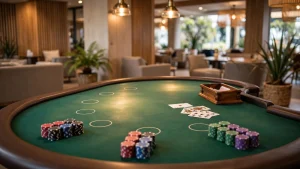
I have found that this changes the feel of a hand more than its basic structure. The dealer’s actions unfold on camera, and the pace follows the table rather than a rapid sequence of software prompts. It resembles sitting at a casino table, with the stream standing between the game and the player. The table is real. The view is mediated.
That mediation has practical consequences. A stream can lag, so what appears on screen may not arrive at the same instant as the action at the table. There may also be a higher bet required to join a live table than to play a software-dealt version. Those are format differences, not signs that one version is automatically better.
RNG blackjack uses software to shuffle and deal, and it generally allows play to move faster. Live play trades that pace for cards handled in front of a camera. Neither format removes the underlying uncertainty of blackjack; they present it differently. One runs through software. The other is streamed from a table.
A live stream is not the same as being physically present. Small delay.
Live Dealer Blackjack and New Zealand’s Online Casino Framework
Choosing a live dealer blackjack site in New Zealand calls for a clear look at what is actually known about each operator. Use these notes as a starting point when reviewing your options.
-
Play Grand
- License
- Malta Gaming Authority, licence no. MGA/B2C/370/2017
Play Grand is listed with a Malta Gaming Authority licence, number MGA/B2C/370/2017.
-
Lamabet
- Payout speed
- 1-3 business days
Lamabet lists a payout speed of 1–3 business days.
-
7Bit Casino
- License
- Tobique Gaming Commission, licence no. 0000091
7Bit Casino is listed with a Tobique Gaming Commission licence, number 0000091.
-
BitStarz
- License
- Curaçao Gaming Authority, licence no. OGL/2024/165/0185
BitStarz is listed with a Curaçao Gaming Authority licence, number OGL/2024/165/0185.
-
N1 Casino
- License
- Malta Gaming Authority, licence no. MGA/B2C/394/2017
N1 Casino is listed with a Malta Gaming Authority licence, number MGA/B2C/394/2017.
-
Zotabet
- License
- 07017519840
- Payout speed
- 1-3 business days
Zotabet lists licence number 07017519840 and a payout speed of 1–3 business days.
-
Ricky Casino
- License
- Tobique Gaming Commission, licence no. 0000002
Ricky Casino is listed with a Tobique Gaming Commission licence, number 0000002.
-
Neospin
- License
- Tobique Gaming Commission, licence no. 0000064
Neospin is listed with a Tobique Gaming Commission licence, number 0000064.
-
Wintino
- Payout speed
- 1-3 business days
Wintino lists a payout speed of 1–3 business days.
A live dealer blackjack table is a game format, not a regulatory category. The cards may be dealt in a streamed studio, but that does not tell a player which country supervises the operator, whether it holds a New Zealand licence, or what protections apply. In 2026, those questions sit within a changing framework: New Zealand has moved from prohibiting domestic online casinos to establishing its first local licensing regime.
The Department of Internal Affairs (DIA) is New Zealand’s primary gambling regulator and oversees the online casino licensing framework. The Gambling Commission has a distinct role within it: it hears and decides casino licensing applications, issues online casino licences, and approves changes to licence conditions. In practical terms, the DIA oversees the framework while the Commission makes licensing decisions. They are not interchangeable names for the same authority.
The change introduced in 2026
The Gambling Act 2003 does not permit online casinos to be based in New Zealand. Before the new law, gambling websites operating from offshore could be accessible to New Zealand residents, but they were not licensed or supervised by a New Zealand regulator. A player using one of those services had no domestic government recourse.
The Online Casino Gambling Act 2026 came into force on 1 May 2026 and created the country’s first domestic licensing regime for online casino gambling. That changes the regulatory position, but not overnight. The Act includes a transitional period from 1 May to 1 December 2026. Providers that were already serving New Zealand customers before the start date may continue during that window under the transition provisions.

That permission is temporary, not a general approval of every offshore casino or every live blackjack table. Providers that have not applied for a licence must stop conducting online casino gambling in New Zealand by 1 December 2026. A provider whose application is declined must also cease those operations and leave the market. The full licensed regime is not expected to be fully operational until 2027, and unlicensed operation is expected to become an offence around the middle of that year.
The distinctions matter. “Available” does not necessarily mean locally licensed; “operating during the transition” does not mean the provider has completed licensing. A foreign licence may be relevant to the provider’s obligations elsewhere, but it is not a New Zealand licence. Dates and status carry more weight than the promotional label.
What the transition means for players
During the earlier offshore-only period, a local authority did not supervise those sites, and there was no domestic government recourse for customers. The 2026 law establishes a route towards local oversight, but the transition is a bridge between the old position and the intended licensing system. It should not be read as though every service has already passed through the Commission’s review.
The new regime also changes the consequences for providers. Operators without a licence may face enforcement action and fines of up to NZ$5 million. This is a consequence for operators, not a stated penalty for a customer placing a wager. The market framework does not make the act of playing at an offshore casino a crime for the player.
There are restrictions on promotion as well as licensing. Online casino gambling must not be advertised to people in New Zealand during the transition period. Once operators are licensed, advertising is permitted only under tight rules, and sponsorships are prohibited. A familiar brand or prominent live table is not evidence that advertising or operation complies with the local framework. Marketing can make a service look settled before its regulatory position is settled.
Licensed operators will also have to implement stricter age and identity verification systems. That requirement belongs to the compliance side of the new regime; it is not a feature of how blackjack is dealt. The difference is easy to miss when the same screen combines a live table, account controls and promotional material. One is game presentation. The other is regulatory compliance.
Reading the framework, not the table
For live dealer blackjack in New Zealand in 2026, the useful regulatory question is not whether the dealer appears on camera or whether the table is labelled “live”. It is whether the provider’s position fits the relevant stage of the domestic regime: the pre-Act offshore period, the temporary transition, or the licensed system as it becomes operational.
The DIA and Gambling Commission have separate responsibilities, and the transition has defined dates and consequences for providers. Those points give the framework its shape. They do not amount to a recommendation of any casino, nor do they confirm the status of an individual service. A game interface cannot settle that question. The legal position sits behind it.

Card Counting: What Mental Calculation Does—and Doesn’t—Change
Card counting is a method of keeping a running mental estimate of which cards have already appeared, then using that estimate to judge what may remain. In New Zealand, doing this through mental calculation is not illegal. That is a narrow legal point: it does not make counting a reliable way to earn money, and it does not settle every question about a particular game or website.
The distinction matters because “legal” can sound like an endorsement. It is not. Counting gives a player information about cards already seen; it does not reveal the next card, remove chance from a hand or guarantee a profitable result. The estimate can be wrong, and the next cards can go against it. A method may change how someone interprets the game without changing the game’s underlying uncertainty.
I have found it useful to separate three ideas that marketing often folds together: the legality of a mental technique, whether the game’s dealing process gives that technique useful information, and whether the player’s results will improve. Only the first point has a clear answer here. The other two depend on mechanics and outcomes, not a label such as “live.”
Why the dealing method matters
In a live table, actual cards are dealt and the stream shows the play. That makes the sequence of cards visible. A person attempting to count can keep a mental record of what has appeared during the observed deal. But seeing a sequence is not the same as knowing what comes next. Nor does a visible stream, on its own, establish that a count can overcome the game’s rules or ordinary variance.

Online RNG blackjack works differently. The game uses software shuffles, and its pace can be faster than a live-dealer table. A count based on cards from earlier play has limited meaning when a software shuffle changes the card sequence. The key issue is continuity: a mental estimate only relates to cards that remain part of the same relevant sequence. If that sequence is shuffled, earlier observations no longer provide the same basis for estimating what follows.
That is why “online blackjack” is too broad a category for claims about card counting. A live stream and an RNG game may both show blackjack, but the source and handling of the cards differ. Faster software play can also mean more hands pass in a given period, leaving less time to reflect between decisions. More activity is not more certainty.
What the law does not promise
New Zealand law does not make mental arithmetic illegal simply because it is used to keep track of cards. That statement should not be stretched into a claim that every counting-related action is permitted in every setting, or that a casino must welcome the practice. A legal distinction is not a promise about a site’s terms, its response to play, or the player’s ability to establish a dispute.
Nor does the legal position say anything about whether an online live dealer can be trusted in a particular instance. A suspicion that a dealer has cheated is a separate allegation; counting cards neither proves nor disproves it. The visible sequence may be part of what a player observes, but it cannot by itself establish misconduct. The practical standard is evidence, not a pattern that merely feels unusual.

I would also resist the familiar claim that a “best” live table is one where counting will work. That turns a conditional mental estimate into a sales proposition. A live dealer may make the cards visible, but visibility alone does not tell the player how useful an estimate will be, how the game is configured, or whether the observed run is representative. Those are separate questions.
A technique, not a system
The sound way to understand card counting is as a way of organising observations, not a system for forcing a result. It may inform a player’s view of the cards already dealt, but it cannot make an uncertain sequence predictable with certainty. It also does not transform RNG play into a live shoe: software shuffles remain software shuffles, and faster play remains faster play.
This is where the word “edge” is often used too casually. A theoretical advantage under particular conditions is not the same as a dependable return in a real session. The count may be imperfect, the game may interrupt continuity through shuffling, and outcomes can remain adverse even when a player believes the estimate is favourable. A number in the head is not control over the deal.
The distinction, then, is straightforward. Mental card counting is not illegal under New Zealand law. Live dealing makes card sequences observable; RNG blackjack uses software shuffles and generally moves at a faster pace. Neither point is a guarantee of success. Counting can describe information a player has noticed. It cannot promise what the next card will be.
Reading a Live Blackjack Site Beyond Its Marketing
“Best” is a label, not a table rule. When I compare live blackjack pages, I look past the banner and open the details for the specific table. A site can present several tables under one broad heading, while their rules differ in ways that affect both decisions and the house edge. The table, not the lobby’s headline, is the useful unit of comparison.
The first checks are the number of decks and what the dealer does on soft 17. Then come surrender availability and the payout for a natural blackjack. These are not cosmetic variations: blackjack strategy can change with the rules, and a different rule set can change the house edge. A specialist review describes these as details that vary among games; that is a reason to verify the selected table’s own information, not to assume that one description applies across a whole site.
A tidy game tile may leave those points out. I treat a rules panel, help page or table information screen as more useful than promotional copy, and check that the details refer to the exact game being opened. If the rule information is hard to locate or appears inconsistent, the marketing has not answered the practical question. It has only made the table look simple.
For low-stakes live blackjack, the displayed minimum bet is the relevant detail, rather than a general claim that a site suits smaller budgets. Minimums can be attached to individual tables, so a low figure shown elsewhere in the lobby does not establish that the chosen live table offers it. The same care applies to mobile live blackjack: a phone-friendly page says little about whether the table information, controls and stream remain clear on a smaller screen. The interface matters, but it does not replace checking the rules.
Searches for a “no deposit bonus” can make an offer look like a shortcut to a table. It is still an offer with conditions, not evidence that the blackjack itself is a better choice. Bonus terms can belong to another part of the decision, and promotional language should not be confused with the rules governing a hand. Read the terms separately.

A live table may also be described as an invitation to “go live.” Behind the phrase is a particular table, with its own rules and interface; the label does not tell much by itself. I compare the details shown for that table, rather than ranking live dealer blackjack sites by their slogans or appearance. There is no dependable shortcut from a polished lobby to a favourable rule set.
The practical comparison is therefore narrow: confirm the table’s rules, its stated minimum, and whether its mobile presentation makes those details readable before play begins. That does not settle every question about an offer or account. It does stop broad site claims from standing in for the actual terms of the game.
Small print matters.
Real-Money Tables: Payouts and Conditions to Check
A live table’s advertised pace or presentation says little about what a real-money hand returns. The relevant terms sit in the table rules and the conditions attached to the account. I have seen players focus on the dealer stream, then discover that the payout or bonus terms they assumed did not apply to that table. The small print does the work.
A natural blackjack payout is one detail to verify before play. A specialist review reported tables paying 3:2 and others paying 6:5; that is a report about the tables it examined, not a guarantee of what any particular online blackjack website with a live dealer currently offers. The difference changes the return on a natural, so the payout displayed for the chosen table matters more than a general description of blackjack elsewhere on the site.
The same separation matters when a deposit or other promotion is involved. A bonus may be available on an account without every game contributing to its wagering requirements in the same way. Blackjack may count differently from other games, or be subject to conditions that change how quickly wagering requirements are met. The headline offer is only the front door. The terms explain what happens after entry.
Maximum-bet rules can also apply while wagering requirements are active. A bet that is permitted at the table may still breach a promotion’s conditions. That can affect whether bonus funds or associated winnings remain eligible under the offer. The table rules and the promotion terms are separate documents, and checking only one leaves a gap.
I treat the order of checks as practical rather than promotional: read the table’s payout information, then the bonus conditions, and confirm whether blackjack is included and how it contributes. Check any maximum-bet rule before play with real money. Trustworthy sites and casinos should make these conditions available; vague banners are not a substitute for the full terms.
For blackjack online with live dealers, the streamed game can look consistent while the financial conditions differ between tables or promotions. A familiar interface does not mean identical terms. Nor does a bonus automatically improve the value of a session: restrictions can determine whether it can be used as expected.

The useful comparison is therefore not simply which table looks most generous. It is whether the stated payout and the applicable account conditions are clear, and whether they fit together. If the terms cannot be understood before money is committed, the uncertainty is part of the cost. Check first. Then decide.
Playing a Hand Against the Live Dealer
A blackjack hand is a contest against the dealer, not against the other people at the table. The aim is to finish closer to 21 than the dealer without going over. In a live game, the cards are dealt on camera, while the player’s choices are made through the table controls. The sequence is straightforward; choosing when to stop is where the hand turns.
The first decision follows the initial deal. A hit asks for another card, adding its value to the hand. Number cards count at face value, picture cards count as ten, and an ace can count as one or eleven. That flexibility can make a hand safer than its first total suggests, but another card can still push it past 21. The dealer’s visible card provides context, not certainty.
Standing ends the player’s turn with the current total. It is the choice to keep the hand as it is rather than risk another card. I have seen new players treat a hit as the active option and standing as doing nothing. That is a misleading way to frame it. Standing is a decision: the current total is being trusted to compete with the dealer’s eventual hand.
DO
- Check the natural blackjack payout
- Verify the deck count
- Confirm the dealer's soft-17 rule
DON'T
- Rely on general site claims
- Assume all tables have the same rules
- Trust a promotional label without checking the details
Doubling down is a more committed move. The player increases the wager and takes one additional card, then the hand is finished. The attraction is clear when the position looks favourable; the trade-off is that there is no further chance to draw if that card leaves the hand short. It is a decision about both exposure and timing.
A split is available when the opening hand contains a pair. The pair becomes separate hands, each played on its own, with a further wager attached to the second hand. That can turn one awkward starting position into two chances to build a competitive total. It also creates two outcomes to manage. The table interface may make the action look simple. The cost is still real.
The live format puts these choices on a shared rhythm. Cards arrive through the streamed table, and the player selects an action through the interface before the hand progresses. A delayed picture or a slow click can make the moment feel less immediate than a physical table, but the underlying decisions remain hit, stand, double down or split. The dealer is the opponent; the stream is only the way the hand is presented.
I find it useful to separate the action from the atmosphere. A dealer’s pace, table graphics and other players’ decisions do not change the aim of the hand. Nor does a confident-looking interface make a risky choice safer. Each action changes what can happen next, and sometimes the best-defined move is simply to stop. That is the whole decision.
Blackjack Rules, Payouts, and the Insurance Question
A live dealer’s table can look consistent from one game to the next, while the rules behind the cards differ. Those details affect both the decisions available during a hand and how a winning hand is paid. The felt, camera angle and pace of the live blackjack dealer are not a substitute for reading the table rules.
A specialist review describes a natural blackjack payout of 3:2, while noting that some tables pay 6:5. That is a reported comparison, not a guarantee about every live table or a fixed market standard. The distinction matters because the payout changes the return on a natural blackjack. The displayed rules are the useful reference for the particular game being considered.
Other rule differences can be just as easy to miss. Games may use different numbers of decks; the dealer may hit or stand on soft 17; and surrender may or may not be available. A specialist review also reports variation in these rules between games. A change to one condition does not make a table universally better, but it can change how a hand should be played and the game’s house edge.
The options during a hand depend on the table’s rules. A player may be able to hit, stand, double down or split, and some games allow surrender. It is worth separating the decision from the label: an option appearing in the interface is useful only when its effect and availability are clear in that game’s rules. A familiar-looking layout can conceal a different rule set.
Insurance deserves particular restraint. Its presence in the interface does not make it a routine part of a sound blackjack approach, and it should not be presented as a dependable way to win. I treat it as a separate wager to assess cautiously, not as protection that guarantees a better result. For most players, avoiding insurance is the safer general position.
Understanding the dealer's role
The live dealer is not responsible for setting the table's payout or rule conditions; those are attached to the game itself.
The live dealer is not the person who sets the table’s payout or rule conditions. Those are attached to the game, so attention belongs on the published rules rather than assumptions drawn from the dealer’s manner or presentation. A streamed table may feel more like a conversation than a software game, but that does not change the mathematics of the listed rules. Nor does a dealer’s visible presence tell players whether the dealer can hear them; the game’s own communication features determine what interaction is available.
Before play, the key checks are the natural-blackjack payout, deck count, soft-17 rule, and whether surrender is permitted. Then the available actions can be understood in context. Small print, large consequences.
Real-Money Play Without Chasing Losses
With real-money live dealer blackjack, the budget is a limit on exposure, not a target that has to be spent. I have seen the distinction disappear once a session turns against someone: the next stake is treated as a way to recover what has already gone, rather than as a fresh decision. That is chasing losses. It does not change the cards or improve the position.
A workable budget is money set aside for gambling that can be lost without affecting ordinary expenses. It helps to decide the session limit before play and stop when it is reached, whether the session ends ahead or behind. A live table can make each decision feel immediate, but the speed of the stream is no reason to revise that limit mid-session. Pausing or leaving is a practical money-management choice, not a blackjack rule.
The game itself remains a contest against the dealer: the aim is to finish closer to 21 without going over. That objective does not turn a losing run into evidence that a win is due. Nor does changing stakes after a loss make the next hand more favourable. “Getting even” is a compelling phrase; in practice, it often means putting more money at risk to pursue an outcome the previous hand cannot influence. A hard stop helps. No recovery plan.
Bonuses add a separate layer. Wagering requirements describe conditions attached to bonus funds or related offers; they are not part of the formal rules for a hand. Blackjack may contribute differently from other games toward those requirements, so the apparent value of an offer can depend on how the terms count blackjack play. The relevant wording should be checked before real-money play, including whether the table or game type qualifies and what restrictions apply.
Maximum-bet rules can also apply while wagering requirements are being met. A stake that is allowed at a table may still breach a bonus condition, with consequences set out in the offer terms. That distinction is easy to miss: the table determines what action is permitted in the hand, while the promotion sets its own conditions for qualifying play. Neither overrides the other.
I treat the budget and the offer terms as separate checks. The budget controls how much is exposed; the terms determine how bonus-related play is counted and constrained. If those conditions are unclear, the bonus should not be treated as cash available to play. Live dealer blackjack can make real-money decisions feel more tangible, but it does not make a budget optional or a promotion simpler. Keep the limit fixed. Stop when it is reached.
Free Blackjack: What a Practice Table Can and Can’t Show
A practice table can show how the interface behaves, how decisions are entered and whether the pace feels manageable. It cannot, by itself, establish what a real-money table will cost to join or what conditions apply to paid play. “Free” describes the stake, not a complete preview of every part of the game.
The format matters. Online RNG blackjack uses software shuffles and can move through hands faster than a streamed live table. That makes an RNG practice game useful for getting familiar with a digital layout, but its speed is not a reliable guide to the rhythm of live dealing. At a live table, actual cards are dealt and the stream carries the action; a delay can make the experience feel less immediate than a software game.
That difference also affects what a trial reveals. A free live-dealer table may show the camera view, dealer interaction and timing, but streaming delays can interrupt the flow. Live tables may also require higher bets than a practice game, so free play does not necessarily show whether the paid version fits a particular budget. A demonstration is a rehearsal, not a price quote.
The phrase “rigged” is often used to describe an outcome that feels suspicious, but a practice session cannot settle that question. RNG play depends on software shuffles; live play uses physical cards viewed through a stream. Those are different dealing methods, not proof on their own that a game is fair or unfair. A short run of results is not a dependable test of either format.
I would treat practice as a way to learn the controls and notice the practical differences between software dealing and streamed play. It can expose a confusing interface or a laggy stream before money is involved. It cannot confirm the terms of real-money play, nor show that a particular run of cards predicts future results.
Useful, but limited.

Live Blackjack Games and Bonus Bets: Read the Rules First
A live blackjack table is not defined by its streamed dealer alone. Variants can change the rules, and those changes can affect both strategy and the house edge. A familiar title or polished studio presentation tells little about the conditions that govern a hand. The useful comparison is the rules page beside the table, not the promotional label.
I have seen “best” used as if it described a measurable quality. Often it only signals a ranking or sales claim. For live blackjack games, the practical question is whether the stated rules match the way the table operates and whether the terms attached to a promotion apply to that particular game.
“Free bet” can also mean different things in different contexts. It may appear in the name of a blackjack variant or in promotional wording, but the phrase alone does not explain how a table works or what a bonus permits. A live dealer free-bet offer should therefore be read as a set of conditions, not as proof that every live table qualifies. The same applies when the wording is shortened to “freebet”: spelling does not settle eligibility.
Bonus terms can treat blackjack differently from other games. A promotion may assign blackjack a different contribution toward wagering requirements, or exclude some tables or variants. Maximum-bet rules may also apply while wagering requirements are being met. Those clauses can matter more than the headline value of a bonus. Check the full terms on trustworthy casino and information sites before any real-money play; the table’s rules and the promotion’s rules are separate documents.
That separation is easy to miss. A table can be available while a bonus does not count play there as expected, or a wager can breach a promotional maximum even though the game itself accepts it. Neither situation changes the formal blackjack rules; it changes how the promotion is treated.
Read both layers. Table rules first; bonus conditions alongside them. No headline substitutes for either.
Casino Games in New Zealand: Roulette, Blackjack & More
Content created by the «casinoguidenz.com» team