
Understand the Rules and Risks Before You Play
 Available in US
See how offshore access differs from local licensing, and what to expect from live baccarat tables, betting rounds and payment options.

What Offshore Access Means for New Zealand Players
A live baccarat table hosted offshore can be accessible to a Kiwi player without being licensed specifically in New Zealand. Those are separate questions, though casino marketing often lets them blur together. A site may accept people in New Zealand and offer live dealer games, but that does not mean it holds a New Zealand gambling licence. There is no Kiwi-specific gambling licence for online casinos.
The distinction matters because access describes what happens at the point of use: a player can reach a website and take part in a game. A domestic licence would describe a different relationship, in which an operator is authorised under New Zealand’s own online casino framework. For the market context relevant here, New Zealand has no domestic licensing framework for online casinos, while players are not prohibited from accessing offshore platforms. Kiwi players are free to play live dealer games offered by international or offshore gambling sites.
I have seen how easily a line such as “available in New Zealand” can be read as a regulatory endorsement. It is not. In ordinary commercial language, availability can mean only that the website accepts the player or that the game loads from their location. It does not, by itself, establish that the operator is locally licensed, locally supervised or backed by a New Zealand regulator. Access is not a licence.
Choosing a live baccarat site in New Zealand involves checking the details available for each operator before deciding where to play. This list provides a concise reference for the options featured on this page.
-
Play Grand
- License
- Malta Gaming Authority, licence no. MGA/B2C/370/2017
Play Grand lists a Malta Gaming Authority licence, number MGA/B2C/370/2017.
-
Lamabet
- Payout speed
- 1-3 business days
Lamabet lists a payout speed of 1–3 business days.
-
7Bit Casino
- License
- Tobique Gaming Commission, licence no. 0000091
7Bit Casino lists a Tobique Gaming Commission licence, number 0000091.
-
BitStarz
- License
- Curaçao Gaming Authority, licence no. OGL/2024/165/0185
BitStarz lists a Curaçao Gaming Authority licence, number OGL/2024/165/0185.
-
N1 Casino
- License
- Malta Gaming Authority, licence no. MGA/B2C/394/2017
N1 Casino lists a Malta Gaming Authority licence, number MGA/B2C/394/2017.
-
Zotabet
- License
- 07017519840
- Payout speed
- 1-3 business days
Zotabet lists licence reference 07017519840 and a payout speed of 1–3 business days.
-
Ricky Casino
- License
- Tobique Gaming Commission, licence no. 0000002
Ricky Casino lists a Tobique Gaming Commission licence, number 0000002.
-
Neospin
- License
- Tobique Gaming Commission, licence no. 0000064
Neospin lists a Tobique Gaming Commission licence, number 0000064.
-
Wintino
- Payout speed
- 1-3 business days
Wintino lists a payout speed of 1–3 business days.
That difference is particularly easy to miss when searching for a live baccarat casino online. The table may appear in a familiar browser or app, with local-facing wording and a deposit route that suits the market. None of those details changes where the operator is established or which authority regulates it. The service is still offshore if it is provided from outside New Zealand. The appearance of a local option is not the same thing as local authorisation.
Nor does the absence of a New Zealand-specific licence mean that players are barred from visiting an offshore site. The market position is not a simple choice between “locally licensed” and “illegal for the player”. New Zealand players can access offshore gambling services, while the country has not had its own online casino licensing framework for those services. Confusing the operator’s status with the player’s ability to access a site produces a misleading picture in either direction.
This is why language around “New Zealand casino” deserves a careful reading. It can refer to a site that accepts Kiwi players, a page written for the local market, or a service with some practical features suited to people in New Zealand. It does not necessarily mean the operator is a New Zealand business or has a local gambling licence. The label is commercial shorthand, not proof of regulatory status.
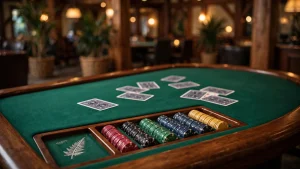
For live baccarat, the distinction is the same as for other online casino games. A player may find the game at an international operator and participate from New Zealand; that fact alone says nothing about a domestic licence, because no such Kiwi-specific online casino licence exists. The phrase “live baccarat NZ” may describe the intended audience or the player’s location, not the legal home of the casino.
I used to treat a site’s local-facing presentation as a useful signal of how it operated. It is a weak signal. A New Zealand currency display, local wording or a game catalogue visible from the country can make a service easier to use, but none establishes who oversees the operator. The practical distinction remains plain: a site can be accessible here without holding a licence issued specifically for New Zealand.
That does not make the two positions equivalent. A player’s ability to open a baccarat online live casino and the operator’s regulatory position are different parts of the same transaction. One concerns whether the service is reachable and accepts participation; the other concerns the legal framework under which the service is provided. Treating them as interchangeable gives a false sense of certainty.
The same applies when a website uses broad terms such as “trusted” or “regulated”. Those words need context: regulated by whom, and under which jurisdiction? They should not be taken to mean New Zealand has authorised the operator. A casino’s own description can explain how it presents itself, but it cannot create a Kiwi-specific licence where none exists.
So the basic market context is less complicated than the wording around it: offshore live baccarat is accessible to New Zealand players, but accessibility does not confer domestic licensing status. Both points can be true at once. That is the distinction to keep in view when a live dealer casino presents itself as serving the New Zealand market.
How a Live Dealer Table Works Behind the Video Feed
Live dealer baccarat brings a physical table into an online casino through a video stream. The dealer is not an animation, and the cards are not merely graphics generated to resemble a table. A professional dealer works in a studio or a casino based in a particular country, while the game is broadcast live for remote players. The screen is the interface; behind it is a real table and a real person.
That distinction is easy to blur in casino copy. “Live” can sound like a decorative label, but here it describes how the game is delivered. The dealer handles real cards, and the stream carries the table action to players as it happens. Other live dealer games may use real wheels or different physical equipment; baccarat’s defining studio object is the card table. It is a straightforward setup, not a simulation pretending to be one.
The video feed also changes the character of online play. A digital table game presents a software interface, while live baccarat places a dealer and a physical setting in view. The player watches the action through the stream and can interact with the professional dealer through the game’s interface. That interaction is part of the format, even though it does not turn an online session into a conversation across a shared room. The connection is mediated by the casino’s software and the broadcast.

I have always found that the word “authentic” does less work than people expect. What matters is not a slogan about atmosphere; it is the chain between the physical table and what appears on screen. A live baccarat table is presented as a real game in progress, with the dealer and cards visible through the feed. The software makes that presentation available remotely. A player is not standing at the table, but the dealer is handling the game rather than a computer rendering a dealer.
Studios are built to support this kind of broadcast. The live game may come from a dedicated studio or a casino located in a particular country. In either case, the central arrangement is the same: a professional dealer operates the physical game, and a live video feed lets online participants follow it in real time. This is why “online baccarat with a live dealer” is more than a label for a particular set of rules. It describes a format that combines a physical table with a remote interface.
The feed does not make every part of the room equally important. The table is the focus because that is where the cards and dealer are. The player’s view is designed around the game, not around a tour of the studio. This is a practical choice: the stream needs to make the table legible, while the interface supports participation alongside the video. The screen joins those two elements, but they remain distinct. One is a live picture; the other is the online control layer.
That distinction helps explain why live dealer baccarat online can feel different from a standard digital table, even when both are available through the same casino account. In the live version, the dealer’s presence is visible, and the action unfolds through a broadcast. The interaction is real in the limited, specific sense that a professional dealer is conducting a physical game and players can interact with that dealer through the platform. It is not evidence that the player has direct access to the studio or control over how the table is operated.

There is also a useful way to think about the video feed: it is the delivery channel, not the game itself. The physical table supplies the cards and dealer; the stream conveys what is happening; the online interface lets the remote participant take part. When those pieces are treated as one vague “live experience”, the description becomes sales language. Separating them makes the format easier to understand.
A live dealer baccarat table therefore sits between a conventional casino table and a fully digital game. It retains the visible dealer and real equipment of a physical setting, but participation happens remotely through a screen. That is the basic arrangement behind an online baccarat live dealer casino: a real table, a professional dealer, a broadcast, and an interface that connects the player to the game. No mystery. Just a table on camera.
Baccarat Bets, Hand Values and the House Edge
Baccarat asks for a prediction, not a sequence of decisions. The aim is to back the hand that will finish with the higher value: the player hand or the banker hand. The possible results are a player win, a banker win or a draw. The labels can be misleading at first. “Player” does not mean the person placing the wager, and “banker” is not a role the customer takes on. They identify the two sides of the game.
The comparison is based on which hand is closest to nine. That gives the round a clear target, but it does not make the betting choice a judgement about who appears stronger at the table. The wager is placed on an outcome before the hands are compared. In live baccarat, the central choices are therefore straightforward: back the player, back the banker, or consider the draw where that option is offered.
I regard that simplicity as one of baccarat’s defining features. The decision is narrow, and the player is not asked to manage a hand in the way a participant in blackjack does. The important distinction is between the result being predicted and the person making the prediction. Confusing those labels can lead to a basic misunderstanding of what a banker bet means.
Player Bet
Wins when the player hand is the one closest to nine.
Banker Bet
Wins when the banker hand is closer to nine.
Draw
A separate possible result where neither side is closer to nine.
What the three outcomes mean
A player bet wins when the player hand is the one closest to nine. A banker bet wins when the banker hand is closer. If neither side is closer, the result is a draw. These are the game’s possible outcomes, but the main betting decision centres on choosing one of the two hands.
The draw is worth understanding even when the wager is on a side. It is not another name for a banker or player win; it is a separate possible result of the comparison. A player deciding between the two main bets is still making a prediction about which hand will be higher, while the draw remains part of the round’s outcome structure.
This is where the table can seem simpler than it is. The choice looks like a direct contest between two sides, yet the draw means the round does not always resolve in favour of either. I find it useful to keep those ideas separate: the bet is a prediction, and the result is determined by the final comparison. No judgement about the dealer or the other people at the table changes that basic structure.
Reading the house edge
For live dealer baccarat, the house edge is around 1.06% on banker bets and around 1.24% on player bets. Those figures describe the casino’s mathematical advantage over time, rather than a prediction of what will happen in an individual round. A low house edge is not a promise of a win, and it does not prevent short-term results from moving sharply in either direction.

The difference between the two figures is modest, but it is still meaningful when comparing the two principal wagers. The banker bet carries the lower stated edge; the player bet is slightly higher. That does not make either choice a reliable way to forecast the next result. It only describes the relative mathematical cost of the bets over repeated play.
I have seen promotional language turn a small edge into something that sounds like a near-certainty. That is the wrong reading. “Low edge” means the built-in advantage is comparatively limited in the long-run calculation, not that the casino has little chance of winning a particular hand or that the player’s choice is likely to succeed. The distinction matters.
A house-edge figure also needs to stay attached to the wager it describes. The banker and player figures are not interchangeable, and they do not describe every possible outcome as if all bets had identical terms. The draw is part of the game’s result set, while the quoted comparison here concerns the banker and player bets. A neat number can conceal that difference if it is presented without context.
A simple choice, not a system
The appeal of live baccarat is partly that the basic objective is easy to state: predict which hand will be closest to nine. But an easy choice is not the same as control over the result. The house edge does not become smaller because someone follows a pattern, changes sides after a loss, or treats a run of results as evidence about what must happen next.
I would describe the practical decision in plain terms. The player bet backs one hand, the banker bet backs the other, and a draw is also possible. The mathematical edge is slightly lower on the banker wager than on the player wager. Beyond that, the choice remains a wager on an outcome, not a method for directing the game.
That is the useful distinction to carry into a live baccarat round: understand what each label refers to, recognise the draw as a separate result, and read the house edge as a long-run measure rather than a short-term forecast. The format is simple. The uncertainty remains.
Bitcoin Bets and the Practical Limits of Crypto Payments
Bitcoin can be used as a payment route for live baccarat where an operator supports it. That does not make the game itself a Bitcoin product: the wager is still placed at the live table, while Bitcoin is one possible way to move funds into or out of the account. Keeping those steps separate makes the practical limits clearer.
A specialist review reports that Bitcoin withdrawals may clear in under an hour, compared with 24 to 48 hours for POLi and e-wallets and 5 to 7 business days for bank transfers. Those are timings reported by that source, not a standing promise from every operator or a reliable forecast for a particular transaction. Payment arrangements change, and the time shown for a method may not describe every stage between requesting a withdrawal and having funds available.

That distinction matters. A cashier may show a withdrawal as submitted before the payment has completed. A quoted processing period can describe the operator’s handling, the payment provider’s handling, or both; the wording varies. I have seen “fast” used as if it meant immediate. It does not. The useful question is what the stated timing covers and whether the operator sets conditions for releasing a withdrawal.
Deposits and withdrawals are separate checks
A payment method being available for deposits does not, by itself, confirm that the same method can be used for withdrawals. The specialist review identifies Neteller, Skrill and Bitcoin among methods that may support fast deposits or withdrawals, while also noting that fees or limitations may apply. Availability and conditions depend on the operator’s payment arrangements.
Before choosing Bitcoin, the account’s cashier and payment terms are the relevant place to check whether it is accepted for both directions, how a withdrawal is requested, and whether any fee or restriction applies. A method can be convenient at the point of deposit and less suitable when funds are being withdrawn. That is not a technicality. It changes the actual payment route.
Bitcoin is not automatically fee-free. The same applies to the other named methods: a payment option can carry costs or limits, and a broad label such as “crypto” does not settle what a particular operator allows. The terms attached to the account are more useful than a general claim about speed.
The currency question
Many operators allow deposits and withdrawals in New Zealand dollars. That can give Kiwi players a way to keep the account balance in NZD rather than treating every payment as a crypto transaction. It is still worth distinguishing the account currency from the payment method: an operator may support NZD alongside particular deposit or withdrawal routes, but the available combination depends on its cashier.
Do
- Check the cashier for Bitcoin withdrawal support
- Verify specific operator fees and restrictions
- Confirm if NZD account currency is available
Don't
- Assume deposit methods always support withdrawals
- Treat published payment timings as guarantees
- Confuse payment routes with game features
For a Bitcoin payment, the practical comparison is therefore not simply “crypto versus cash.” It is whether the operator supports Bitcoin for the intended transaction, what conditions apply, and whether an NZD route is also available. A fast option on paper may not be the best fit if the method carries a limitation or fee that matters to the account holder.
I would not treat any published timing as a promise. Payment speeds can vary, and the source reporting the comparison is a specialist review rather than a guarantee from every operator. Its figures are best read as a reported comparison: Bitcoin payouts were described as clearing in under an hour, while the review gave longer stated periods for POLi, e-wallets and bank transfers. The difference is informative; it is not a service-level commitment.
What Bitcoin does not change
Using Bitcoin does not alter the live baccarat wager or the table’s settlement of a hand. It changes the route used to fund or withdraw from the account. The distinction is easy to lose in promotional language, where a payment method can be made to sound like a feature of the game itself. It is not.
Nor does a quick deposit establish that withdrawals will be equally quick. Depositing and withdrawing are different account actions, and the stated payment terms may treat them differently. For a live bet on baccarat, funds must be available in the account before they can be used at the table; after that, the payment route matters when money is moved back out. The table experience and the cashier are separate pieces of the service.
The least misleading way to describe Bitcoin in live baccarat is as one possible payment option, with reported speed advantages in a specialist review but with conditions that still need checking. Neteller and Skrill appear in the same review as fast-payment methods, and the source also warns that limitations or fees may apply. None of those labels removes the need to look at the operator’s own terms.

Speed is only one part of the decision. Availability, the direction of payment, any stated charge or restriction, and whether the account can use NZD are all relevant. “Fast” is not the same as frictionless.
Why Live Baccarat Usually Has No Free-Play Table
A live baccarat table is not just a software game with a play-money setting switched on. Someone has to run the operation behind it, and that creates costs whether a player stakes real money or not. For a casino, offering a live table without revenue from wagers can be difficult to justify.
The expense is built into the format. A live dealer operation needs people, a studio and physical equipment, as well as the systems that connect the table to the casino’s game. Those resources are committed to the session regardless of whether a participant is playing for cash or using a free-play balance. The table still has to be staffed and maintained.
That is the commercial reason free-play access is less common for live dealer games than for games that can run entirely through software. A digital game can be made available without a dealer conducting each round. A live table has an operating cost attached to the activity itself. “Free” describes the player’s stake, not the casino’s cost of providing the game.
This also explains why a live baccarat page may be available only after signing in or selecting a real-money table. The casino is offering a paid service, not a cost-free demonstration. The distinction is easy to miss when a site uses the same game name for different formats, but the presence of baccarat rules or a description of the game does not mean a live table is being supplied for free.
Learning and free play are separate questions. A person can understand the objective and the available bets without taking part in a live session; the live table is not the only way to become familiar with the game. But that does not turn a real-money table into a free one. If the interface requires a cash stake to join, it is not a free-play mode, however prominently the game is presented.
In my view, this is where the wording can blur the economics. “Try it” sounds like a no-cost invitation, but a live dealer session still requires the casino to fund an operating service. Unless the site explicitly offers a free version of that live table, the safer reading is that the table is intended for paid play. A practice feature, if offered separately, should not be assumed to reproduce the live service.
No free table, then. A cost decision.
Betting Windows and the Pace of a Live Round
The pace of live baccarat is set partly by a clock. Unlike a game that waits indefinitely for a decision, a live table generally gives players a limited window to place their bets. Once that window closes, the round moves on. The timing is part of the format, not a signal that a particular outcome is more likely.
I have found it useful to think of the betting window as an operating boundary. The table needs a clear point at which betting ends and the next stage begins. That keeps a shared round moving, but it also means that a player cannot treat the interface as if it will remain open while they consider every option. Live games commonly use short windows, so the overall pace can feel brisk.
That briskness is not the same as a faster decision process. A round still has its own sequence, and the time available to place a bet is only one part of it. When the window is open, the focus is on making a selection and confirming it before betting closes. When it is shut, the opportunity for that round has passed. No drama. Just a closed window.

Some live baccarat games also impose specific time constraints on playing hands. The exact arrangement can differ by game, so there is no single timetable that describes every table. The practical point is that timing may apply beyond the initial betting period. A session that looks relaxed on a screen can still require attention to on-screen prompts and deadlines.
This is one reason that playing live baccarat online feels different from using a format that proceeds without a live round structure. The pace is shared: the table moves forward rather than waiting for each participant to act at any moment. That can make play feel more immediate, but it also leaves less room to pause midway through a round. “Real time” describes the rhythm; it does not mean the game is moving at a speed tailored to one person.
For anyone comparing live tables, timing is worth noticing before play begins. The display may show when betting is open and when it is about to close. A short interval can be easy to miss if attention is elsewhere, particularly when the table is already in motion. The terms and prompts for that game are the useful reference, rather than an assumption that every baccarat table allows the same amount of time.
I would not read a short betting period as a reason to act quickly without thought. It is simply a constraint built into many live games. The useful distinction is between deciding what to do and having enough time to enter that decision. Live baccarat asks for both, and its round clock makes the second part visible.
When the Live Game Feed Runs into Technical Trouble
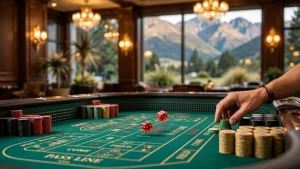
A live baccarat session depends on a connection between the studio feed and the game interface. That connection can be interrupted. A specialist review notes that live dealer games may encounter technical problems from time to time; that is a possibility to account for, not evidence that a particular site or table has a recurring fault.
When the video freezes, drops out or stops matching the on-screen interface, the immediate issue is uncertainty. The player may not know whether the table is still active, whether an action registered, or whether the display has caught up. Those are different problems, but they can look similar from the screen. I treat the visible game state as incomplete until the service indicates what happened.
This is where a live baccarat game online differs from a simple video clip: the feed is part of an active session, so an interruption can affect the player’s confidence in what they are seeing. It does not, by itself, establish that a bet was lost or that a round was settled incorrectly. Nor does a smooth picture prove that every system behind it is functioning perfectly. The screen is evidence of the feed, not a full audit trail.
The practical response is to avoid repeating an action while the interface is unclear. Check whether the session has resumed and whether the displayed round status has changed before doing anything further. If the result or balance remains unclear, preserve the relevant account and session details and contact the operator’s support channel for an explanation. A clear record makes it easier to distinguish a temporary display issue from an unresolved account question.
- Avoid repeating actions if the interface is unclear
- Confirm if the session has resumed
- Check if the displayed round status has changed
- Save account and session details for support
There is no sound basis for turning the possibility of a fault into a reliability claim about all live tables, or into an accusation against one named service. Technical interruptions can happen; their cause and handling depend on the individual incident. A professional studio and a live video feed do not remove that uncertainty.
The distinction matters. In a live game, the stream is how the table is observed, but an interruption alone does not tell the whole story of what the system recorded. Treat it as a pause in visibility, not proof of a particular outcome.
Checking a Live Baccarat Site’s Regulatory Status
A live baccarat site can look established without making its regulatory position clear. In my experience, the useful check is not the polish of the lobby or a licence badge in the footer; it is whether the operator’s status can be verified independently.
For an offshore site, first identify which gambling body is said to regulate the operator. The site should make that relationship clear, rather than relying on a vague claim that it is “licensed”. That word can describe very different things. A named regulator and a licence that can be checked are more meaningful than a logo alone.
That check does not create a New Zealand-specific licence. New Zealand has no Kiwi-specific gambling licence, and offshore operators have not been licensed or supervised by a New Zealand regulator under the earlier framework. A foreign regulator’s oversight and New Zealand’s domestic position are separate questions.
I would also confirm the operator’s licence status with the Department of Internal Affairs. This is a distinct check, not a substitute for examining the claimed foreign oversight. If the operator’s identity, regulator or licence details do not line up, the site’s own assurance is not enough.
There is a practical limit to what a badge can tell a player. It does not, by itself, establish what protections apply to a particular account or resolve a dispute. Before treating a live baccarat site as regulated, the operator’s status needs to be clear from sources beyond its own promotional pages. Verify the operator, not the slogan.
The 2026 Licensing Change and the December Cut-off
The Online Casino Gambling Act 2026 took effect on 1 May 2026, beginning a transition from a market without domestic online-casino licences to one with a formal licensing system. For live baccarat, the important point is that live dealer tables are not treated as a separate licensing class: they sit in the same category as online slots and digital table games.
The legislation sets a ceiling of 15 licences across the online casino sector. That is a cap on licensed operators, not a promise that every existing site will qualify. From 1 December 2026, only approved operators may legally accept players in New Zealand under the new rules.
The period between the Act taking effect and the December cut-off is a transition, not a blanket extension for every offshore site. Providers already serving the market may continue during that window under the transitional provisions. Those without a licence application must stop serving Kiwi players by the cut-off. A pending application allows continued operation while the Department of Internal Affairs considers it, but not advertising during that wait. If an application is declined, the provider must leave the market.
I would not read “transition” as meaning the old position simply carries on unchanged. It is a staged change: existing services may continue under conditions, while the new system determines which operators can remain after the deadline. The full licensed regime is expected to be operational in 2027, so the December date marks the restriction on who may accept players, rather than the end of every administrative step.
For anyone following live baccarat in New Zealand in 2026, the practical dividing line is therefore clear: the operator’s status under the new framework matters from December, and the number of licences available is limited. No automatic renewal.
Can New Zealand players play real-money live dealer games at offshore casino sites?
Yes, New Zealand players can access live dealer games at offshore sites, but that does not mean the operator has a New Zealand-specific licence. From 1 December 2026, only 15 approved operators may legally accept New Zealand players.
Which live dealer games can New Zealand players usually access?
Live baccarat, blackjack and roulette are among the live dealer games available to New Zealand players at offshore casinos.
What is a live casino dealer?
A live casino dealer is a professional who runs a physical table, handling real cards or other equipment while the game is streamed to online players.
How do live casinos work?
A casino streams a real table from a studio or casino, and players watch the action and place bets through the online game interface. Players can interact with the dealer, and each round usually has a limited time for betting.
Casino Games in New Zealand: Roulette, Blackjack & More
Content created by the «casinoguidenz.com» team