
Know what changes before you choose a table
 Available in US
See how free blackjack works across game formats, table rules, payouts and practice options.
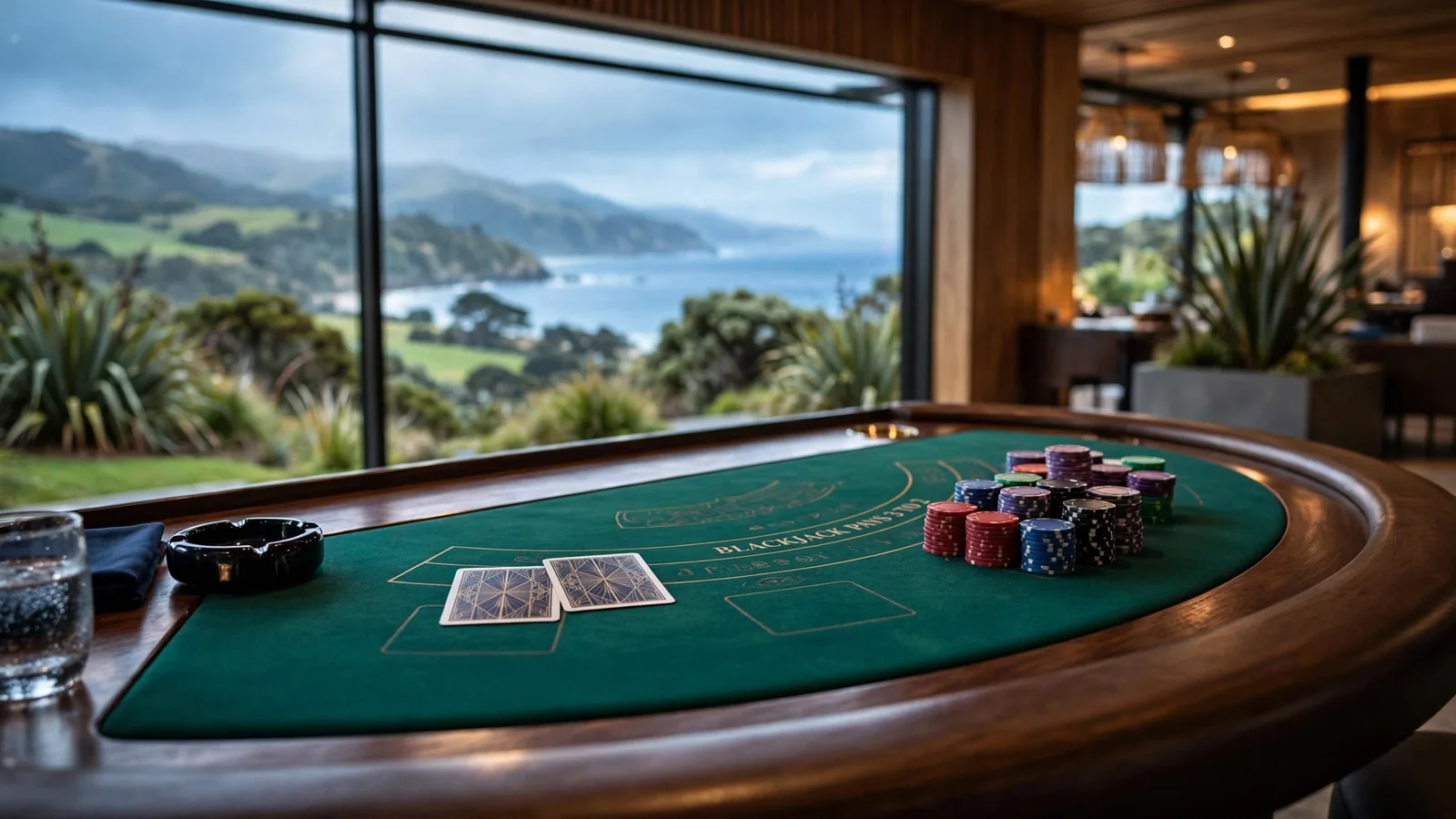
Blackjack Rules and Payouts: What Changes from Table to Table
Blackjack is a contest between each player and the dealer, not a game in which players compete to make the highest total at the table. The aim is to finish closer to 21 than the dealer without going over. A hand that exceeds 21 is bust, so taking another card can improve a weak total or end the hand immediately. That push and pull is the basic structure behind casino blackjack, whether the cards are dealt at a physical table or shown on a screen.
The arithmetic is simple; the consequences are not. Number cards count at face value, while jacks, queens and kings each add 10. An ace can be counted as 1 or 11, whichever gives the hand a useful total without busting. A hand with an ace counted as 11 is often called soft: if another card makes that total too high, the ace can instead count as 1. A hand without that flexibility is hard. This distinction matters because the same displayed total can carry different risk depending on whether the ace can adjust.
A natural blackjack is an opening hand made from an ace and a card worth 10. It is different from reaching 21 after taking additional cards. The distinction can affect settlement: a natural may receive a special payout, while a total of 21 assembled later may be treated as an ordinary winning hand. Table rules determine the precise outcome, so the label alone is not enough to establish what a hand will return.
During a turn, the main choices are hit, stand, double down and split. Hitting means taking another card; standing ends the player’s turn with the current total. Doubling down increases the original wager under the table’s conditions and commits the player to a limited continuation, commonly one further card. Splitting is available when the opening cards form a pair: the hand is separated into two hands, each dealt and settled independently. The options are familiar across blackjack games, but the conditions attached to them are not guaranteed to match from table to table.
Surrender may also be offered. It lets a player give up a hand under the applicable rule, with part of the wager returned rather than continuing to play it. Availability and timing matter: a table may not offer surrender, or may restrict when it can be used. The dealer’s procedure matters too. Some games require the dealer to take a card on a soft 17; others require the dealer to stand. That small difference can change which totals remain live and how a close hand is resolved.
Other rule details also shape the game: the number of decks in use, the dealer’s treatment of soft 17, whether surrender is allowed, and the payout attached to blackjack can all differ. A specialist review describes these as variable table rules rather than fixed features of every game. The practical lesson is to read the rules panel before a hand begins. Two games with the same familiar name may settle particular situations differently.
Payout wording deserves the same attention. A specialist review reports a 3:2 payout for a natural blackjack, while noting that some tables specify 6:5 instead. Those ratios describe the profit relative to the original wager, not the total amount returned including the stake. The difference affects the value of a natural, even though the cards and objective have not changed. It is not safe to assume that the more favourable figure applies just because a game is called blackjack.
A win, a loss and a push are separate outcomes. If the player finishes closer to 21 without busting, the hand can beat the dealer; if the dealer wins or the player exceeds 21, the wager is lost. When both sides finish on the same total, the hand may push and the stake is returned, subject to the game’s rules. A natural can be treated separately from an ordinary 21, which is another reason the payout table matters as much as the headline description.
This is where a free blackjack game can still be useful for understanding the mechanics, even when no cash stake is involved: the same card values, choices and table rules determine how each hand develops. But a free game does not make the rules universal. Before play, the useful checks are plain ones: how naturals are paid, how the dealer handles soft 17, whether surrender is available, and what happens after a split or double. These details are not decoration. They are the operating terms of the hand.
I have seen players focus on the visible cards and treat the rule panel as background. That is how a payout difference slips past unnoticed. The basic game stays recognisable, but the settlement can change with the table. Read the terms first. Then play the hand.
Free Blackjack Online: How Play Works in New Zealand in 2026
If you’re looking for free blackjack in New Zealand in 2026, it helps to review the available operators before choosing where to play. Use this list as a starting point and check the details that matter to you.
-
Play Grand
- License
- Malta Gaming Authority, licence no. MGA/B2C/370/2017
Play Grand is listed with a Malta Gaming Authority licence, number MGA/B2C/370/2017.
-
Lamabet
- Payout speed
- 1-3 business days
Lamabet lists a payout speed of 1–3 business days.
-
7Bit Casino
- License
- Tobique Gaming Commission, licence no. 0000091
7Bit Casino is listed with a Tobique Gaming Commission licence, number 0000091.
-
BitStarz
- License
- Curaçao Gaming Authority, licence no. OGL/2024/165/0185
BitStarz is listed with a Curaçao Gaming Authority licence, number OGL/2024/165/0185.
-
N1 Casino
- License
- Malta Gaming Authority, licence no. MGA/B2C/394/2017
N1 Casino is listed with a Malta Gaming Authority licence, number MGA/B2C/394/2017.
-
Zotabet
- License
- 07017519840
- Payout speed
- 1-3 business days
Zotabet is listed with licence number 07017519840 and a payout speed of 1–3 business days.
-
Ricky Casino
- License
- Tobique Gaming Commission, licence no. 0000002
Ricky Casino is listed with a Tobique Gaming Commission licence, number 0000002.
-
Neospin
- License
- Tobique Gaming Commission, licence no. 0000064
Neospin is listed with a Tobique Gaming Commission licence, number 0000064.
-
Wintino
- Payout speed
- 1-3 business days
Wintino lists a payout speed of 1–3 business days.
Free blackjack online sits within a market undergoing a legal transition. The word “free” describes a way of accessing a game; it does not, by itself, explain who operates the service or how that provider fits the New Zealand framework. In 2026, the relevant question is not only whether a blackjack game can be opened without staking money, but also which rules govern the provider.
The Online Casino Gambling Act 2026 took effect on 1 May 2026, establishing New Zealand’s first domestic licensing system for online casino gambling. That change followed a different position under the Gambling Act 2003, which does not permit online casinos to be based in New Zealand. Before the new Act, offshore online casino services were not licensed or supervised by a New Zealand regulator. Customers who wagered through such websites had no domestic government recourse.
The transition is not an immediate switch to a fully operational licensing regime. The Act sets a transitional period from 1 May to 1 December 2026. Providers that were already serving people in New Zealand before the start of that period may continue operating until 1 December under the transitional provisions. They must stop providing online casino gambling in the country by that date if they have not applied for a licence. The full licensing system is expected to be operational in 2027, rather than being complete as soon as the Act commenced.
The responsibilities are divided. The Department of Internal Affairs is New Zealand’s primary gambling regulator and oversees regulation of the online casino licensing framework. The Gambling Commission handles casino licensing applications: it hears and determines them, issues online casino licences, and approves changes to licence conditions. In practical terms, the Department oversees the framework, while the Commission makes the licensing decisions assigned to it.
That distinction matters when a site presents free casino blackjack alongside other casino content. A game label alone does not show whether a provider is operating under transitional arrangements, has applied for a licence, or will be covered by the eventual regime. Nor does the existence of a licensing framework mean that every service available during 2026 has already been licensed under it. The transition has boundaries.
I have seen how the word “free” can make a product feel separate from the business behind it. It is not. A no-stake game may be offered as a way to try blackjack online, but the phrase does not settle the operator’s regulatory position. The status depends on the provider and the applicable transition rules, not on whether the screen calls the game free blackjack online.
For New Zealand, 2026 is therefore a year of change rather than a settled licensing landscape. The law now provides for domestic online casino licences, but the transition still allows qualifying existing providers to continue temporarily, and the full regime is not expected until 2027. That is the market context for free play. The label is only the surface.
Playing Blackjack for Free: Hands, Decisions and Table Options
Free play makes the decisions in a blackjack hand easier to examine without a cash stake taking centre stage. The basic contest remains the same: the player’s hand is compared with the dealer’s, and the aim is to finish nearer to 21 without going over. What changes from one table to another is the set of choices available and the conditions attached to them.
A hand is not a single decision. Each action changes what can happen next. Hitting takes another card; standing ends the player’s turn. Doubling down and splitting are also possible at tables that allow them, while surrender may be offered under some rules. In free blackjack, these options are useful to try one at a time. The point is not to find a button that wins every hand. It is to see how a choice changes the rest of that hand.
I have found that the clearest way to play without stakes is to pause before each decision and state the reason for it. Is the aim to improve a hand that seems weak, or to stop before another card could push it too far? Is the table permitting a more involved action, and does the player understand what that action does? A quick click can finish a hand, but it does not explain it. A deliberate choice does.
Treat each action as a choice, not a shortcut
Hitting and standing are the most direct actions to compare. One keeps the hand open to another card; the other accepts the current total and leaves the next move to the dealer. Free play allows repeated exposure to both outcomes without turning each result into a financial lesson. A hit may produce a stronger hand or one that goes over 21. A stand may hold up, or the dealer may finish closer to the target. Neither outcome proves that the decision was automatically right or wrong: the result of one hand is not a reliable measure of the decision behind it.
Doubling down and splitting make the decision tree more visible. Their availability depends on the table rules, so a player should not assume that every version offers the same options in the same situations. In a free game, it is possible to notice when these actions appear and learn what the interface asks before confirming. That matters because an unfamiliar control can alter the hand sharply. A free table is a low-pressure place to understand the prompt, not a reason to treat every available action as a good one.
Surrender, where offered, is another rule-dependent option. Its presence changes the choices available in a hand, but the word alone does not explain when the table permits it or what follows from selecting it. I look for the table’s own rules rather than relying on habits carried over from another game. Small rule differences can change how a decision should be approached.
Hitting
Taking another card to improve a weak total.
Standing
Ending the player's turn with the current total.
Doubling Down
Increasing the original wager under specific table conditions.
Splitting
Separating a pair into two independent hands.
Table options change the experience
A blackjack game online in free-play mode can look familiar while behaving differently under its table rules. Variants may differ in rules, and those differences can affect strategy and the house edge. That is why a player moving between tables should treat each one as its own game rather than assuming that a remembered approach transfers unchanged.
The useful comparison is practical: which actions are available, when do they appear, and what does the game display before a decision is made? The number of options can affect the rhythm of a hand. A table with surrender available presents a choice that another table may not. A change in other rules can also alter the strategic context, even when the screen and dealing sequence seem familiar. The title is not the rule sheet.
Searches for European blackjack or Switch play often point to a named variation, but a label is not a complete explanation of its rules. I would check the actual table information before treating either as interchangeable with a familiar version. The same applies when moving between online games and offline free blackjack: the setting may change, but the rules still determine what actions are allowed. No assumptions from the name alone.
For a two-player blackjack session, free play can make the hand-by-hand discussion more useful than simply comparing who finished closer to 21. Each player can explain whether they would hit, stand, double down, split, or surrender where permitted, then compare the reasoning after the hand. That turns the game into a shared exercise in reading the table. It does not change the underlying rules, and agreement between players does not make a decision correct.
Free blackjack is best approached as play with room to observe, not as a promise that the same choices will produce a particular result. I use it to notice how a table presents its options and how rule differences shape the decisions. Repetition can make the interface familiar; it cannot remove uncertainty from the next hand. If play later moves to real money, set a budget beforehand and do not chase losses. A free hand is practice in choosing. Not a forecast.
Free Bets and Blackjack Payouts: Read the Conditions, Not the Label
“Free bet” sounds like a description of the game, but it is generally a description of a promotion attached to a wager. The distinction matters. Blackjack still settles according to the table’s own payout rules; a promotional label does not replace those rules or establish what a winning hand will return.
I have found it useful to separate the wording into two questions: what does the promotion provide, and how does the game pay? The first answer sits in the offer conditions. The second sits in the blackjack rules. Treating them as one promise is where the small print starts to matter.
What the promotional wording leaves open
A free bet may be subject to conditions about eligibility, how it can be used, which games qualify and what happens to winnings. The phrase alone does not establish that the stake is returned with a win, that winnings can be withdrawn, or that every blackjack table qualifies. Those details depend on the terms attached to that particular offer.
The label “exclusive” does not settle any of this. It may signal that an offer is restricted to a particular group or route, but the operative wording is still the terms: what action qualifies, which games count, and what restrictions apply. A prominent headline is not a payout rule.
When an offer involves wagering requirements, blackjack may contribute differently from other games. Maximum-bet rules may also apply while those requirements are being met. That can change how an offer works in practice, even if the promotional wording makes the benefit sound straightforward. I would read those clauses alongside the game-specific conditions, not as an afterthought.
The table payout is a separate calculation
Blackjack payouts are not uniform across every table. A specialist review has reported a natural blackjack payout of 3:2 at one table and 6:5 at another. That is a reported comparison, not a rule that can be assumed for every game. The table’s displayed rules are the relevant terms for that hand.
This distinction helps explain why “free bet blackjack payout” can refer to two different things. It might mean the table’s settlement for a blackjack hand, or it might mean the treatment of a promotional stake and its winnings. The former depends on the game rules; the latter depends on the offer conditions. Neither phrase, by itself, gives the full calculation.
The same applies to claims about return. A free bet does not change the game’s underlying return characteristics simply by being labelled free. A blackjack RTP figure, where one is presented, should not be read as a promise about the outcome of a particular hand or about the value ultimately received from a promotion. Promotional restrictions and game rules are separate moving parts.
Read the operative wording
Before using a promotion with real money, check the fine print and bonus conditions on trustworthy sites and casinos. In particular, look for the eligible blackjack games, the way winnings are treated, any wagering contribution assigned to blackjack, and maximum-bet restrictions during wagering. If the terms do not clearly explain how the promotional stake and resulting winnings are handled, the label cannot fill that gap.
That is the practical test. The offer describes an incentive; the table describes a payout. Keep them separate.
Blackjack for Fun: RNG Games, Live Tables and Multiplayer
“Free” describes the stake, not the way the cards are dealt. A no-cost session can use a software-based random number generator (RNG), or it can show a live dealer handling actual cards. The distinction matters even when no money is involved: it changes the pace, the feel of the table and how much of the experience is shared with other players.
RNG: a quicker, software-run table
In RNG blackjack, software shuffles the cards and deals each hand. That makes the game move faster than a live stream, with no dealer presentation or broadcast delay between decisions. For someone looking for blackjack online free for fun, this format is the more direct one: the screen presents the game, and the hand proceeds through software.
RNG vs Live Dealer
In RNG blackjack, software shuffles and deals the hands, making the game move faster. In live-dealer blackjack, a physical dealer handles actual cards via a video stream, providing a more social, casino-style atmosphere.
That speed is a trade-off, not a quality verdict. There is less of the visible table routine that makes a casino-style game feel social. The interface may still show other players or table activity, but the central experience is the software dealing and settling hands. “Instant” is the selling point; in practice, it means fewer pauses, not a more authentic table.
I have seen free play treated as though the format were incidental. It is not. A quick software game and a streamed table can both be free to play, yet feel like different products.
Live dealer: the table on screen
Live-dealer blackjack uses physical cards handled at a real table. A video stream brings that dealing to the screen, giving the game a more recognisable casino-table atmosphere. It is closer to watching a dealer work than to seeing a software animation.
The cost of that presentation is time. Streaming can delay the game, and live tables may require higher bets than software versions. In a free-play context, availability and table terms depend on the particular service, so “free” should not be read as a promise that every live table can be joined without a stake. Check what the table actually offers.
There is also a practical difference in attention. A live stream gives the dealer and table more prominence; the player is waiting for the broadcast and its pace. That can suit someone who values the setting over rapid hands. Less speed.
What multiplayer means
“Multiplayer” can describe a table experience where several people are present around the same dealer, rather than a separate kind of blackjack. In a live format, other players’ activity can make the table feel shared, while the dealer and physical cards remain the centre of the game. In software-based play, a multiplayer label may refer to a social layer around the game; the label alone does not tell how that feature works.

For free blackjack games for fun, the useful comparison is therefore not simply solo versus multiplayer. It is software dealing versus a live table, and then whether the interface includes other players. An online blackjack game with multiplayer features may still run quickly if it is software-based; a live table may feel more social but take longer to move through the stream.
The word “fun” is subjective. Some people want a brisk session with minimal ceremony; others want the dealer-led atmosphere and company of a shared table. Neither format makes the game inherently better. The difference is in the experience being offered, and in whether its pace and social features match the reason for playing.
No-Download Blackjack: What Browser Play Changes
“No download” describes how a game is opened, not what happens behind the cards. A blackjack game can run in a browser without a separate installation, but that label alone does not establish whether it is free to play, whether registration is required, or what conditions apply. Those are separate details, and the access wording should not be treated as a promise about them.
- No-Download
-
A method of accessing games directly through a web browser without the need to install separate software on a device.
The practical distinction is between browser access and downloaded software. With browser play, the game is opened through a web page rather than installed as a separate program. That removes an installation step; it does not, by itself, explain how the game is operated or whether an account is needed. “No registration” is a further claim, not an automatic consequence of playing in a browser.
The same distinction matters when free blackjack is compared with freeware. A downloadable game may be designed to run on a device after installation, while browser play is accessed online. Neither format, on its own, tells what the game costs or whether its play is connected to a casino service. The wording on the page needs to make that clear.
Behind the browser window, the game may use software shuffles or a live dealer. In RNG blackjack, software shuffles the cards, and the pace can be faster than at a live-dealer table. A browser-based game is not necessarily an RNG game, though; the access method and the dealing format are different things. With live blackjack, cards are dealt in a streamed session, so browser access does not remove the practical effects of streaming delays.
That is the useful check. “No download” concerns installation. “No registration” concerns access requirements. “Free” concerns whether play involves money. One label does not settle the others.
I have seen access language do a lot of work in a short line. It can make a game sound frictionless while leaving the actual terms elsewhere on the page. The sensible reading is literal: the software may open in a browser, but the label does not certify the cost, account requirements, or format. Small distinction. Big difference.
Blackjack Simulators as a Way to Practise the Rules
A free blackjack simulator is useful for rehearsing the sequence of a hand without putting money at stake. I find its value less in producing a score and more in making decisions visible: a hand arrives, an option is chosen, and the result follows. Repeating that process helps separate the rule being applied from the feeling that a particular choice “must” work.
The basic choices are familiar: hit, stand, double down or split. A simulator gives those decisions a low-pressure setting, but the available actions depend on the table rules built into that version. Some games may also allow surrender. The interface should make the permitted move clear; a missing option is not a puzzle to solve but a feature of that game’s rules.
Practise the decision, not the outcome
A useful routine is to pause before each choice and state the reason for it. Is the hand being strengthened, held as it is, or played under a rule that changes what is available? Then watch how the hand settles. The result alone does not prove that the decision was sound: a sensible choice can lose, and a weak choice can happen to win. That distinction is easy to miss when every result is treated as a verdict.
I have made that mistake myself. A short run of favourable hands can make a decision feel validated, while an unfavourable run can tempt a player to abandon a consistent approach. Neither run establishes much. The point of free blackjack play is repetition with attention, not a promise that the next session will go better.
Do
- Read the specific table rules before starting.
- Use simulators to practice decision-making.
- Set a budget before playing with real money.
Don't
- Assume payouts are universal across all tables.
- Rely on a winning run to validate a strategy.
- Chase losses during play.
Check which rules the simulator uses
Blackjack variants differ, and those differences can affect both strategy and house edge. A practice game is therefore only a useful guide to the version it represents. If its rules are visible, note what they say about available actions and other table conditions before treating a decision as transferable to another game. If the rules are unclear, the simulator can still help with the rhythm of choosing, but it is a weaker reference for comparing decisions.
This is where the label “practice” can mislead. A simulator can help make rules familiar; it cannot guarantee wins, remove variation between games or establish that one approach is right everywhere. Nor does a favourable result in free play predict a future result with money involved.
I use simulator sessions as a way to catch hesitation and identify rules that need another look. That is a modest purpose, and a useful one. No magic formula.
No-Deposit Blackjack: Free Play Is Not the Same as Free Money
“No deposit” describes how a session begins; it does not, by itself, explain whether anything won can be withdrawn. In practice, the phrase may refer to a play-money game, a promotional credit, or another offer with conditions attached. Those are different arrangements, even when the same blackjack table appears on screen.
With play money, the balance is there to support the game, not to act as cash. A hand still follows blackjack’s central contest: the player competes against the dealer, trying to finish closer to 21 without going over. A result can change the displayed balance, but that does not make the balance withdrawable.
Promotional credit is a separate case. Its terms determine what the credit can be used for and whether any resulting balance can be withdrawn. The label “free” leaves those mechanics unsaid. I have seen the headline do its job before the conditions are even opened. That is the point.
The distinction matters when a page advertises blackjack with no deposit. Before treating a balance as money, the conditions need to be read in full, including any wagering requirements, game contribution rules and maximum bet rules during wagering. Blackjack may count differently from other games toward a wagering requirement. A balance can therefore be visible without being available for withdrawal.
A browser-based game that opens without a deposit is not necessarily a cash promotion either. “Free” may mean that no real-money stake is involved, while the game itself remains a way to play hands. The presentation can look similar; the account balance and its terms are what clarify the difference.
I separate three things when assessing such an offer: access to the game, credit that can be used to play, and money that can actually be withdrawn. They should not be treated as interchangeable. If real-money play follows, the budget should be set beforehand, and losses should not be chased. Check the full bonus conditions on a trustworthy site before staking cash. No shortcut.
Blackjack Practice and Strategy: Counting, Shuffling and Limits
A free blackjack strategy card can make decisions easier to review, but it is not a promise of profit. Basic strategy is a set of choices based on the hand and the table rules. Since variants can change those rules, a chart prepared for one game may not fit another. I treat it as a reference for consistent decisions, not a forecast of the next result.
Card counting is different. It means keeping a mental tally of cards already dealt and using that information to assess what may remain. Under New Zealand law, mental calculation alone is not illegal. That legal point does not mean the method works in every setting, or that a particular site permits every way of playing.
The shuffle matters. Online RNG blackjack uses software shuffles and can move at a faster pace than a live-dealer table. In games that automatically reshuffle, previously dealt cards do not provide a reliable running count for later hands in the way a card counter would need. Faster rounds are not an advantage in themselves. They simply leave less time between decisions and can make a session move quickly.
“Strategy” is often presented as if it removes uncertainty. It does not. A sound decision can still lose, and a poor decision can sometimes win. Betting systems do not turn that variance into a guaranteed result. I have seen players mistake a short winning run for proof that a system had found an edge. It had not.
Insurance is generally a poor choice for most players. It is a separate wager, not a way to protect the original hand from every loss. The distinction matters.
Free blackjack practice can help make decisions familiar without putting cash at risk, but practice money does not establish that a strategy will produce winnings. If real-money play follows, set a budget and do not chase losses. Promotions add another layer: blackjack may count differently toward wagering requirements, and maximum-bet rules can apply while those requirements are active. Read the conditions before relying on a bonus.
The useful limit is straightforward: strategy can organise decisions; it cannot control the shuffle or guarantee an outcome.

Unblocked Blackjack: Why Access Does Not Change the Game
“Unblocked” describes access, not a different kind of blackjack. A page may load where another page does not, but that label says nothing by itself about how the game is run, whether its rules have changed or whether the site is safe. I separate the access question from the game question. They are not the same thing.
Free blackjack can be useful for seeing how an online table behaves without staking money. But the word “free” does not verify who operates the page or explain what happens to the game behind the screen. Nor does “unblocked” amount to a quality check. It is a description of availability, not a seal of approval.
The practical distinction is in the format. Online RNG blackjack uses software shuffles, and hands can move faster than at a live-dealer table. That remains true whether access is described as open, unblocked or simply available in a browser. The label does not turn a software-shuffled game into a physical deck, and it does not establish that a particular site uses a particular setup. Check the game’s own information rather than reading technical assurances into a search phrase.
I have found that access language can make a page sound more useful than it is. “Unblocked” may suggest a workaround or a special version; in practice, it only points to whether a page can be reached in a given setting. It does not tell the player how outcomes are generated, what rules apply, or what protections exist around the service. Those details need to be assessed separately.
For casual play, the sensible question is not whether a blackjack page carries an “unblocked” label, but whether its format and terms are clear. If the point is simply to pass time, a free game can offer that without making access status evidence of trustworthiness. If real money is involved, set a budget and do not chase losses. A reachable page is still just a page.
Casino Games in New Zealand: Roulette, Blackjack & More
Content created by the «casinoguidenz.com» team