
Understand the draw before reading Keno results
 Available in US
Keno draws 20 numbers from a pool of 80, independently of the numbers players choose.
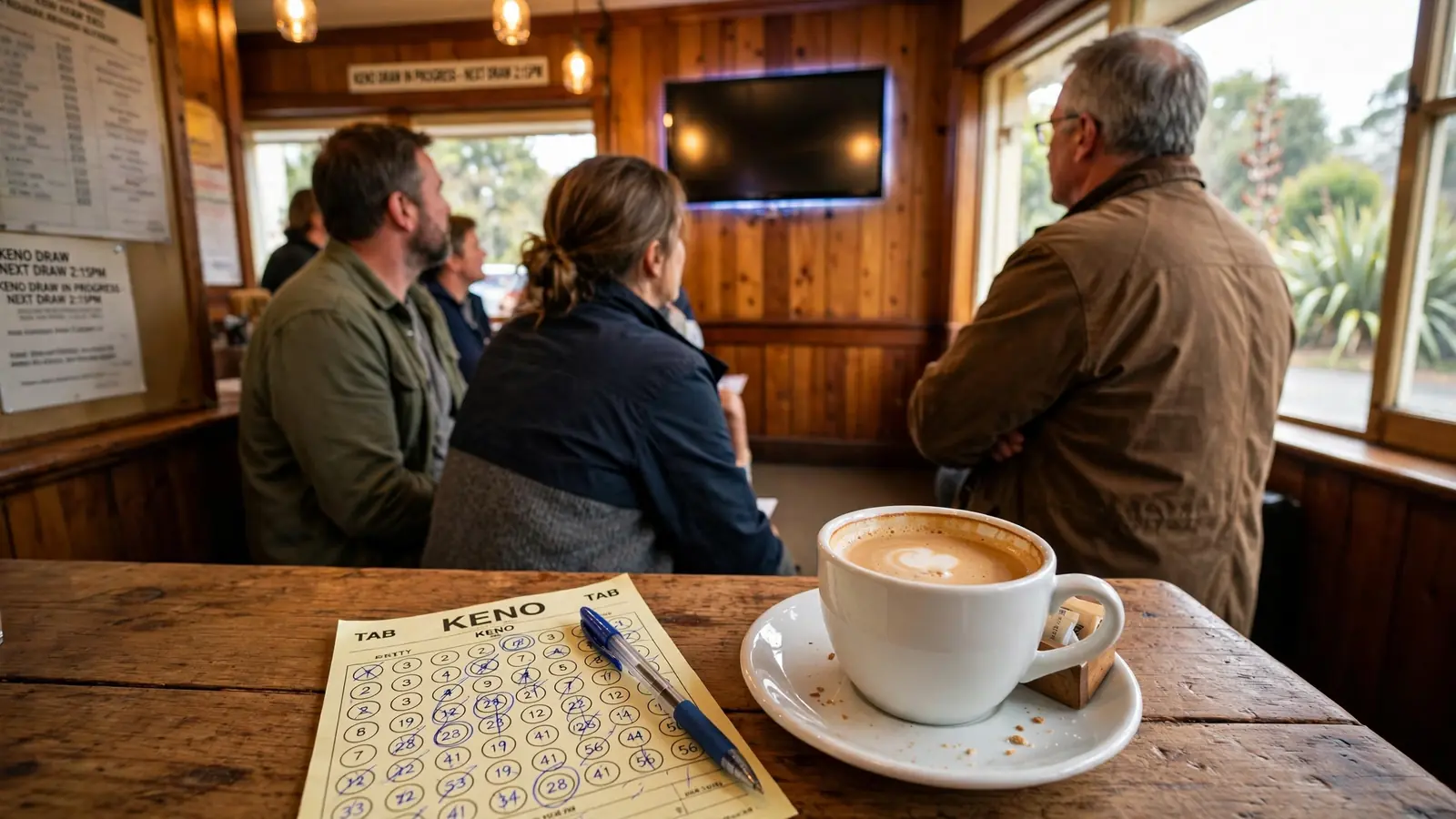
How a Keno Draw Works
Keno NZ is built around a simple draw: twenty numbers are drawn from a pool of eighty. That is the central mechanism behind the game. The pool defines the set of possible numbers; the draw produces a smaller set from it. Understanding that distinction makes the rest of the game easier to follow, without confusing the draw itself with the choices made on an entry or the way a prize is assessed.
The numbers are not drawn as a response to what players have chosen. A draw is a random event, not a comparison that adjusts itself to the entries already placed. The twenty numbers come from the pool of eighty, and the result stands on the draw’s own outcome. In practical terms, the same basic process applies whether a person thinks carefully about number choices or makes them without a pattern. The draw does not read intention.
That separation matters. From the counter side, I saw people treat the game as if a number that had appeared often had somehow earned another appearance, or as if one that had been absent was due. Those are familiar ways of reading a sequence, but they do not change how the next draw works. Keno draws are independent: the outcome of an earlier draw does not influence the probability of a number appearing in the next one.
Choosing where to play keno in New Zealand means checking what each operator can reliably tell you before you sign up. Use these brief notes as a reference point when considering your options.
-
Play Grand
- License
- Malta Gaming Authority, licence no. MGA/B2C/370/2017
Play Grand lists a Malta Gaming Authority licence, number MGA/B2C/370/2017. This gives you a specific licensing detail to consider when evaluating the operator.
-
Lamabet
- Payout speed
- 1-3 business days
Lamabet states a payout speed of 1–3 business days. That timing is a useful detail to weigh when considering the operator.
-
7Bit Casino
- License
- Tobique Gaming Commission, licence no. 0000091
7Bit Casino lists a Tobique Gaming Commission licence, number 0000091. The listed licence is the available fact to consider when assessing the operator.
-
BitStarz
- License
- Curaçao Gaming Authority, licence no. OGL/2024/165/0185
BitStarz lists a Curaçao Gaming Authority licence, number OGL/2024/165/0185. This provides a specific licensing detail for your assessment.
-
N1 Casino
- License
- Malta Gaming Authority, licence no. MGA/B2C/394/2017
N1 Casino lists a Malta Gaming Authority licence, number MGA/B2C/394/2017. This licensing information is a concrete point to consider.
-
Zotabet
- License
- 07017519840
- Payout speed
- 1-3 business days
Zotabet lists licence number 07017519840 and a payout speed of 1–3 business days. These are the available details to factor into your assessment.
-
Ricky Casino
- License
- Tobique Gaming Commission, licence no. 0000002
Ricky Casino lists a Tobique Gaming Commission licence, number 0000002. This gives you a specific licensing detail to consider.
-
Neospin
- License
- Tobique Gaming Commission, licence no. 0000064
Neospin lists a Tobique Gaming Commission licence, number 0000064. The listed licence is the available point of reference for evaluating the operator.
-
Wintino
- Payout speed
- 1-3 business days
Wintino states a payout speed of 1–3 business days. This timing is a useful detail to consider when assessing the operator.
Independence is easy to misread. It does not mean that results must look evenly spread over a short run, or that a particular pattern cannot appear. Random sequences can include clusters, gaps and repetitions across separate draws. A number may appear in one draw and then appear again in a later one; another may be absent for a period. Neither occurrence creates a debt that the next draw has to repay. There is no balancing mechanism in the stated rules of the draw.
The distinction is between what has happened and what can be inferred from it. A past result can be recorded accurately, but it cannot tell a player that a particular number is now more likely, or less likely, in the next independent event. Frequency tables may describe earlier outcomes. They do not turn those outcomes into instructions for a future draw. A record is a record.
The pool and the draw
It helps to picture the process in two stages. First, there is a fixed field of eighty possible numbers. Then twenty are drawn from that field. The result is therefore not a selection from every number that could exist, but from a defined pool. That is the structural answer to how Keno works in New Zealand: the game’s draw uses a known pool and returns a set of drawn numbers.

The word “set” is useful because the draw result is treated as the collection of numbers produced, not as a story about why each one appeared. The order in which numbers are displayed may be visually prominent, but the core mechanic described here is the twenty-number outcome. A display sequence does not provide evidence of a trend or a hidden order that can be exploited. It is still the result of a random draw.
The mechanics also explain why the same draw can be discussed in different ways without changing what happened. One account may focus on the eighty-number pool; another may describe the twenty numbers produced. Both refer to the same event. The pool is the range from which the draw is made, while the drawn numbers are its outcome. Keeping those terms separate avoids a common muddle: the pool is not the result, and the result does not rewrite the pool.
For anyone asking how to play Keno NZ, the first useful step is to understand this mechanism before considering any choices attached to an entry. The draw does not guarantee a particular result, and knowing how it is structured does not provide a method for predicting it. It simply clarifies what the game produces: twenty drawn numbers, selected at random from a pool of eighty.
There is no memory between draws. The previous outcome may be remembered by players, displayed in a results history or used to make a chart, but the next draw remains independent. I have found this is the point that gets lost when a string of results starts to look meaningful. A pattern can be visible in hindsight without having predictive force. Appearance is not influence.
That is the basic framework. The numbers are drawn from a defined pool, and every draw begins without being affected by the frequency of earlier results. Randomness does not promise a tidy pattern. It only means the next outcome is not determined by the last one.
How Many Numbers Need to Match to Win?
There is no single hit count that answers how many numbers must match in every Keno NZ game. The payout depends on two things together: how many numbers were selected and how many of those selections match the drawn numbers. A hit cannot be judged in isolation from the selection it belongs to.
That distinction is easy to miss. A player may focus on the number of matches and assume that the same hit count means the same result every time. It does not. A hit count is only one part of the calculation; the number of selections also matters. The relevant question is not simply “How many numbers matched?” but “How many were selected, and how many of those were hits?”
Players can choose between one and ten numbers in Keno. That gives the entry a range of possible selection sizes, but it does not make one choice a reliable route to a prize. Selecting more numbers changes the shape of the outcome: there are more selected numbers that could match, but there are also more selections against which the hit count is considered. More numbers on a line do not, by themselves, mean a better result.
I have seen this misunderstanding at the counter: the visible part of the result is the number of matches, while the less obvious part is how that result relates to the original selection. “More chances” is a sales-friendly phrase, but it leaves out the other side of the calculation. A larger selection changes the relationship between selection size and hits; it does not promise a return.
The same applies when only a small number of selections are made. A short selection can still produce hits, but the existence of a hit alone does not establish that a prize has been won. The outcome depends on the applicable payout rules for that selection size and hit count. Without those two details, a statement such as “one match wins” or “three matches are enough” would be misleading.
This is why a fixed answer to “How many numbers need to match to win Keno NZ tonight?” cannot be given without knowing the number of selected numbers and the relevant prize conditions. The draw’s result does not turn a hit count into a universal threshold. A result needs to be assessed against the entry’s selection, not compared with a single number that supposedly applies to every line.
What a hit count tells you
A hit count records how many selected numbers appeared among the drawn numbers. It is not a prediction, and it does not explain the payout on its own. Two entries with different selection sizes can show the same number of hits and still be assessed differently, because Keno payouts depend on both the hits and the number selected.
That relationship also explains why there is no sound shortcut for how to win Keno NZ. Choosing a particular set of numbers, or changing the size of the selection, cannot guarantee that the draw will produce a prize-winning result. Number choice describes the entry; it does not control the outcome.
DO
- Identify how many numbers were selected
- Count how many of those selections matched
- Assess the combination under applicable payout rules
DON'T
- Use past frequency as a shortcut for winning
- Assume a single hit count applies to all selection sizes
- Rely on "hot" or "cold" number trends
Searches for “hot” or most common Keno numbers often treat past frequency as a clue to what should be selected next. Frequency records may describe earlier results, but they do not make a number more likely to match in a later draw. A number that has appeared often is not due to appear again, and one that has appeared less often is not owed a turn. Tracking can organise past results. It cannot turn them into a winning method.
The practical reading is plain: first identify how many numbers were selected, then count how many of those selections matched, and assess that combination under the applicable payout rules. The hit count alone is incomplete. The selection alone is incomplete. Neither guarantees a prize.
“How much can you win playing Keno in New Zealand?” has the same dependency. A payout cannot be inferred merely from how many numbers were picked or from a headline hit count. Both details have to be considered together. Treating either one as a standalone answer creates false certainty.
I would not describe any selection as a “system” for winning. The word suggests control where there is only a choice of entry and a result to assess. A player can choose the numbers; the player cannot make those numbers match. That is the boundary between selecting a line and predicting its outcome.
So, the number needed to win is not one universal figure. It depends on the selected-number count and the hits recorded against it, under the payout rules for that combination. Any claim that one particular hit count guarantees a prize across all selections goes further than the game’s stated relationship supports. No fixed shortcut.

Keno Rules and Entry Costs in New Zealand
The practical rulebook is narrower than the name of the game suggests: a standard entry involves choosing numbers and setting a stake for a particular draw. The key decisions are made before the ticket is accepted. Once the scheduled draw time arrives, entry for that draw is closed.
That cutoff is a firm boundary, not a grace period. A selection made after the draw is due to begin cannot be treated as an entry for that draw. I regard this as the operational detail most easily missed: a ticket is tied to a specific draw, and the time printed or shown for it matters. Close enough is not the same as in time.
Number selection and stake
The distinction matters when comparing an ordinary Keno entry with an online game labelled Keno.
The stake is chosen per selection. Standard Keno offers these amounts: $1, $2, $3, $4, $5, $10, $20, $50 or $100. These are discrete choices rather than a freely entered amount. The ticket’s cost is therefore shaped by both the selected stake and the number of selections made; the listed amount is not a blanket price for every possible entry.
That wording can sound like a small technicality. It is not. In the counter workflow, the selection and the stake are separate decisions, and the cost attaches to each selection. A ticket with several selections should not be read as though its displayed stake necessarily describes the total cost. The entry details need to be considered together before submission.
I find this is where promotional shorthand can obscure the mechanics. “Choose your stake” sounds simple, but it leaves out the per-selection basis. The useful question is not merely which amount appears on screen or on a playslip, but what that amount applies to. The wording on the entry should be read as an instruction about the stake for each chosen selection.
When an entry is final
The entry deadline follows the draw schedule: sales for a draw stop when its scheduled start time arrives. There is no extra interval after that point to amend a selection or add a ticket to the same draw. The next available opportunity is tied to a later draw, not a late adjustment to the one already due.
In practical terms, a correctly chosen stake does not compensate for missing the cutoff. Nor does having a selection ready mean it has been entered. Until the ticket is accepted for the intended draw, it is only a proposed entry. That distinction is basic, but it is the difference between a choice on a screen or playslip and a valid draw entry.
The rules are easiest to keep straight when treated as three separate checks: the number-selection range for the version being played, the stake amount per selection, and whether the entry has been accepted before the scheduled draw time. None of these determines a result; they define the entry itself. Mechanics first. Result later.
Keno in New Zealand: Where and How It Is Played
Keno NZ can be entered through a physical lottery retailer or, where tickets are legally sold, through digital channels. Those routes are not interchangeable everywhere. A specialist affiliate review describes entry through an official lottery retailer, a mobile app or a website, but ties those options to the regions in which Keno NZ tickets may legally be sold. That territorial condition matters: a digital service being visible online does not, by itself, establish that tickets can be bought from every part of the country.

At a retailer, the transaction takes place at the counter. The player supplies the entry details and pays the stake through that outlet. This is the most direct route for someone who prefers a physical point of sale rather than an account or screen. Availability still depends on whether Keno tickets are legally sold in the relevant region; a retailer’s presence alone should not be treated as proof that every lottery product is offered there.
The digital routes described in the review are a mobile app and a website. They provide a way to submit an entry without visiting a counter, but the review’s regional qualification applies to these routes as well. It would be misleading to describe them as nationwide options without that qualification. Nor does the existence of an app mean that every mobile device or every online gambling service carries Keno NZ.
There is an important distinction between this lottery product and online casino gambling. They are not the same channel or regulatory category. New Zealand’s Department of Internal Affairs is the primary gambling regulator and oversees the online casino licensing framework. The Gambling Commission handles casino licence applications, decides those applications and approves changes to licence conditions. Those responsibilities concern casino licensing; they do not establish where Keno NZ tickets are sold or make a casino app a Keno entry point.
I have seen how wording such as “available online” can blur these boundaries. It may describe a route offered in a particular location, not a promise of access from every address, and it says nothing by itself about the other games on a platform. The practical question is narrower: whether the specific Keno entry route is offered where the ticket may legally be sold. Geography first.
The retailer, app and website options therefore describe different ways to place an entry, not different versions of the draw. A counter-based purchase and an online submission are access methods; neither changes what Keno NZ is. The channel also does not remove the regional restriction noted in the specialist review. For a clear account of access, the location condition needs to sit beside the list of channels, not in fine print beneath it.
That distinction is useful when comparing references to “New Zealand Keno” or “NZ Keno”. Such labels can refer to the same lottery game without showing whether the source is discussing a retailer, a web entry or a mobile app. The channel should be stated plainly, and any regional limit should remain attached to it. A short label is not a map of legal availability.
In practical terms, physical retail and digital entry are the routes described for Keno NZ, subject to the stated regional condition. The licensing roles of the Department of Internal Affairs and the Gambling Commission belong to the separate online casino framework. Keeping those categories apart avoids treating a general casino service as evidence of a lawful Keno ticketing option.
Daily Keno Draw Times
Keno NZ has four scheduled draws each day: 10 am, 1 pm, 3 pm and 6 pm. The times make the daily timetable easy to identify, but each one is a separate entry point with its own cutoff. A ticket has to be entered for the intended draw before that draw is due to begin.
The closing time is the scheduled draw time itself. For the 10 am draw, entry closes at 10 am; the same rule applies at 1 pm, 3 pm and 6 pm. There is no extra period after the listed time for adding an entry to that draw. A ticket submitted once the cutoff has passed cannot be treated as an entry for the draw that is already due to start.

That distinction is the practical detail often lost in a simple schedule. A list of draw times tells when the draws are planned; it does not mean entries remain open until after a result appears. The deadline belongs to the start of the draw, not to the moment someone checks its outcome. In my experience, that is where timing misunderstandings begin. A few minutes matter.
For anyone asking how to play daily Keno in New Zealand, the schedule answers only the timing part: choose the draw intended and make sure the entry is in before its stated start time. The times do not change the way a Keno entry is made, and they do not say anything about the chance of a particular result. They are simply the daily timetable and the boundary for entering each draw.
The gaps between the scheduled draws are not all the same, so it is safer to read the times individually rather than assume a repeating interval. The sequence is 10 am, 1 pm, 3 pm and 6 pm. Each listed time marks a draw and its own closing point. A missed cutoff means the relevant draw has begun; it does not extend because an entry was nearly submitted.
A compact schedule can therefore be written as:
- 10 am — entry closes when the draw is due to begin.
- 1 pm — entry closes when the draw is due to begin.
- 3 pm — entry closes when the draw is due to begin.
- 6 pm — entry closes when the draw is due to begin.
This is the full daily timetable. The useful habit is to treat the listed start as the deadline, rather than as a reminder to begin an entry. No grace period is part of the stated schedule. Short and exact.
How to Read a Keno Prize Table
A Keno prize table is a map from two pieces of information to a prize outcome: how many numbers were selected and how many of those numbers matched the draw. Neither figure works on its own. A hit count that has one meaning for a small selection may lead to a different outcome when more numbers were chosen.
The simplest way to read the layout is to find the row for the selected-number count, then locate the column or entry for the number of hits. The point where they meet shows the prize assigned to that combination. Labels and layout can vary, but the underlying comparison stays the same: selected numbers on one side, matched numbers on the other.
That distinction matters when comparing Keno prizes in New Zealand. A table is not a scale where every hit has a fixed value regardless of the original selection. The result depends on both the total selected and the number that match. More matches among the selected numbers correspond to a higher prize, but a hit count should always be read in the context of the selection row.
I have seen players focus on a single column and miss the row that changes its meaning. That is an easy way to misread a table. A prize shown beside a particular hit count is not a general payment for that many matches in every selection; it belongs to the relevant combination.

Read the intersection, not a headline figure
When a Keno prize table is presented, a large figure can attract attention before its conditions are noticed. The useful information is the exact entry for the selected-number count and hit count in question. A headline prize, if shown, describes an outcome within the table; it does not say what every ticket with a similar number of hits receives.
The same discipline applies when checking a table described as current. The word “today” does not change the structure of the calculation. The relevant question remains which selection and hit combination the displayed prize belongs to. If that connection is unclear, the figure cannot be applied confidently to a particular result.
A table also does not predict which numbers will be drawn or how many chosen numbers will match. It records the prize relationship for possible outcomes. The draw and the prize lookup are separate things: one produces the hits, the other shows what the matching combination pays.
What the table can settle
Used carefully, the table answers a narrow question: what prize corresponds to this selected-number count and this hit count? It can make the relationship between a ticket’s selection and its result legible, without turning the result into a promise.
The practical habit is simple: identify the selection first, then check the matching hit entry. Do not compare prize figures across different rows as though they describe identical outcomes. The selection changes the context.
That is the whole job of the table. No forecast.
Keno Payout Charts: What They Can and Cannot Show
A Keno payout chart is a lookup guide: it connects the number of selections on a line and the number of those selections that appear in the draw with the corresponding payout. Read across the relevant selection count, then find the hit count. The chart’s job is to show that relationship, not to tell a story about how likely a particular result is.
That distinction matters. A chart can make the payout rule easier to inspect, but it cannot identify which numbers will be drawn or promise that a line will reach a particular outcome. Each draw stands on its own. Past frequencies, a pattern that looks overdue, or a cluster of recent results does not change the chance of a number appearing next time.
I have seen “hot numbers” used as if they were a practical edge. The phrase sounds analytical; what sits behind it is a record of earlier draws, not a forecast. A payout chart is different: it describes what a given combination of selections and hits pays under the chart being used. It does not improve the combination or alter the draw.
The word “today” can make a chart seem more immediate than it is. A chart may describe the payout structure applicable to a game, while the result of today’s draw remains unknown until it is drawn. The date does not turn a payout lookup into a prediction. Nor should a chart from one version of a game be assumed to apply to another without checking that the selection and stake conditions match.

The practical reading is narrow but useful: identify the selection count, locate the hit count, and read the associated payout in the applicable chart. If the chart does not specify the conditions under which its figures apply, those figures cannot be interpreted safely in isolation. The relationship is conditional, not universal.
No forecast. Just a lookup.
Keno Winners, Results and Number-Tracking Tools
A Keno result is useful when read alongside the entry it relates to: the drawn numbers can be checked against the numbers selected on that ticket. A list of winning numbers on its own does not establish that a particular ticket won. The selection and the result have to be considered together.
When I look at claims about Keno winners in New Zealand, I separate a reported win from a general account of how the game works. A winner story may describe an outcome, but it does not show that the same numbers, or the same approach, will produce another win. The next draw is not influenced by earlier results.
Number-tracking tools can summarise past appearances, such as which numbers have appeared more or less often in a chosen record. That is a description of past draws, not a forecast. Each draw is independent, so a number appearing frequently in the past is no more likely to appear in the next draw on that account. Nor does a run of infrequent appearances make a number “due”. The record has no memory.
That distinction matters because frequency charts can look more predictive than they are. A chart may organise historical results neatly; it cannot turn those results into a reliable signal about a future draw. “Hot” and “cold” are labels for what has already happened, not properties that change the odds of what comes next. A tidy graph. Still only history.
Prize Claim Period
In New Zealand, there is a 12-month period to claim an uncollected Keno prize. After this period, the prize is forfeited and returned to the Prize Reserve Fund.
For prize claims, a specialist affiliate review reports a 12-month period to claim an uncollected Keno prize, after which the prize is forfeited and the funds return to the Prize Reserve Fund. Because this deadline is reported by that type of source and may be subject to change, it should not be treated as a permanent rule without checking the applicable claim terms. The practical point is not to leave a possible prize unverified: keep the ticket or entry details and establish the relevant claim conditions promptly.
A result check and a number tracker answer different questions. The first helps establish what happened in a particular draw; the second describes patterns in past results. Neither provides a dependable way to identify future winning numbers.
Online and Mobile Keno: Selection Differences
Online Keno can present a wider number-selection range than the standard game: one description allows selections from four to twenty numbers online, while standard Keno is described as allowing one to ten. Those ranges overlap, but they are not interchangeable. Published descriptions conflict on the rules, so the format matters when interpreting a selection screen. I would not assume that a number range shown for online play applies to a standard Keno entry.
The difference concerns what can be selected, not a promise of a particular outcome. A wider range changes the available choices; it does not make a result predictable. The practical point is to read the game’s own selection controls and rules together, rather than carry assumptions from one version of Keno into another. Small distinction. Real consequence.
Mobile access is a separate question from online selection rules. A specialist casino review reports that app availability and mobile game offerings vary between casinos. That is a description of variation, not a guarantee that any particular casino has an app or carries Keno on a phone. A mobile site, an app and a desktop version may not present the same games or controls.

For Keno NZ, digital play should therefore be understood as a channel whose options depend on the specific service, not as a single standard interface. The selectable range and the games available on mobile are separate details. Checking one does not establish the other.
Is There a Maximum Keno Win in New Zealand?
There is no single maximum figure that can be inferred from the Keno draw itself. A payout depends on two things: how many numbers were selected and how many of those numbers were drawn. The same hit count can therefore have a different payout when the selection size changes.
That distinction matters when a headline says “maximum win”. It may sound like a fixed feature of Keno, but the draw only produces a set of numbers. The prize comes from applying the relevant payout terms to a particular selection and its hits. Without those terms, a dollar ceiling would be guesswork.

I have seen this confusion at the counter: a player asks about the biggest possible prize, while the useful first check is which Keno entry and payout conditions are being discussed. A number pulled from a chart for one selection cannot automatically be treated as the ceiling for every entry. Nor does a high hit count alone establish a particular cash amount.
So the practical answer is conditional. The payout is determined by the selection-and-hit combination and the applicable prize schedule. A confirmed maximum amount should only be quoted alongside the terms that define it; otherwise, a precise figure creates certainty the game mechanics do not support.
This is a distinction between a result and a limit. Keno results describe what matched; a maximum-win claim describes the upper boundary of a payout arrangement. The two are not interchangeable. No guaranteed win follows from choosing more numbers or from expecting a particular combination to appear.

A careful account of a potential top prize therefore needs the relevant schedule and entry conditions, not just the game name. Keep the claim tied to those terms. That is the honest boundary.
How do you play Keno in New Zealand?
Choose numbers for an entry, then compare them with the 20 numbers drawn from a pool of 80. In standard Keno, you can select 1–10 numbers; online Keno allows 4–20. Payouts depend on how many numbers you selected and how many match.
What time is the Keno draw held?
New Zealand Keno draws take place four times daily: at 10 am, 1 pm, 3 pm and 6 pm. Entries close at the scheduled draw time.
Does a number being “hot” or “cold” affect its chances in the next Keno draw?
No. Each draw is independent, so a number’s past frequency does not change its chance of appearing in the next draw.
Do these numbers improve my odds?
No number pattern improves the chance of a number appearing in the next draw. Past results do not influence future draws.
Casino Games in New Zealand: Roulette, Blackjack & More
Content created by the «casinoguidenz.com» team