
I check the wheel before choosing a roulette table
 Available in US
Wheel layout, zero rules and payout maths shape the risks behind roulette choices, while no betting pattern can guarantee a result.
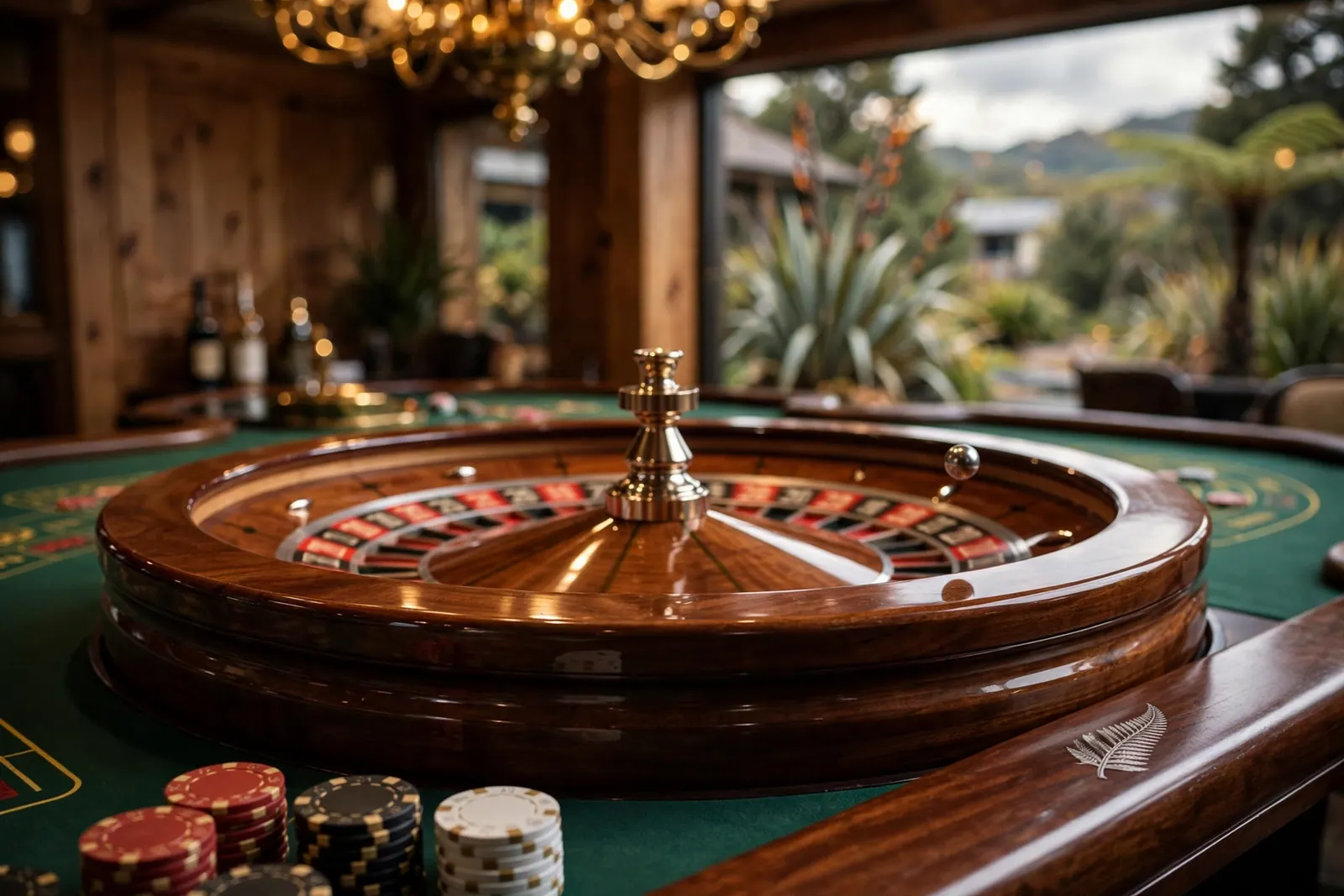
Start with the Wheel: Single Zero, Double Zero and French Rules
I start by checking the wheel, not the graphics or the name on the table. Roulette variants can look nearly identical on screen while carrying different layouts, and that changes the game’s underlying odds before a bet is placed.
European Roulette has 37 pockets: numbered pockets and a single zero. Its house edge is 2.70%. American Roulette adds a double zero, bringing the total to 38 pockets, and has a house edge of 5.26%. The extra pocket is not decoration. It gives the house a larger mathematical advantage, even though the familiar betting areas may make the two tables look much alike.
French Roulette uses the same single-zero layout as European Roulette. Its distinction is the rules attached to certain bets, including La Partage and En Prison. Those rules affect eligible even-money outside bets when zero appears; they do not change the wheel’s pocket count. That difference matters: a table can share a layout with another variant yet treat a particular result differently.
Choosing roulette sites in New Zealand means checking the details that matter to you before you play. This list offers a concise starting point for reviewing the available information on each operator.
-
Play Grand
- License
- Malta Gaming Authority, licence no. MGA/B2C/370/2017
Play Grand is listed with a Malta Gaming Authority licence, number MGA/B2C/370/2017.
-
Lamabet
- Payout speed
- 1-3 business days
Lamabet lists a payout speed of 1–3 business days.
-
7Bit Casino
- License
- Tobique Gaming Commission, licence no. 0000091
7Bit Casino is listed with a Tobique Gaming Commission licence, number 0000091.
-
BitStarz
- License
- Curaçao Gaming Authority, licence no. OGL/2024/165/0185
BitStarz is listed with a Curaçao Gaming Authority licence, number OGL/2024/165/0185.
-
N1 Casino
- License
- Malta Gaming Authority, licence no. MGA/B2C/394/2017
N1 Casino is listed with a Malta Gaming Authority licence, number MGA/B2C/394/2017.
-
Zotabet
- License
- 07017519840
- Payout speed
- 1-3 business days
Zotabet lists licence number 07017519840 and a payout speed of 1–3 business days.
-
Ricky Casino
- License
- Tobique Gaming Commission, licence no. 0000002
Ricky Casino is listed with a Tobique Gaming Commission licence, number 0000002.
-
Neospin
- License
- Tobique Gaming Commission, licence no. 0000064
Neospin is listed with a Tobique Gaming Commission licence, number 0000064.
-
Wintino
- Payout speed
- 1-3 business days
Wintino lists a payout speed of 1–3 business days.
When I compare options, “best” is not a label I take from a game title. The single-zero layout starts from a lower house edge than the double-zero layout, while French rules can further improve the position on eligible bets. That does not make every French table identical in practical terms: the posted rules determine what happens when zero lands.
A search for the best roulette game often points towards a variant, but the useful comparison is more precise: count the zero pockets, then read the rules that apply to the table. A supposed best strategy for a roulette game cannot make a double-zero wheel behave like a single-zero one. The layout is part of the price of play.
The distinction is easy to miss when the interface foregrounds colours, chips and animations. I learned to read the table rules first; a familiar name is not enough. Small difference. Real maths.
What a Bet Actually Pays—and What the House Keeps
A roulette bet has two separate measures: the amount returned when it wins and the game’s underlying house edge. The first is visible on the table; the second describes the mathematical cost built into the wheel over repeated play. Confusing them makes a generous-looking payout seem better than it is.
The house edge is the portion of stakes the game is mathematically structured to retain over time. On single-zero European Roulette, that edge is 2.70%. A bet on one number and a bet covering a group of numbers can have very different chances of winning and different payouts, yet on the same standard wheel they do not change that underlying edge. The bet changes the shape of possible outcomes, not the wheel’s advantage.

Payout percentage expresses the other side of the same relationship: the share of stakes expected to be returned over time. A specialist review reports a 97.30% payout percentage for European Roulette and 94.70% for American Roulette. Those figures correspond to the familiar single-zero and double-zero house edges, respectively. They describe long-run expectation, not a promise that a particular session will return that share. Short sessions can end far above or below it.
That distinction matters when a table advertises a “best payout.” The phrase may refer to the return attached to a specific winning bet, rather than the expected return across all stakes. A large payout can simply reflect a lower chance of landing the winning outcome. It does not, by itself, make the game more favourable. I have seen the headline number do the selling while the wheel layout carried the less attractive part of the deal.
Comparing the underlying cost
For a fair comparison, the wheel and its rules matter before the bet label. European Roulette’s single zero gives it a lower standard house edge than American Roulette’s additional zero. That difference applies across the game’s bets; choosing a different bet type does not erase it.
A specialist review gives American Roulette a payout percentage of 94.70%, against 97.30% for European Roulette. These are useful comparative figures when their stated game assumptions match the table being considered. They are not session forecasts, and the percentage does not say what any one spin will return. The practical reading is narrower: all else being equal, the lower house edge leaves less mathematical cost in the game.
European Roulette
37 pockets with a single zero and a house edge of 2.70%.
American Roulette
38 pockets including a double zero and a house edge of 5.26%.
French Roulette
Single-zero layout with specific rules like La Partage and En Prison.
Some roulette variants make comparisons less straightforward. A specialist review places 100/1 Roulette’s payout percentage within a range from 92.86% to 96.19%. The spread is a warning against treating a variant’s name as a complete description of its odds. Its rules and payout structure need to be checked together; a familiar label is not enough to establish the return.
For anyone asking what counts as the best odds at roulette, the sound starting point is the lowest house edge among the variants actually available, not the most eye-catching individual payout. The payout percentage can help express that comparison, but only when it refers to the same rules and is understood as a long-run measure. Better odds still mean an advantage for the house, not a reliable return for a player.
A roulette simulator can demonstrate how different bets produce different win-and-loss patterns. It cannot change the maths of the wheel, and a simulated run is not evidence that a real-money result is due. Useful for mechanics. Not a forecast.
So “best” has a precise but limited meaning here: a lower house edge makes the game less costly in expectation. It does not make any particular bet safe, nor does a higher advertised payout prove better value. The table’s rules determine the underlying cost; the chosen bet determines how sharply wins and losses may be distributed.

Even-Money Bets When Zero Lands
A bet on red, black, odd, even, high or low looks straightforward until the ball lands on zero. These are even-money outside bets: a win pays an amount equal to the stake, while zero is neither red nor black, odd nor even, high nor low. On a standard table, that outcome costs the full stake. La Partage and En Prison alter what happens to that bet, but only when the wager is eligible and zero appears.
I have seen “best bets” used as if a bet type can protect a stake from the wheel. It cannot. The useful distinction here is narrower: some French roulette rules soften the result of zero for even-money outside bets. They do not apply to every wager on the layout, and they do not turn a lost bet into a winning one.
La Partage: half returned
With La Partage, zero triggers a split outcome. Half of the stake on an eligible even-money bet is returned; the other half is collected. The bet does not win, but the loss is smaller than it would be under the ordinary treatment of zero.
That can matter when comparing the best roulette bets for someone who prefers outside wagers. The attraction is not a secret selection of red over black, or a number with special protection. It is the rule attached to the table. A straight-up number bet does not qualify, nor does a dozen or column bet: La Partage is limited to even-money outside bets.
The distinction is easy to miss in a game menu. A French label may describe the wheel or game, while the specific table rules determine whether La Partage is actually available. I check the rule text rather than relying on the title. Small print changes the settlement.
En Prison: the stake waits
En Prison treats zero differently. Instead of returning part of the stake immediately, the table carries the eligible even-money bet forward to the next spin. The original stake is effectively held rather than settled on the zero result.
If the next spin wins the carried bet, the original stake is returned, with no additional winnings. If that spin loses, the stake is collected. So the zero result does not produce an immediate half-refund, as it does with La Partage; it creates another unresolved spin for that stake.
That difference affects how the outcome feels, not what can be predicted. A player may prefer the certainty of getting half back at once, or may accept the carried bet under En Prison. Neither preference changes the next result. The stake remains exposed to the rules of the game, just in a different form.
When checking a table, I look for the exact wording around En Prison. It should be clear whether the rule applies to the chosen even-money bet and what happens on the following spin. “Zero protection” is advertising shorthand, not a full explanation. The settlement terms matter.
What counts as the bet
Even-money describes the payout category, not every wager that happens to cover many numbers. Red and black, odd and even, and high and low are the familiar outside bets in this group. La Partage and En Prison apply only to these eligible bets, and only when zero lands.

That makes the answer to “what bet has the best odds in roulette?” dependent on what is meant by best. A rule that reduces the loss on zero can improve the treatment of an eligible even-money bet, but it does not apply to a called number or to every outside wager. The practical choice is to match the bet to the table rule, not to assume that a favourable label covers the whole layout.
The same caution applies to roulette played online. The screen may make the wager and result easy to follow, but it does not establish which settlement rule is in force. I read the game’s rules before treating a French table as one with La Partage or En Prison. If the rule is absent, it should not be assumed.
Bonuses are a separate set of terms
A deposit bonus does not change how zero settles a roulette bet. Its conditions govern the bonus and any related winnings, not the wheel. Bonus money must be wagered 50X within 30 days; winnings from free spins must be wagered 50 times within 7 days. A withdrawal request voids all active or pending bonuses. Those terms can determine whether a promotion is useful, but they do not improve a bet’s chance of winning.
There is no universal best way to play roulette to win, and no even-money rule guarantees a result. La Partage returns part of an eligible stake when zero lands; En Prison holds that stake for another spin and may return it without winnings or collect it. Both are specific settlement rules. The wheel still decides the outcome.
Why Roulette Systems Cannot Predict the Next Spin
A staking system can decide how much to place after a win or loss. It cannot make a particular result more likely. I have seen these ideas presented as if a carefully arranged sequence of bets can turn roulette into a forecast. The distinction is simpler: a system controls the stake pattern, not the wheel.
Each spin is independent. The results already recorded do not alter the probability of outcomes on the next spin. A run of losses does not make a win more likely, and a run of wins does not mean another win is due. The sequence may feel meaningful because people naturally look for patterns, but it provides no prediction of what comes next.
That is why no betting system can reliably deliver a winning result. A progression that raises the stake after losses may recover earlier losses if a win arrives and the bankroll and table rules allow the sequence to continue. But it cannot ensure that the win arrives before the player runs out of money or has to stop. A progression that cuts stakes after losses can limit exposure, but it also cannot change the spin’s result. Different mechanics. Same uncertainty.
“Best” is doing a lot of work in claims about roulette systems. Sometimes it describes a plan that is easy to follow; sometimes it implies a dependable way to profit. Those are not the same thing. A structured approach can help keep bets consistent, but consistency is not prediction, and a staking plan does not make a losing result harmless.

The Martingale is a familiar example: increase a stake after a loss, intending that a later win will cover the accumulated losses and leave a gain. The arithmetic only works under assumptions that may not hold in actual play. A losing sequence can continue, while available funds and table limits constrain how far a progression can go. The next spin remains uncertain throughout. It is not a winning strategy.
Other systems arrange stakes around previous outcomes, alternate between larger and smaller bets, or prescribe when to stop. These may change the size and timing of wins and losses. They do not make past results influence future ones. A stop rule can end a session; it cannot convert the spins that occurred into a forecast of those that remain.
I have also seen the phrase “online winning system” used to make a staking chart sound like an edge. The chart is only a set of instructions. Online play does not make a sequence of results less random, and software that records earlier spins does not make those results predictive. A pattern on a screen is still a record of the past.
A useful test is to ask what the system actually changes. If it changes stake size, it changes exposure. If it changes when play stops, it changes session length. If it claims that a previous run alters the next result, it claims more than a staking plan can support.
Roulette outcomes are random, and every real-money bet can lose. No system removes that uncertainty or guarantees profit. I treat a betting plan as a way to organise decisions, not as a machine for calling the next spin. Risk only what can be afforded to lose. No exceptions.
Roulette Strategy Starts with the Rules, Not a Winning Pattern
I treat roulette strategy as a choice about conditions, not a method for calling the next result. The table’s label is only a starting point. The useful detail is the rule attached to the wager: it determines which bets qualify for special treatment and what happens when zero appears.
For even-money outside bets, French Roulette offers the most favourable terms because La Partage and En Prison alter the handling of a zero. The benefit is specific, not universal. A player choosing a different type of bet does not get the same protection simply because the table is French. A French table with La Partage can also lower the effective house edge for an eligible even-money wager when zero lands. That is a rule-based change to the cost of that bet, not a way to control the spin.
This is the practical answer to what counts as the best roulette strategy: first match the rules to the kind of bet being considered. A strategy that relies on a rule the table does not offer is just a plan built on the wrong terms.
Before placing a wager, I would check three things:
- Which bets qualify? La Partage and En Prison apply to even-money outside bets, not to every wager on the layout.
- What happens after zero? The table rules determine whether the bet is treated differently, so the wording matters.
- Does the rule apply at this table? A game’s name does not guarantee that every table uses the same conditions.
That last check is easy to skip. “French” can sound like a complete description, but the table’s displayed rules are what settle the point. I have seen the label do more persuasive work than the small print. Read the small print.
A broad spread of bets is not automatically a better spread. Adding more positions changes how the stake is distributed; it does not turn the rules into an advantage or make a result certain. The sensible comparison is between the actual conditions and the bets those conditions cover—not between a compact layout and a crowded one.
The same discipline applies to every roulette variant. A rule may improve the terms for a particular bet, while leaving other bets untouched. It is therefore possible for a table to look attractive in general and still be a poor fit for the wager being considered. The decision should follow the rule, not the name, colour scheme or promotional description.
There is no pattern that makes roulette predictable. Outcomes are random, and every real-money bet can lose. A rules-based approach can clarify the terms and avoid mistaken assumptions; it cannot guarantee a return. I would keep the stake within what can be afforded to lose. A clear limit matters more than a clever-looking arrangement.
- Confirm which bets qualify for special rules like La Partage.
- Check the exact settlement terms for the zero result.
- Verify if the specific rule is active at the chosen table.
- Set a clear spend limit that you can afford to lose.
Roulette Apps: The Game Matters More Than the Icon
A roulette app is a way to reach a game on an iPhone, iPad or Android device. The icon, screen design and app-store description do not determine how the wheel works. The rules shown for the selected table do. I have seen attractive packaging make a game feel more distinctive than it is; the detail that matters is still the pocket layout and the rules attached to the spin.
A free-play version can be useful for learning where controls sit and how a roulette table presents bets. It should not be confused with evidence about real-money results. A practice screen may use the same visual layout as another game while offering different rules, and a smooth animation says nothing about the chance of a result. The device changes the interface, not the underlying probabilities.
On a small screen, the practical issue is whether the full table information can be inspected before play. Important details should be visible or accessible: the roulette variant, the wheel layout, the available bet types and any special rules. If those details are hidden behind a menu or a compact help panel, the game may be harder to assess on a phone than on a larger screen. That is a usability concern, not a reason to assume the game has better or worse odds.
The same distinction applies when choosing a roulette app for an iPhone or an Android device. A responsive interface may make placing and reviewing bets easier, but it cannot make a number more likely to appear. Roulette spins are independent: earlier results do not change the probability of the next outcome. A history panel can record what has happened; it cannot turn that record into a forecast.

I would treat “best” as a question about fit, not a promise of results. Does the interface make the rules legible? Can the selected game be identified before a bet is placed? Is it possible to review the table information without losing track of the selection? Those checks are more useful than judging an app by its icon or by visual effects.
An iPad’s larger display may make controls and table labels easier to read, while a phone can make the same information feel crowded. Neither device changes the game. Free play can help with navigation, but real-money roulette carries a different consequence: every bet can lose. Random outcomes remain random on any screen. Do not risk more than can be afforded to lose.
Roulette in New Zealand: Bonuses, Licensing and the Rules Behind the Offer
A roulette bonus is not just extra balance. It is a set of conditions attached to a promotion, and the advertised headline can leave out the part that determines whether the offer is usable. Eligibility, wagering requirements, expiry, game contribution and withdrawal restrictions may all apply. I treat the terms as part of the offer itself, not fine print to inspect after a deposit.
For bonus money, the required term is 50X wager the bonus money within 30 days. Winnings from free spins carry a separate condition: they must be wagered 50 times within 7 days. These are not interchangeable clocks or balances. A promotion can also specify how roulette contributes towards wagering, so the presence of roulette in a game menu does not establish that every roulette stake counts in full. The applicable contribution and the time limit need to be read together.
Bonus Requirements
For bonus money, you must wager the amount 50X within 30 days. Winnings from free spins must be wagered 50 times within 7 days. Note that a withdrawal request will void all active or pending bonuses.
Withdrawal terms matter just as much. A withdrawal request voids all active or pending bonuses. That can change the value of an offer even when its wagering condition appears achievable: withdrawing is not simply moving cash out while leaving the promotion untouched. The rule may apply to an active offer or one still pending, so the status of a bonus matters before a request is made. No surprise there.
Who regulates online casino gambling
New Zealand’s regulatory position is changing under the Online Casino Gambling Act 2026, which came into force on 1 May 2026. It establishes the country’s first domestic licensing regime for online casino gambling. The Department of Internal Affairs oversees the licensing framework and is the primary gambling regulator. The Gambling Commission handles casino licence applications, determines them, issues online casino licences and approves changes to licence conditions.
That division of work is worth understanding. A reference to the Department of Internal Affairs does not mean it performs every licensing decision itself; the Commission has the specified application and licensing responsibilities. For anyone assessing a claim about regulatory oversight, the name of the body and the role being claimed should match.
The change does not mean every online casino serving New Zealand is already operating under a domestic licence. The Act provides a transition from 1 May 2026 to 1 December 2026. Providers that were already serving people in New Zealand before the Act came into force may continue during that window, subject to the transitional provisions. Providers that have not applied for a licence must cease conducting online casino gambling in New Zealand by 1 December 2026. The full licensed regime is not expected to be fully operational until 2027, and unlicensed operation is expected to become an offence around mid-2027.

Before the new Act, online casinos could not be based in New Zealand under the Gambling Act 2003, while offshore online casino gambling was not licensed or supervised by a New Zealand regulator. A customer using an offshore website in that period had no domestic government recourse. The new framework changes the regulatory path, but it does not turn every existing site into a licensed provider overnight. During the transition, advertising online casino gambling to people in New Zealand is prohibited. Claims about a licence should therefore be considered against the timing and transitional rules, not treated as a decorative badge.
Licensed operators must implement stricter age and identity verification systems. Operators without a licence may face enforcement action and fines of up to NZ$5 million. These are regulatory consequences for providers, not a reason to assume that a bonus promotion itself demonstrates that an operator is licensed.
Reading an offer without mistaking it for value
A phrase such as “best roulette bonus” is marketing language, not a measure of what can be withdrawn. The practical reading starts with the eligibility criteria, then checks how the wagering requirement applies to roulette, when the offer expires, and what happens if a withdrawal is requested. A promotion may look generous while its game contribution or withdrawal condition makes it unsuitable for the way the balance is intended to be used.
Do
- Match the bet type to the specific table rules.
- Read the small print regarding bonus eligibility.
Don't
- Assume a 'French' label guarantees La Partage is available.
- Mistake a marketing headline for actual mathematical value.
I have seen the headline do its job while the terms do the accounting. The useful comparison is not between bonus labels but between the conditions attached to them. A roulette offer can be evaluated on those terms without treating it as a recommendation or assuming that an app, a system, or a promotional balance changes the underlying game. Bonuses are conditional funds. They are not a licence, and they are not protection against loss.
Numbers on the Wheel Do Not Become Due
A number that has not appeared for a while can feel overdue. One that has appeared repeatedly can seem “hot”. Neither history changes the chance of the next result. Roulette spins are independent: the wheel does not remember what landed before, and a previous run does not make a particular pocket more or less likely on the next spin.
I used to see number selection treated as if it were a reading of the wheel. A player would scan the recent results, mark the numbers that seemed active, then put more weight on them. That can make a session feel deliberate, but it does not make those selections predictive. The same applies to a number that has been absent: waiting does not build up a claim on the next spin.

There is no best number in roulette in the sense of one pocket having an advantage because of its recent history. A chosen number may win, but that result would not prove it was a better choice. Nor does a list of “best numbers” alter the underlying randomness. The distinction matters: preference can guide which bet is placed, but it cannot change what the wheel is likely to produce.
Wheel-based called bets can also be misunderstood at the table. Their groupings follow where numbers sit around the wheel, rather than where they appear on the betting layout. That is a way of describing a set of wheel positions, not a signal that those pockets are due. The felt layout is arranged for placing bets; it is not a map of the wheel’s physical order.
I separate those two ideas when checking a called bet: what positions it covers, and what the player believes that coverage can do. The first is a matter of rules and layout. The second is often a story built around past results. It may help organise a selection, but it cannot forecast the next spin.
A number can be chosen for any personal reason. The outcome remains random, and every real-money bet can lose. No pocket owes a return.
Choosing Roulette Plays Without Treating Them as Guarantees
When I assess a roulette play, I separate the decision from the sales language around it. “Best” can mean a bet that is easy to follow, a game with rules the player understands, or a stake that fits a fixed entertainment budget. It does not mean a selection that can secure a result. Every real-money bet can lose.
A practical check before placing a bet is whether the choice is clear on its own terms:
- Know what is being selected. A bet on a colour, a group of numbers or one number has different conditions for winning and different returns. The label on the betting area is not a substitute for knowing how the game settles it.
- Read the table rules. The same-looking play can be affected by the wheel variant and any special rule attached to the table. The useful comparison is the actual rules displayed for that game, not a claim that a particular selection is “safe.”
- Set a spend limit in advance. Treat the stake as money that may be lost, and do not risk more than can be afforded to lose. A limit is a boundary, not a prediction of how long a session will last.
- Keep the decision simple. A play should be understandable before the spin, without adding extra bets because of what happened earlier or because a feature is presented as a “hot” opportunity.
I have seen attractive labels do quiet work: they make a familiar bet feel newly reliable, while leaving the underlying uncertainty untouched. A neat layout, a confident name or a recent run of results does not turn a wager into a dependable choice. The useful question is not which play promises the most, but whether its rules and possible loss are understood before the stake goes down.
For New Zealanders comparing roulette games, the strongest practical choice is one that can be evaluated without relying on a winning story: clear rules, a stake within the player’s means, and no assumption that a result is owed. That is a sensible way to choose among plays, not a method for controlling the wheel.
If a session stops feeling like entertainment, stepping away is more useful than increasing a stake or trying to recover losses. No roulette selection changes the basic uncertainty of a real-money wager. The boundary matters.
Roulette Tactics Are Risk Decisions, Not Ways to Lock In a Win
The phrase “best roulette tactics” can make a method sound like an advantage hidden in the layout. In practice, a tactic is a way to decide how much to stake, how to organise play, or when to stop. It can shape the size and pace of risk. It cannot turn a random game into a predictable one.

I have seen the distinction get blurred in promotional language. “Controlled” play may simply mean that stakes are planned in advance; “bold” play may mean larger exposure. Neither label changes what the wheel can produce. Roulette spins are independent, so the results already seen do not alter the probabilities on the next spin. A streak is a record of what happened, not a signal that a particular outcome is now more likely.
That is why there is no best tactic to win in roulette in the sense of a repeatable method that secures profit. A staking pattern can change how a run of results affects a balance, but it cannot guarantee that the run will end favourably. Every real-money bet can lose. A plan is not protection.
The useful test is less glamorous: does the tactic make the risk understandable before the bet is placed? A fixed stake, for instance, may make exposure easier to track than changing the amount in response to emotion. A stopping point can prevent a session from expanding simply because an earlier result was disappointing. These are boundaries, not winning mechanisms. They do not alter the outcome or promise that a balance will be preserved.
Claims built around a “sure” sequence deserve particular care. The certainty belongs to the sales pitch, not the game. When a tactic depends on a previous spin making the next one more favourable, it rests on a false premise. When it asks for larger stakes to recover losses, it can increase the amount at risk without improving the chance of recovery.
My practical conclusion is plain: use tactics to contain exposure, never to justify it. Do not risk more than can be afforded to lose. Randomness remains. No lock-in.
Casino Games in New Zealand: Roulette, Blackjack & More
Content created by the «casinoguidenz.com» team