
Know the rules before choosing where to play
 Available in US
The guide separates offshore access from local licensing and explains venue hours, bonus conditions, age limits and self-exclusion.
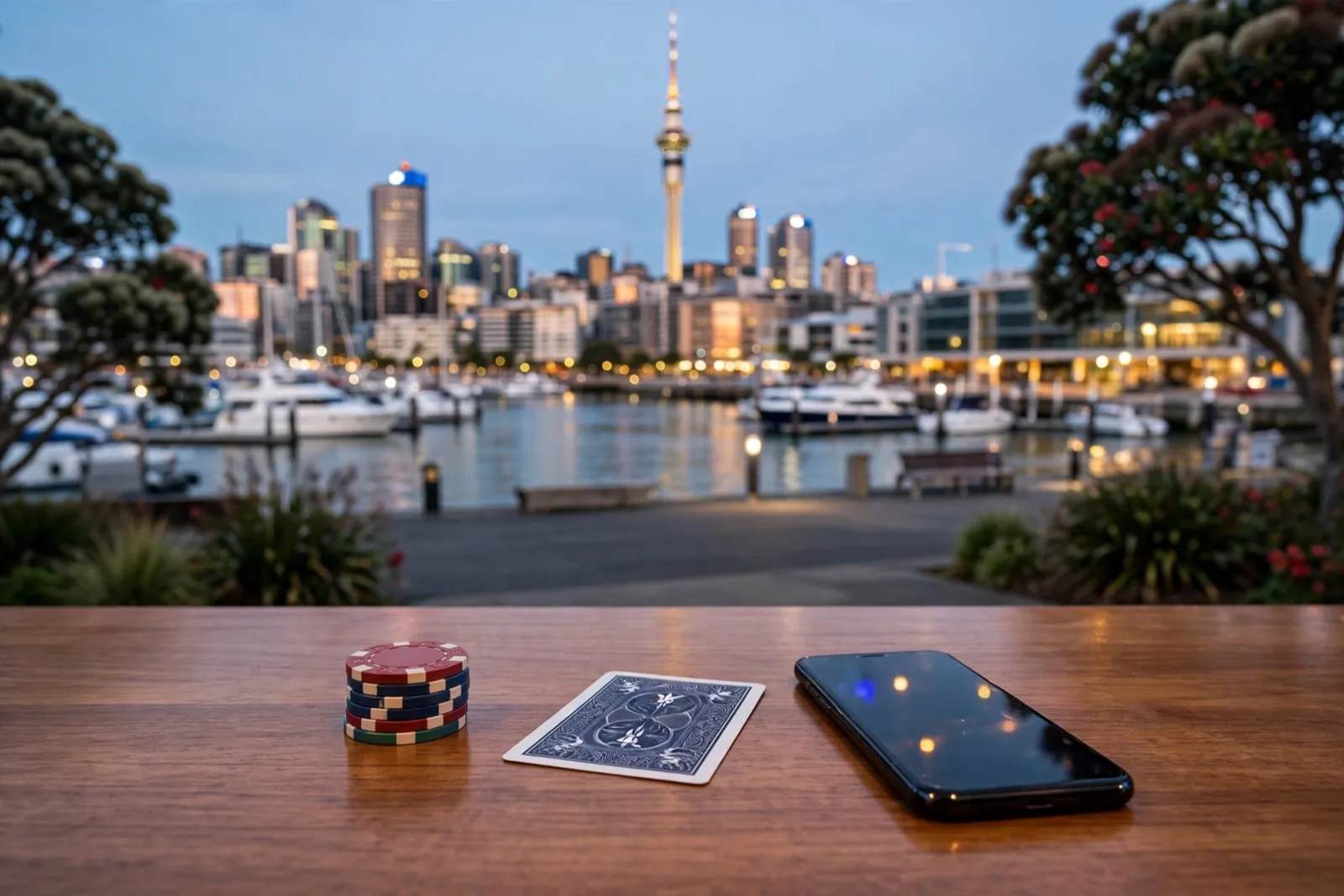
Online Casino Access in New Zealand: What Changes in 2026
The legal position has two parts that are easy to confuse: where an online casino can be based, and whether someone in New Zealand can access an overseas site. The Gambling Act 2003 does not permit an online casino to be established in New Zealand. That restriction on domestic operators has not, by itself, made it illegal for New Zealanders to play on offshore sites.
That distinction does not mean offshore gambling previously carried the same protections as a locally regulated service. Before the new law, online casinos operating from outside the country were not licensed or supervised by a New Zealand regulator. A player using one had no domestic government recourse if a dispute arose. Access and regulatory oversight are separate questions.
The change arrived on 1 May 2026, when the Online Casino Gambling Act 2026 came into force. It creates New Zealand’s first domestic licensing framework for online casino gambling. The Department of Internal Affairs is responsible for allocating licences, with the legislation providing for no more than 15. The change is not a blanket approval for every overseas operator already taking New Zealand customers. It is a move from an unregulated offshore market towards a controlled local system.
Choosing an online casino while in Auckland calls for checking the details that matter to you before signing up. This list offers a concise reference to the information available for each operator.
-
Play Grand
- License
- Malta Gaming Authority, licence no. MGA/B2C/370/2017
Play Grand lists a Malta Gaming Authority licence, number MGA/B2C/370/2017.
-
Lamabet
- Payout speed
- 1-3 business days
Lamabet states a payout speed of 1–3 business days.
-
7Bit Casino
- License
- Tobique Gaming Commission, licence no. 0000091
7Bit Casino lists a Tobique Gaming Commission licence, number 0000091.
-
BitStarz
- License
- Curaçao Gaming Authority, licence no. OGL/2024/165/0185
BitStarz lists a Curaçao Gaming Authority licence, number OGL/2024/165/0185.
-
N1 Casino
- License
- Malta Gaming Authority, licence no. MGA/B2C/394/2017
N1 Casino lists a Malta Gaming Authority licence, number MGA/B2C/394/2017.
-
Zotabet
- License
- 07017519840
- Payout speed
- 1-3 business days
Zotabet lists licence number 07017519840 and a payout speed of 1–3 business days.
-
Ricky Casino
- License
- Tobique Gaming Commission, licence no. 0000002
Ricky Casino lists a Tobique Gaming Commission licence, number 0000002.
-
Neospin
- License
- Tobique Gaming Commission, licence no. 0000064
Neospin lists a Tobique Gaming Commission licence, number 0000064.
-
Wintino
- Payout speed
- 1-3 business days
Wintino states a payout speed of 1–3 business days.
A specialist review describes overseas-licensed operators serving New Zealand customers as operating in a grey area while the government moves to regulate the market. That wording needs context: the law now in force sets out a transition, rather than making the full licensing system operational overnight.
Providers that were already serving people in New Zealand before the Act took effect may continue during the transition, which runs from 1 May to 1 December 2026. The permission is time-limited. From 1 December, an operator without a valid licence cannot continue offering online casino services to New Zealanders; providers that have not applied must also stop by that date. If an application is declined, the provider must leave the market and cease those operations.
The full licensed regime is not expected to be fully operational until 2027. The transition therefore matters: the law has changed, but the market is still moving from its earlier arrangement to a system in which providers must meet New Zealand’s licensing requirements. Unlicensed operation is expected to become an offence around mid-2027, and the regime provides for enforcement against operators, not a new penalty for players simply using an offshore site.
I find it useful to separate three things: a site’s ability to load, its legal status as a provider, and the protection available if something goes wrong. A working website only answers the first. Under the previous arrangement, offshore services were accessible, but there was no New Zealand regulator overseeing them. The new framework addresses provider oversight; it does not turn every overseas licence into a New Zealand licence.

The transition also changes what “available in New Zealand” can mean over time. A provider may be able to continue temporarily because it was already operating here, while still needing to meet the conditions for entry into the licensed system. The government’s intention is to bring online casino services under local rules, not to preserve an open-ended route for offshore operators without approval. The distinction is regulatory, not simply geographic.
For players, the law’s introduction does not make recreational gambling winnings taxable. New Zealand does not tax those winnings, whether the operator is based locally or overseas. That tax treatment is separate from the operator’s licensing position and does not resolve disputes with an offshore business.
Casino access also has an age boundary: casino gambling areas in New Zealand are restricted to people aged 20 and over. That requirement is distinct from the location of an online operator and from the transition dates. The main change in 2026 is the beginning of domestic oversight, with a defined period for existing providers and a later move to the full licensing regime. Transitional, not permanent.
SkyCity Auckland: A Land-Based Casino in the City Centre
SkyCity Auckland is a physical casino in the centre of the city, at the corner of Victoria and Federal Streets. It opened there on 2 February 1996. That address and history make it a recognisable part of Auckland’s central landscape, but the useful distinction is not simply between an old venue and a newer one. It is between casino gaming inside a licensed casino and gambling machines in other kinds of premises.
In everyday conversation, people may use “pokies” for machines in both settings. The word describes the experience, not the regulatory category. Casino gaming machines operate within a licensed casino such as SkyCity. Class 4 machines, by contrast, are found in pubs and clubs. The setting matters: the machines may look similar, but they do not sit under the same type of venue licence.
That distinction is easy to miss when the conversation is about finding a casino in Auckland. A pub or club with machines is not another casino, even if it offers electronic gaming. The city’s casino venue is a specific kind of licensed operation; Class 4 gambling takes place in a different environment. I find it clearer to begin with the premises and licence, rather than with the appearance of the machine. Similar screens do not mean the same category.
SkyCity Auckland’s central location makes it a straightforward point of reference for people discussing land-based casino gambling in New Zealand. It is not a label for every place in Auckland where gambling machines can be found. Nor should a search for “Auckland casinos” blur the difference between a casino venue and a pub or club operating Class 4 machines. The distinction is practical as well as legal: the venue tells you what kind of gambling operation you are dealing with.
The age boundary is also important at the venue level. Casino gambling areas in New Zealand are restricted to people aged 20 and over. That is the minimum age for casino gaming, not a general description of who may enter every part of a building or visit the surrounding city-centre area. The restriction applies to the casino gambling area itself.

SkyCity has a further connection to the online market, but it is a specific one. Under the Online Casino Gambling Act 2026, SkyCity alone holds an online casino licence tied to its land-based operation. That link is worth noting because it joins a familiar physical venue with the new online licensing framework. It does not make the casino floor and online casino gaming the same service, and it does not turn every offshore website into an extension of the Auckland venue.
The relationship is best understood as a licensing connection, not as a claim that the online and land-based experiences are interchangeable. A person visiting the casino is dealing with a venue at Victoria and Federal Streets; someone using an online service is engaging with a digital operation under a separate framework. The shared operator connection matters, but the form of play and the setting remain different.
That is where promotional language can blur the picture. “Casino” may be used broadly in casual speech, while the legal categories are more precise. A machine in a pub or club does not become a casino gaming machine because it resembles one, and an online service does not become the physical Auckland venue because the same operator has a connection to both. The label alone is not enough. The setting and the licence tell the fuller story.
When I explain the difference, I start with three questions: where the gambling takes place, what kind of operation is authorised there, and whether the activity is part of a land-based casino or another gambling setting. That approach avoids treating every machine as equivalent and keeps SkyCity Auckland in its proper context: a city-centre casino with a defined physical location and a distinct place in the online licensing framework.

For a visit, the address is the corner of Victoria and Federal Streets. For understanding the market, the more useful detail is the distinction between casino gaming machines and Class 4 machines in pubs and clubs. One is not simply another name for the other. Different setting. Different category.
Auckland Casino Opening Hours and Holiday Closures
SkyCity Auckland is listed as operating around the clock, every day of the week, with three stated holiday exceptions. The operator’s published opening-hours information gives the regular schedule as 24 hours a day, seven days a week. For an ordinary day, that means the casino does not have a standard evening closing time.
The exceptions matter when a visit falls on a public holiday. SkyCity Auckland closes on Christmas Day and Good Friday. On Anzac Day, the stated closure runs from 3am until 1pm. Outside those periods, the published schedule is continuous. This is the clearest answer to whether the Auckland casino is open: it is listed as open at all hours, except for those named closures.
The holiday exceptions
Christmas Day and Good Friday are full-day closures in the stated schedule. Anzac Day is different: the closure covers the morning, from 3am to 1pm. That distinction is useful for planning a visit around the holiday, particularly if travel would begin early. The schedule does not describe Anzac Day as a full-day closure.
The times are local venue times. The Anzac Day closure begins in the early hours, so it crosses the boundary between the previous evening and the holiday date. A visit late on the preceding night should not be treated as uninterrupted access into the morning.
I have learned to read opening hours as operating information, not as a promise that every part of a venue is available in precisely the same way at every moment. The published hours establish when the casino is open or closed; they do not specify the hours of individual services or facilities. Keep the distinction clear. Open does not describe every detail inside.
Planning around the schedule
For a routine visit, the stated 24/7 operation means there is no regular nightly closing to plan around. The practical exception is the holiday calendar. Christmas Day and Good Friday are listed as closures, while Anzac Day has a defined morning closure. A schedule change would affect the visit even though the venue otherwise operates continuously, so holiday plans should be based on the operator’s current opening-hours information.
The published hours are venue-specific. They refer to SkyCity Auckland, not to every gambling venue in the city. They also do not establish the opening times of nearby restaurants, bars or other facilities. Those details are separate from the casino’s operating schedule.
Casino gaming areas in New Zealand are restricted to people aged 20 and over. That requirement applies to entry to the gaming areas, regardless of whether the visit is during ordinary hours or around a holiday closure.
The useful takeaway is straightforward: SkyCity Auckland is listed as open continuously through the week, but it closes on Christmas Day and Good Friday, and from 3am to 1pm on Anzac Day. For holiday travel, that narrow timing detail matters. Check the operator’s published hours before setting out, especially when the visit depends on the Anzac Day morning opening.
Free Spins and No-Deposit Offers: Read the Wagering Terms First
A “free” spin or no-deposit bonus describes how an offer is entered, not what can be withdrawn. The promotional label may mean that no payment is needed to receive a benefit, but it does not establish that any resulting balance is cash-ready. The terms attached to the offer determine what the benefit is, how it can be used and what must happen before a withdrawal is possible.
I have seen the headline do most of the selling while the conditions do the practical work. A large amount beside “free money” can look like a cash credit. It may instead refer to bonus funds with restrictions, or to a stated value attached to a set of spins. Those are not interchangeable. The label is the pitch; the rules define the transaction.
What a free-spin offer actually gives
A free spin is a chance to play a specified game under the promotion’s rules. It is not the same as receiving the spin’s displayed result as unrestricted cash. If a spin produces a win, the terms may say how that result is credited and whether it remains subject to wagering requirements. Until those requirements are met, the resulting balance may not be withdrawable.
The distinction matters because “100 free spins” tells little on its own. The number does not explain which game is eligible, how the spins are issued, whether they must be used in a particular sequence, or what happens to any winnings. Those details belong to the offer conditions. If they are not clear, the headline cannot fill in the gaps.
A no-deposit offer also needs to be read as a defined promotion, not as a promise of cash without conditions. “No deposit” describes the absence of a deposit requirement to claim that particular offer. It does not, by itself, cancel other requirements attached to bonus funds or winnings. That is the small print doing its intended job.
The wagering basis changes the meaning
Wagering requirements can be calculated against bonus funds alone or against the deposit plus bonus. That difference changes the amount of play required before funds become eligible for withdrawal. With a no-deposit offer, the terms still need to state what balance is subject to wagering and which activity counts towards completing it.
DO
- Check the full terms and conditions for any promotional offer.
- Verify the wagering requirements and the base they are calculated against.
- Confirm the specific games that contribute to the turnover.
DON'T
- Assume a "free" bonus is immediately withdrawable as cash.
- Rely solely on the headline number or value advertised.
- Ignore the specific rules regarding game contribution rates.
I find it useful to separate three things that promotional copy often puts close together: the advertised value, the balance credited to the account and the amount that can eventually be withdrawn. The first is a headline. The second is governed by the offer’s mechanics. The third depends on satisfying the applicable conditions and any other withdrawal rules.
A “$150 free no-deposit” claim, for instance, should not be read as a statement that $150 is immediately available to cash out. The figure may describe the promotion’s stated value, while the terms determine whether the benefit is bonus credit, spins or another form of restricted play. The same applies to claims framed as free money: wording does not override the rules.
Read the conditions before valuing the offer
Before treating a promotion as useful, check the full terms for the parts that define it:
- What is credited: spins, bonus funds, or another benefit?
- Which games or activity qualify?
- What wagering requirement applies, and is it based on bonus funds or a combined balance?
- Are there restrictions on how the benefit can be used or withdrawn?
- What must be completed before a withdrawal can be requested?
These are not interchangeable details. A promotion can sound generous while leaving its practical value dependent on conditions that are easy to overlook. If the terms do not explain how winnings from free spins are treated, or what balance the wagering rule applies to, the headline is not enough to judge the offer.
The same care applies when a promotion advertises “100 bonus” or “100 free spins” without making the form of the benefit prominent. A number can refer to a promotional credit or a quantity of play; it is not evidence of an equivalent cash amount. I have learned not to compare offers by their biggest displayed figure. First establish what the figure measures.
A deposit match is a different structure from a no-deposit offer: it is tied to making a deposit. Some specialist reviews describe new-account packages that combine matched deposits with free spins, but that does not make those spins a no-deposit benefit. The promotion’s own terms still determine how each part works. Keep the categories separate.
The useful question is not whether an offer says “free.” It is what the account receives, what conditions attach to it, and what must be completed before any balance can leave the account. Until those points are clear, the advertised amount is only a label.

How to Compare No-Deposit Bonus Value Without the Headline Number
A no-deposit bonus is often presented as a simple amount, but that figure does not show how much play is required before any winnings become withdrawable. The useful comparison is between the amount offered and the conditions attached to it. I have seen the headline do most of the selling; the terms do the actual accounting.
The central calculation is the wagering requirement. It sets the turnover needed before a bonus can be cleared, and the base for that calculation matters. A requirement applied to bonus funds alone produces a different total from one applied to the deposit and bonus together. With a no-deposit offer, the wording still needs to be read carefully: the operator’s definition of the qualifying balance determines what is multiplied.
A specialist review describes one illustration in which a 40x requirement applies to a NZ$30 deposit-plus-bonus total, creating a turnover target of NZ$2,400 or more. That is an example of how the calculation can work, not a standard term for no-deposit bonuses. The multiplier on its own is not enough to judge the offer; the calculation base has to be known as well. Same multiplier, different base, different workload.

Why game contribution changes the comparison
Turnover is not necessarily credited equally across every game. Pokies commonly count in full towards wagering, while blackjack and other table games may contribute much less. A lower contribution means more actual play may be needed to produce the same credited turnover.
The descriptions of table-game contribution do not fully agree. One account says these games may count much less than pokies; another gives a range of 5–20% for table games and live casino titles, with some offers excluding them altogether. These are not interchangeable terms. The written rules for the particular offer determine whether a game contributes, and at what rate.
That distinction can make a bonus look more flexible than it is. A player may see a wide game selection and assume every game advances the wagering requirement at the same pace. The permitted games and their contribution rates can tell a different story. If a table game contributes only a small fraction of its stake, a session there will clear the requirement more slowly than equivalent play on a game counted in full. If the game is excluded, its play will not advance the requirement at all.
The practical comparison is therefore not just “bonus amount versus wagering multiple”. It is the amount of eligible play needed after taking game contribution into account. Two offers with similar headline values can have very different effective workloads if one counts pokies fully and the other restricts or reduces contribution across the games a player prefers.
Read the wording as a calculation
A useful way to assess an offer is to identify three elements in its terms: the balance used for the wagering calculation, the multiplier applied to that balance, and the games that count towards completion. If any one is unclear, the advertised amount cannot tell the full story.
For example, a stated multiplier may sound manageable when it applies only to bonus funds, yet demand substantially more turnover if it applies to a larger combined balance. Then game contribution affects how much of each stake is credited. The true comparison is between the required credited turnover and the eligible play that can generate it—not between the promotional figures alone.
This is why a larger headline amount is not automatically better value. A smaller offer with a narrower calculation base or clearer game contribution rules could involve less required play. Conversely, an apparently generous amount may be difficult to clear if the terms apply the requirement to a broader balance and limit which games count. The terms are the price of the offer, expressed as play.

A practical standard for “value”
For an Auckland player comparing online no-deposit offers, the important question is whether the mechanics are transparent enough to calculate. The amount, wagering base, multiplier and contribution rules need to fit together. If the bonus page advertises a figure but leaves the calculation base or eligible games unclear, there is no sound basis for treating that figure as a measure of value.
I would also separate the chance to play from the chance to withdraw. A bonus balance can be available for play while still being subject to conditions that must be completed before winnings can be withdrawn. The headline value does not erase those conditions. Nor does a game’s presence in the lobby establish that it contributes fully to wagering.
Casino gambling areas in New Zealand are restricted to people aged 20 and over. For online offers, the same careful reading of terms matters: assess the amount by the turnover it entails and the games that count, not by the label attached to it.
The short version is plain: calculate first. The headline is not the value.
Welcome Bonuses: What a Sign-Up Match Actually Requires
A welcome match is not free cash. It is a deposit-linked offer: a new account deposits money, and the casino adds a bonus under stated conditions. Some packages divide the match across the first several deposits; a specialist review describes that structure and notes that free spins may be included. That is a description of an offer, not a promise that every casino provides the same package.
The key distinction is what the wagering requirement applies to. It may be calculated against the bonus alone, or against the deposit and bonus together. Those bases produce very different turnover obligations, even when the advertised match looks identical. The offer headline does not settle the question. The terms do.
A specialist review places welcome-package wagering in the range of 35x to 40x the bonus amount. Treat that as a reported range, not a standard that every operator follows: the specific offer can differ, and the calculation basis matters. If wagering applies to the bonus alone, the required play is based on that amount. If it applies to deposit plus bonus, both balances enter the calculation. A larger-looking match can therefore carry a larger turnover target.

This is where “matched” does useful work for the advertisement. It makes the added funds sound equal to the deposit, while leaving the important practical question in the terms: how much qualifying play is required before bonus-related winnings can be withdrawn? Until the requirement has been met, those winnings are not ready for withdrawal. The balance displayed during play is not the same as cash available to take out.
The wording can also distinguish cash deposited from promotional funds. A player may be able to use both in the account, but that does not mean both are treated the same way under the offer. The wagering clause should say whether the turnover is based on the bonus or the combined deposit and bonus. If the clause is unclear, the headline percentage cannot resolve it.
A no-deposit welcome offer is a different proposition. It does not begin with a qualifying deposit match, and it should not be assessed as though it were a sign-up match with the deposit step removed. The applicable conditions still determine whether any bonus-linked winnings can be withdrawn. “No deposit” describes how the offer starts; it does not establish that the resulting balance is unrestricted.
Free spins sometimes appear alongside a deposit match, but their inclusion does not erase the match’s wagering rules. The package may have separate conditions for different parts of the reward. Read the offer as a set of linked terms, not a single figure: what triggers each part, what balance the wagering applies to, and what must happen before winnings become withdrawable.
From the counter side, the match is the hook; the turnover clause is the operating condition. Different promises. Different mechanics.
Free Casino Chips and Bonus Codes: Check the Play-Through Rules
A free-chip code and the amount printed beside it are not the same thing as cash available to withdraw. The code may be only the entry point to an offer; its practical value depends on the conditions attached to the bonus after it is credited. I have seen promotional wording do its most important work in the small print.
The first distinction is what the wagering requirement applies to. A specialist review describes offers where turnover is calculated against the bonus funds, and others where the deposit and bonus are counted together. Those bases can produce different requirements from the same headline offer. The word “free” describes how the bonus is presented, not what can be withdrawn immediately.
A code also does not establish whether a player qualifies or how the offer is activated. The terms determine the applicable conditions. That matters because an amount can look generous while the usable balance remains tied to play-through rules. Read the code as a key to a set of terms, not as a cash value in itself.
Conditions while the bonus is active
A specialist review also describes maximum bet limits that apply while a bonus is active, alongside a stated period for completing the requirement. These conditions affect how the balance can be used and how long it remains eligible. A bet above the permitted maximum may conflict with the offer terms; the exact consequence depends on those terms. The limit and the completion period therefore belong beside the headline amount, not hidden behind it.
The relevant wording is the wording attached to the specific promotion. Similar-looking codes can carry different restrictions, and a number in a banner cannot settle that. The operational detail is often plain: which balance is subject to turnover, what betting conditions apply, and when the requirement must be completed. Small print. Real effect.
This is also why a code copied from an old promotion should not be treated as proof that its stated terms still apply. A code and its conditions form one offer; separating them leaves out the part that determines how the bonus works.
What a headline amount leaves out
For a free casino chip promotion, the useful comparison is not simply the largest advertised figure. It is whether the terms make the bonus workable: the basis used for wagering, the maximum bet while the bonus is active, and the time allowed to complete play-through. If one of those details is unclear, the headline alone cannot answer what the offer is worth.
Casino gambling areas in New Zealand are restricted to people aged 20 and over. That age rule applies to casino gaming, including offers connected with casino play.

I would treat bonus codes as conditional credits, not withdrawable money. The distinction is easy to miss because the promotional amount is prominent and the conditions are not. But the terms decide how the credit can be used. The code is only the start.
Casino Age Limits and Self-Exclusion in New Zealand
Casino gambling areas in New Zealand are restricted to people aged 20 and over. At a land-based venue, that is the threshold for entering the casino gaming area, not a general age rule for every part of a building. The distinction matters: a person may be able to visit other areas without being eligible to take part in casino gambling.
I have seen age checks treated as a front-of-house procedure, but the rule is more than a formality. Staff need to establish that someone meets the minimum age before allowing access to casino gaming. If eligibility cannot be confirmed, entry to the gaming area is not available. Simple, and firm.
Self-exclusion is a separate safeguard. New Zealand venues must allow a person to exclude themselves from gambling for a period of up to two years. It gives someone a way to put a formal barrier between themselves and casino gambling, rather than relying only on a decision made in the moment.
The practical value is in the restriction itself: once an exclusion is in place, the venue is expected to keep the person out of the covered gambling activity for the agreed period. It is not a bonus, a promotional setting or a promise that gambling-related difficulties will disappear. It is a player-protection measure that creates distance from the venue.
I regard self-exclusion as most useful when it is treated as a serious boundary, not a temporary inconvenience to work around. The age rule sets who may enter casino gaming; self-exclusion gives a person a route to step away. Both are part of how a venue manages access.
Is it legal for New Zealanders to play at offshore online casinos?
Yes, it is not illegal for New Zealanders to play on offshore casino sites. However, offshore operators are not automatically covered by New Zealand’s new licensing system, and existing providers may only continue during the transition period if they meet its conditions.
Is verification required?
Yes, operators require identity documents before a first withdrawal. Some ask for documents during registration, while others request them after a deposit.
What are the wagering requirements for the welcome package?
Welcome-package wagering is typically around 35x to 40x, applied either to the bonus or to the deposit plus bonus. Slots usually count fully, while table games may count for much less or be excluded.
What are the limits?
For Class 4 machines in pubs and clubs, the maximum stake is NZ$2.50 per play. These are separate from casino gaming machines at licensed casinos.
Casinos in New Zealand: Online and Mobile Options
Content created by the «casinoguidenz.com» team