
Explore casino-style games without risking cash
 Available in US
Free-play slots and table games offer a way to explore casino formats, but outcomes remain virtual and cannot be withdrawn as cash.

Free Online Casino Games, Without the Cash at Risk
Free online casino games are digital versions of casino-style games played without staking New Zealand dollars. The distinction is financial, not necessarily visual: a game can look and feel like its paid counterpart while the session itself carries no cash risk. I learned to separate those two things early. The interface may resemble a betting product, but a free session is not a deposit, a wager or a route to a cash return.
That makes free play a way to explore the format rather than a substitute for earning or withdrawing money. The word “free” can sound like a promise of value; in practical terms, it describes the absence of a real-money stake. The outcome on screen does not become a payment. That boundary is easy to miss when graphics, sounds and menus borrow the language of casino play. The presentation can be convincing. The balance is not cash.
For someone looking at casinos in New Zealand for fun in 2026, the useful first question is not which game looks most generous. It is what the session actually asks from the player. Free casino games allow play without putting New Zealand dollars at risk, and players can try them without supplying bank or credit card details. That removes a direct financial commitment from the session. It does not turn a displayed result into a redeemable win, or make every site and game identical.
Free online casino play can be accessed on a desktop computer or a mobile device. The choice of screen changes how the game is viewed and controlled, but it does not change the central meaning of free play: no cash is being wagered in that session. On a larger display, details may be easier to see; on a phone, the layout is adapted to a smaller screen. Those are practical differences in use, not differences in the financial status of an outcome.

I have seen players treat “play for fun” as if it described a special class of game with its own promise. It is better read as a description of the session: the game is being played without real-money stakes. The phrase does not tell anyone whether a particular interface is easy to use, whether every feature is available, or whether a result can be carried elsewhere. Those details depend on the game and the way it is offered. The label alone settles only the cash-risk question.
This broad category includes different kinds of casino-style games, so free online play is not another name for one particular format. A player can browse across game types without making a real-money deposit simply to see how they are presented. That can help establish whether the pace, controls and general layout are appealing. It is an initial look, not proof that paid play would feel the same in every respect. Removing the stake changes the decision being made, even if the screen remains familiar.
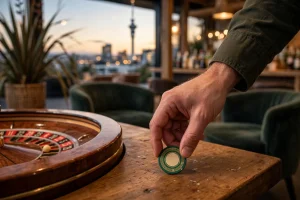
There is also a useful distinction between free casino games and promotional language that happens to include the word “free”. In ordinary free play, the defining point is that New Zealand dollars are not put at risk. Promotional offers can come with separate conditions, so the label should not be treated as a complete explanation of what is being offered. I used to read headline wording too quickly; the operative detail was always in what the player had to do, and what the result could actually become.
For a first look, the sensible value of free play is modest and clear: it lets people inspect a game and decide whether its format interests them before considering anything involving money. It can be used on desktop or mobile, and it does not require bank or credit card details for the free session described here. That is enough to make it a low-commitment way to explore. No larger promise is needed.
The term “online casino for fun” can therefore cover a simple kind of entertainment: opening a casino-style game and playing without risking a cash balance. It should not be confused with a guarantee of winnings, a financial benefit or an invitation to deposit. The strongest feature is precisely the limit. A free session stays separate from money at risk. No cash stake.
What Slot Demo Mode Keeps—and What It Replaces
A pokie in demo mode is not a separate, simplified version of the game. The central arrangement stays intact: the reels turn, the game’s features remain available, and its payout maths is the same as in the real-money version. What changes is the balance used to play. Spins draw on virtual credits rather than cash.
That distinction matters because “free” can sound as if the game itself has been altered. In this case, the key replacement is the bankroll, not the game’s structure. The virtual balance supplies the means to make spins; it does not turn the reels into a different set or remove the features that belong to the game. The machinery is recognisable. The stake is not real.
The game stays; the balance changes
A spin still follows the game’s ordinary sequence. Reels display symbols, combinations are assessed, and features operate within the same design as they do in the cash version. The payout maths also remains the same. Demo mode therefore gives a view of how a particular pokie is built, rather than a stripped-back preview that leaves its main mechanics hidden.
The important qualification is that an unchanged game does not make a demo spin a cash wager. The balance consists of free pokie credits, not money deposited by a player. A displayed result belongs to that demo session; it is not evidence of a cash win. The screen can look familiar while the financial meaning is entirely different.

I have found that this is where promotional language can blur two separate ideas. “Full game” describes the reels, features and payout maths carried over into demo mode. It does not mean a full-money transaction is taking place. Same game structure. Different stake.
What the virtual bankroll does
In free demo play, the game provides a virtual bankroll for spins. That balance is the resource being used as the reels are played. It lets the game represent the ordinary relationship between a stake and a result without putting cash into that relationship.
The balance is part of the demonstration, not a store of value. Its purpose is functional: it allows spins to proceed inside the game’s interface. A figure shown beside the reels can resemble an account balance, but resemblance is not equivalence. It represents free credits for that game session, not funds held for withdrawal or transfer.
This separation is easy to miss because the visual language of online pokies is designed to make the game legible. Credits, spin controls, symbols and feature prompts all appear in the same interface. In demo mode, those elements still serve their game functions, while the credits stand in for cash. The interface may be familiar; the transaction is absent.
Reading a demo accurately
When comparing the demo with the real-money version, the useful question is what has been preserved. The reels, features and payout maths are retained. The balance has been replaced with virtual credits. That is a more precise description than saying that the game is “just for fun”, a phrase that can obscure the practical difference between playing a simulation of the game and making a real wager.
Demo mode mechanics
In demo mode, the central arrangement of the game stays intact, including the reels, features, and payout maths. The only key replacement is the bankroll: spins draw on virtual credits rather than cash.
A demo can show how a feature appears and how the game responds during a spin. It can also make the sequence of play easier to follow because the same basic components are present. But a displayed result remains part of free play. It does not become a cash outcome merely because the game uses the same underlying design.
For anyone assessing online casino slot machines for fun, that boundary is the useful detail: demo mode preserves the game’s mechanics while removing cash from the balance. It can show the structure of a pokie without turning its virtual credits into money. The reels remain. The stake changes.
Playing Casino Games for Practice, Not Payouts
Casino games played for fun can make the rules and rhythm of a game more familiar before money is involved. That is a modest benefit, but a real one: the interface can be explored, choices can be tested, and unfamiliar terms become easier to follow. Free casino games are useful for building that basic knowledge. They do not, however, turn practice into a forecast of future results.
The distinction matters because “practice” can sound more powerful than it is. In my experience, a simulation helps most with the parts a player can observe and repeat: where game information appears, how a turn proceeds, and what a decision changes on screen. It cannot guarantee that the same decision will produce the same result later, or that time spent playing will lead to a payout. Familiarity, not an edge, is the sensible expectation.
Poker makes the boundary clear. Free poker games represent traditional poker through a digital interface, with random number generation involved in the simulation. Some allow play against computer opponents. That gives the interface a way to deal hands and keep a game moving, but a computer opponent is not a human player across a table. It does not provide the full range of human behaviour, conversation, or uncertainty that can shape a live game.

A simulated hand can still help a new player follow the sequence of play and see how decisions are presented. It can also expose confusion: a rule misunderstood in a no-stakes game is easier to notice when no cash is on the line. The useful question is not whether the computer can be “beaten.” It is whether the game’s structure is becoming clearer. A result on screen is one outcome generated by the simulation, not proof that a tactic is reliable.
The same principle applies across casino games. Demo mode exists for almost every type of online casino game, while live dealer games are the main exception. That breadth makes free play useful for comparing formats and learning basic interfaces without treating every game as a cash decision. It is not a substitute for a live dealer table: the social and real-time elements are different, and a simulated environment does not reproduce them.
I would separate learning the controls from learning the odds. A digital game can show what buttons do and how choices are recorded. It may make rules easier to absorb through repetition. But playing more rounds does not make an independent random outcome more predictable. The interface can be learned; chance cannot be rehearsed into obedience.
This is also why free pokies and other casino games should not be judged by whether a session feels successful. Enjoyment can come from understanding a feature or following a game without interruption. Treating virtual results as evidence of likely cash results is a different claim, and free play does not support it. No payout is being earned in a practice session.
There is a practical discipline to keeping the purpose clear. A player can decide that the aim is to learn the sequence of a game, recognise its options, or see whether the format is enjoyable. Those are observable aims. “Getting ready to win” is not. The latter turns a no-stakes simulation into an implied promise about a separate, risk-bearing activity.
For anyone considering play for fun, the most useful outcome may be knowing what remains unclear. If the rules still feel opaque after trying the interface, that is information too. If the game makes sense, the result is familiarity—not a skill certificate, not a prediction, and not money waiting to be collected. That is the honest limit of practice.
Online Casino Games Beyond the Slot Reels
Casino games online are not all variations on a spinning reel. Poker, roulette and blackjack bring different structures to a screen: one is built around hands and decisions, another around a wheel and a chosen outcome, while blackjack centres on a dealer and cards. The interface changes how those formats are presented, but the category is broader than pokies.
Poker is a useful example because its digital version has to represent a familiar sequence of play, not just display a result. Cards, a hand and the actions available at the table are arranged through an interface. Free poker games simulate traditional poker in that digital format, using random number generators (RNGs) to produce outcomes. Some let a player face the computer rather than other people.

That distinction matters. A digital poker table may resemble a shared table, yet the presence of an opponent on screen does not by itself mean another person is playing. In a computer-based game, the opponent is part of the software. The visual language can be familiar; the social setting is different. Those are separate features, even when the game presents them together.
The same principle applies across casino formats: a game’s screen layout follows its underlying structure. A card game presents cards and hands; a wheel game represents its own table and outcomes. This does not make every digital version identical to its traditional counterpart. It means the software translates the format into controls and displays that can be used on a device.
Video poker sits between the poker label and the one-player screen format. In its free version, virtual credits are used to play hands. That is a concrete difference in how a session is funded, not a cash balance waiting to be collected. The game can represent hand-by-hand play without turning those credits into money.
I find it useful to separate three things that promotional language often compresses into one: the game’s format, the interface, and whether play involves other people. “Realistic” can refer to the look of the table, while saying little about the company at the other end of it. The distinction is practical. A polished digital layout is not evidence of a live opponent.
Poker
Digital versions simulate traditional hands and decisions through an interface, often using computer opponents.
Roulette
Players can test betting approaches on a digital wheel to see how the table responds to different choices.
Blackjack
Simulated hands are dealt against a virtual dealer, using an RNG to produce the sequence of play.
For someone exploring casino games for fun, that range allows different kinds of interaction without making every format a slot. A poker hand is organised around cards; video poker uses virtual credits for hands; other table games present their own rules and visual cues. The point is not that one format is better. It is that they ask the screen to do different jobs.
Free casino games can therefore mean more than free pokies. A person looking for online casino play without a cash stake may encounter games whose pace and interface differ substantially from reels. Poker offers a clear illustration: traditional hand-based play is represented digitally, and the software may supply computer opponents. The virtual-credit arrangement in video poker makes the no-cash distinction visible in the game itself.
There is a limit to what the screen tells. A familiar table design communicates the kind of game being played, but not necessarily whether an opponent is human, how the software produces outcomes, or what the credits are worth outside the session. In free video poker, the relevant point is plain: credits are for playing hands. They are not a payout. That separation is easy to miss when every format is presented under the same casino banner.
Free Play in New Zealand: The 2026 Context
If you’re exploring casino options in New Zealand for fun in 2026, this list offers a concise reference to the details available for each operator. Use the information provided to decide which options are worth looking into further.
-
Play Grand
- License
- Malta Gaming Authority, licence no. MGA/B2C/370/2017
Play Grand is listed with a Malta Gaming Authority licence, no. MGA/B2C/370/2017.
-
Lamabet
- Payout speed
- 1-3 business days
Lamabet lists a payout speed of 1–3 business days.
-
7Bit Casino
- License
- Tobique Gaming Commission, licence no. 0000091
7Bit Casino is listed with a Tobique Gaming Commission licence, no. 0000091.
-
BitStarz
- License
- Curaçao Gaming Authority, licence no. OGL/2024/165/0185
BitStarz is listed with a Curaçao Gaming Authority licence, no. OGL/2024/165/0185.
-
N1 Casino
- License
- Malta Gaming Authority, licence no. MGA/B2C/394/2017
N1 Casino is listed with a Malta Gaming Authority licence, no. MGA/B2C/394/2017.
-
Zotabet
- License
- 07017519840
- Payout speed
- 1-3 business days
Zotabet lists licence number 07017519840 and a payout speed of 1–3 business days.
-
Ricky Casino
- License
- Tobique Gaming Commission, licence no. 0000002
Ricky Casino is listed with a Tobique Gaming Commission licence, no. 0000002.
-
Neospin
- License
- Tobique Gaming Commission, licence no. 0000064
Neospin is listed with a Tobique Gaming Commission licence, no. 0000064.
-
Wintino
- Payout speed
- 1-3 business days
Wintino lists a payout speed of 1–3 business days.
In New Zealand, the phrase “for fun” describes the stakes, not the legal status of an online casino. Free casino games do not put New Zealand dollars at risk, so their immediate financial exposure differs from wagering with cash. That distinction matters, but it does not turn a website into a locally regulated service or establish that its paid games have domestic oversight.
The regulatory position changed during 2026, and a simple statement that online casinos are not regulated locally needs a date attached to it. Before the new law, online casino gambling supplied from overseas was not licensed or supervised by a New Zealand regulator. The Gambling Act 2003 did not permit online casinos to be based in New Zealand. Customers who wagered with offshore websites had no domestic government recourse.
The Online Casino Gambling Act 2026 came into force on 1 May 2026, establishing the country’s first domestic licensing framework for online casino gaming. That is a change in law, not an instant switch to a fully operating licensing system. A transitional period runs from 1 May to 1 December 2026. Providers already serving people in New Zealand before the law took effect may continue during that period, subject to the Act’s transitional provisions. The full licensed regime is not expected to be operational until 2027.
That timeline is why “New Zealand does not regulate online casinos locally” can mislead if treated as a complete description of the current position. It reflects the earlier absence of domestic licensing and supervision for overseas gambling, while the new framework is now in force and still moving through transition. The practical distinction is between a law that has established a system and a system that is fully operational. Not the same thing.
Free online casino games sit alongside that market context, but they do not resolve it. A no-stakes game may let someone experience casino-style entertainment without putting NZD on the line. That tells little, by itself, about how a site’s real-money service is treated under New Zealand law, what protections apply to it, or whether a provider falls within the transition provisions. The free version and the operator’s wider business are separate questions.
From the industry side, “free” is a description of the play session, not a certificate of regulatory status. It signals that the game is being used without cash wagering; it does not prove that the surrounding service has a New Zealand licence, nor does it tell what rules govern any paid product on the same website. In a market changing its framework, those distinctions are easy to blur in promotional language. They should not be.
For people looking at casinos in New Zealand for fun in 2026, the grounded point is narrow: free games do not risk New Zealand dollars, while local oversight of online casino services has been in transition. The new Act created a route to domestic licensing, but the full regime is not expected to be operational until 2027. Treating free entertainment as a substitute for understanding the status of a paid service would confuse two different issues.
Virtual Credits, Resets and the Limits of Free Play
A balance displayed in a free casino game can look like a bankroll, but it does not function as one. The credits are part of the game’s free-play setup: they allow play without a deposit, registration or exposure of real money. Their value ends inside the game. They are not funds held for the player, and there is no cash balance waiting to be claimed.
That distinction is easy to miss because the display uses familiar casino language. A number beside a balance can suggest something accumulated or owned. In demo play, it is only a counter for the current session. I separate the appearance from the substance: the screen may show credits, but those credits cannot be withdrawn or turned into real money.

A display is not a payout.
The reset option makes the boundary clearer. When the credits run down, refreshing the game can restore the balance and allow play to continue. That refresh does not add money to an account or reverse a loss. It simply gives the demo another set of virtual credits. The balance is reusable as a feature of the game, not recoverable as property.
This matters when a session is treated as a test of how long a balance can last. A reset changes the starting point; it does not preserve a cash result. If a player tracks outcomes across repeated sessions, the record is personal observation, not an account statement. The displayed total has no financial meaning outside the game.
Free casino games for fun can therefore remove two practical barriers to trying a game: a deposit and the need to register. That does not make the virtual balance a substitute for money. No payment details are needed to use those credits, and no withdrawal follows from playing with them. The arrangement is deliberately bounded.
The word “free” can also carry more than one meaning. Here, it describes access to play without risking real money. It does not mean that the game grants withdrawable funds, or that a displayed credit total can be carried into a separate account. The key condition is not how large the counter appears; it is what the credits can be used for. In this setting, they remain inside the game.
Do
- Use free play to inspect game formats
- Use demo mode to learn controls and layouts
Don't
- Treat virtual credits as withdrawable money
- Expect a demo session to predict real-money wins
I would read a reset as a restart, not a refund. The credits can return to the screen, but the earlier balance does not become cash, and any play remains within the free version. That is the limit in plain terms: usable for the game, unavailable outside it.
For a casino game played for fun, that boundary is what keeps the session separate from wagering. Virtual credits support access to the game, while registration, deposits and real-money risk are not required for that free use. The reset may extend play, but it does not change the nature of the balance. No cash value.
Free Slots Are Not a Route to a Jackpot
The word “win” carries two meanings in casino copy, and the distinction matters. In a free slot game, it can describe an outcome shown during play. It does not mean money has been won or that a cash payment is due. Free versions of slot games do not pay out money.
I learned to read that wording as a description of the screen, not a promise about the player’s balance. The reels may produce an apparent winning combination, and a game may present it with celebratory effects. But the activity remains just for fun: there is no cash prize attached to that result. An animation can look convincing. It cannot turn a free session into a payout.
The same boundary applies to jackpots. Playing free casino slots for fun cannot trigger a jackpot. A jackpot is not waiting to be claimed from a free version, even if the slot’s presentation uses jackpot language or displays a prize-style feature. Treating the two modes as interchangeable is where expectations go wrong.
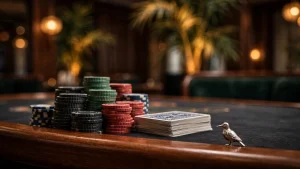
That is why free casino slots games for fun are useful only when the aim is entertainment or familiarity with the on-screen experience. They can show how a slot behaves, but they do not reproduce the financial consequence of a real-money result. No cash outcome. No jackpot.
When I reviewed casino wording, I found that the most important qualification was often the one left until after the attractive phrase: a displayed result in free play is not withdrawable money. “Jackpot” sounds definitive; in a free game it is only part of the presentation, not an award the player can collect.
So the practical reading is straightforward. A free slot session can contain winning-looking moments, but none pays money, and none can activate a jackpot. The entertainment may resemble a cash game on screen. The outcome does not.
Blackjack in Demo Mode—and the Four Winds Search
Blackjack in demo mode keeps the basic table interaction: cards are dealt, decisions are made against a dealer, and the round produces a result. The dealer is virtual, and an RNG generates the outcomes. That makes the experience a digital simulation, not a table with a human dealer handling cards.
The distinction matters because a familiar interface can suggest more than it delivers. A hand may look and proceed like blackjack, but demo play does not turn its result into a cash win. The useful part is seeing how the game responds to decisions and becoming familiar with its pace. The outcome remains generated by software.
I have seen “realistic” used as if it settled the question. It describes the presentation, not the nature of the play. A virtual dealer and an RNG are the mechanics. No live table.
- RNG
-
Random number generators (RNGs) are used in digital simulations to produce outcomes for games like poker and blackjack.
The phrase Four Winds can point to a particular casino or game in a person’s mind, but the name alone does not establish what is offered or how it works. It is better treated as a label someone may encounter than as proof of a specific blackjack product.
For online casino blackjack for fun, the practical expectation is therefore narrow: a simulated hand against a virtual dealer, with an RNG determining outcomes. It can show how a round unfolds, but it is not a route to a real-money result. The presentation may resemble a casino table. The stakes do not.
Browser Play Without a Download
A browser launch removes a setup step: the game opens in a web page rather than requiring a separate app to be installed. Free casino games can usually be started this way, without configuring software first. Most games load in a browser, though “no download” describes the route into the game, not a promise that every title works identically on every device.
I have found that the distinction matters because an app and a browser session create different levels of commitment. An installation adds a file and an ongoing presence on the device; opening a page is more temporary. For a game being tried for fun, that lighter entry can be enough. No app required.
Signing up is a separate question from downloading. A game in demo mode can be launched without creating an account, so the two steps should not be treated as a package. Where that option is available, the game can be opened directly in the browser without first handing over registration details. That is the practical meaning behind free casino games for fun with no download: browser access, not a special kind of game.

The wording “instant” can make the process sound more elaborate than it is. In ordinary cases, the browser is the entry point and there is no app to install; a demo can also be available without sign-up. I would still distinguish that from a claim that every game has no conditions at all. Browser launch is about access and setup, not a statement about all site rules or game features. The useful check is simply whether the chosen game offers demo mode in the browser.
Practising Roulette Bets in Free Play
Roulette demo mode is useful for learning how a bet is placed and how the table responds, without putting a bankroll at risk. I treat it as a way to understand the choices on the screen, not as a rehearsal that can reveal a reliable route to a win. Those are different things.
Free online roulette lets a player try different betting approaches and see how each one works in play. A cautious approach and a more spread-out one can be compared in the same no-stakes setting; the point is to notice what changes in the bet, not to infer that one pattern controls the result. Roulette remains a game of chance. Repeating a choice in demo mode does not make a later outcome predictable.
That distinction is easy to lose when a game labels a sequence “strategy”. The label can describe a way of arranging bets, but it does not turn that arrangement into an advantage. I have seen practice mistaken for preparation: familiarity with the table feels like control, while the underlying uncertainty is unchanged. Familiarity is useful. Control is not.
Free roulette demos provide room to try the game without risking a bankroll. That makes them suitable for learning the layout and becoming comfortable with the mechanics before any real-money decision is considered. No cash at stake.
The most practical measure of a session is whether the rules and bet options make more sense afterwards. A demo can answer that. It cannot establish what a real-money session will return, and its results should not be treated as evidence of future outcomes. Free roulette is for understanding the game and testing an approach on screen—not for forecasting a payout.
Can I play free casino games from New Zealand?
Yes. Free casino games let you play without risking New Zealand dollars, on desktop or mobile.
How does wagering work with bonuses?
A wagering requirement means you must place a specified amount in qualifying bets before withdrawing a bonus. For example, a 30x requirement on a NZ$100 bonus means NZ$3,000 in qualifying bets; free games usually do not count toward wagering requirements.
Do I need to deposit to play?
No. You can play free games using virtual credits without depositing or providing bank or credit card details.
Are free pokies the same as the real versions?
Yes. Demo pokies use the same reels, features and payout maths as the cash versions, but spins use virtual credits instead of real money.
Can you win real money with free pokies?
No. Demo winnings are virtual credits, cannot be withdrawn and do not pay out real money.
Can you win real money playing free online roulette?
No. Free roulette is for practice using virtual play, not for winning or withdrawing real money.
Safety & Guides for New Zealand Casinos
Content created by the «casinoguidenz.com» team