
Assess online pokies with clearer expectations
 Available in US
The guide separates operator rules from player status and explains how game mechanics, rewards and randomness shape expectations.
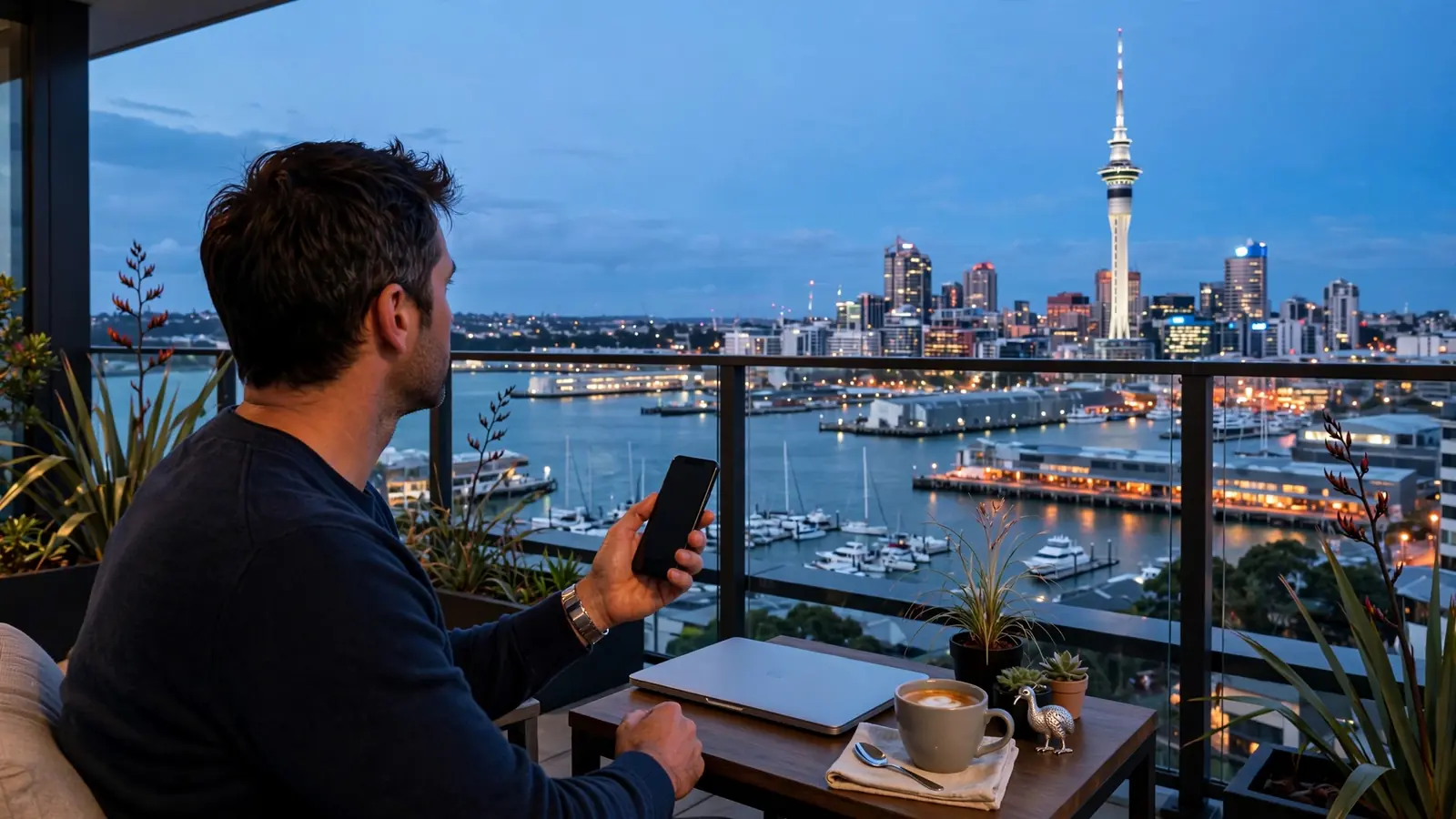
Online Pokies in New Zealand: What the 2026 Shift Means
The phrase “online pokies in New Zealand” can describe two different things: a person in New Zealand playing on a website operated offshore, or a casino business operating from inside the country. The distinction matters. Under the Gambling Act 2003, an online casino cannot be based in New Zealand, but New Zealanders are not committing an offence simply by playing at an offshore casino.
That has shaped the market for years. The websites may be available to people in New Zealand, but their availability does not mean they are locally operated. A site can serve Kiwi customers from overseas without being a domestic casino business. The location of the player and the location of the operator are separate parts of the arrangement.
The 2026 shift is about changing the rules for operators, not making individual players’ past activity unlawful. The Online Casino Gambling Act 2026 created New Zealand’s first domestic licensing framework for online casino gambling. It took effect on 1 May 2026, beginning a transition rather than switching the entire market to a fully licensed system overnight.
Choosing an online pokies site in New Zealand involves more than the games on offer: it is also worth checking the available operator details before deciding where to play. This list provides a concise reference to the information supplied for each operator.
-
Play Grand
- License
- Malta Gaming Authority, licence no. MGA/B2C/370/2017
Play Grand lists a Malta Gaming Authority licence, number MGA/B2C/370/2017.
-
Lamabet
- Payout speed
- 1-3 business days
Lamabet lists a payout speed of 1–3 business days.
-
7Bit Casino
- License
- Tobique Gaming Commission, licence no. 0000091
7Bit Casino lists a Tobique Gaming Commission licence, number 0000091.
-
BitStarz
- License
- Curaçao Gaming Authority, licence no. OGL/2024/165/0185
BitStarz lists a Curaçao Gaming Authority licence, number OGL/2024/165/0185.
-
N1 Casino
- License
- Malta Gaming Authority, licence no. MGA/B2C/394/2017
N1 Casino lists a Malta Gaming Authority licence, number MGA/B2C/394/2017.
-
Zotabet
- License
- 07017519840
- Payout speed
- 1-3 business days
Zotabet lists licence number 07017519840 and a payout speed of 1–3 business days.
-
Ricky Casino
- License
- Tobique Gaming Commission, licence no. 0000002
Ricky Casino lists a Tobique Gaming Commission licence, number 0000002.
-
Neospin
- License
- Tobique Gaming Commission, licence no. 0000064
Neospin lists a Tobique Gaming Commission licence, number 0000064.
-
Wintino
- Payout speed
- 1-3 business days
Wintino lists a payout speed of 1–3 business days.
A transition, not an instant reset
Online casinos that were already providing services to people in New Zealand before the Act began can continue doing so during the transition, which runs until 1 December 2026. The full licensing regime is expected to be operating in 2027. Until then, the market is moving from an era without local licensing of offshore online casino services towards one with domestic rules for operators.
This timing is easy to misread. A new law may be in force while the licensing system it establishes is still being put into operation. The legal framework exists; the transition period allows existing services to continue under the Act’s transitional provisions while the longer-term regime is prepared. A headline about licensing “from 2026” can therefore describe the start of the change, but not necessarily the point at which the complete system is running.
Before the new Act, online casino gambling supplied from outside New Zealand was not licensed or supervised by a New Zealand regulator. That is different from saying offshore play was prohibited for customers. The law drew a line between running an online casino from within the country and accessing a service operated elsewhere. The 2026 framework changes the regulatory arrangement for providers; it does not erase that distinction.

What licensing changes
A licensing regime gives the government a formal route to determine which operators may provide online casino services under New Zealand rules. The framework places the Department of Internal Affairs in the regulatory role. Licensed operators are required to meet conditions covering harm minimisation, advertising, age checks and tax contributions. These are obligations on providers, not a description of what every offshore website has already been required to do under local oversight.
A specialist review published before the framework was in force described a rollout beginning in 2026 and an initial cap of up to 15 licences. That was a projection of the proposed system, not proof that licences were already issued or that the full regime was active. The later legislation established the transition and set the expected full launch for 2027. In a changing market, the difference between a proposal, a law taking effect and a functioning licensing system is not cosmetic. It determines what has actually changed at a given point.
For anyone comparing online pokies, the word “New Zealand” may therefore refer to the audience, the operator’s location or the rules governing the service. Those are not interchangeable. A site available to Kiwi players is not automatically a New Zealand-based casino, and the arrival of local licensing does not instantly turn every offshore operator into a locally licensed one.
The shift is structural. For the first time, New Zealand has a domestic licensing framework for online casino gaming, while the existing providers covered by the transition can continue operating until its stated end date. The full regime is not expected to be fully operational until 2027. That leaves a defined period in which the market is changing rather than settled.
The practical meaning of “best” also changes with that context. A game or website may appeal to players, but popularity is not the same thing as local regulatory status. Nor does a 2026 label, by itself, establish that a service holds a New Zealand licence. The market is moving towards a system in which the operator’s status matters under domestic rules. For now, the key distinction remains straightforward: offshore play by New Zealanders is not the same as operating an online casino from within New Zealand.
Choosing a Site When Local Oversight Is Limited
A site can look polished and still leave a New Zealand player with little local protection if something goes wrong. The important distinction is not how professional the pages appear, but which authority, if any, can supervise the operator and provide a domestic route for a complaint.
Offshore online casinos are outside the oversight of a specific New Zealand gambling regulator. That means a dispute with one does not sit within a local consumer-protection system for online casino customers. The operator may describe its own complaint process, but that is not the same as a New Zealand agency being able to review the case or require a remedy. From the industry side, I have seen how easily a reassuring label can blur that difference. “Licensed” is not a complete explanation; the issuing jurisdiction and the scope of its authority matter.

That distinction is central when comparing what might be called the best online pokies site in New Zealand. A site’s terms, support channels and public policies can offer clues about how it handles customer issues, but none of those features creates local oversight. If the operator is offshore, a New Zealand player should not assume that a complaint can be escalated to a domestic gambling regulator. There is no local agency specifically responsible for resolving disputes with offshore online casinos.
The framework established by the Online Casino Gambling Act 2026 changes the regulatory picture, but it does not make every site serving New Zealand customers locally licensed. The law establishes a domestic licensing regime, with requirements for operators licensed under it. A specialist review of the framework identifies the Department of Internal Affairs as the regulator. That attribution should be read as a description of the framework, not as proof that every offshore site is subject to its supervision.
Under the framework as described, licensed operators must address harm minimisation, advertising restrictions, age verification and tax contributions. These are meaningful obligations because they concern how an operator conducts business, not simply what it says about itself. But they are relevant only where the operator is within the regime and subject to its conditions. A logo, a claim of compliance or a link to a foreign licence does not establish that New Zealand’s requirements apply.
A specialist account of the licensing rules also describes those obligations as applying to operators that hold a New Zealand licence. The practical point is the boundary: local licensing can attach enforceable conditions to an operator, while an offshore site outside the system remains beyond DIA oversight. Those two situations should not be collapsed into one category simply because both sites accept New Zealand customers.
Do
- Identify the specific regulator and jurisdiction
- Check if terms are clear about complaint handling
- Distinguish between local licences and overseas authorisations
Don't
- Assume an offshore site is subject to DIA oversight
- Treat a professional-looking site as a guarantee of local protection
- Rely on a foreign licence for domestic consumer protection
When assessing a site, the useful question is therefore not whether it calls itself “trusted”, but what that claim actually means. Does it identify a regulator and explain the jurisdiction? Are its terms clear about complaint handling and the operator’s responsibilities? Does it distinguish a local licence from an overseas authorisation? These checks do not guarantee a favourable outcome, and they cannot turn an offshore operator into a locally supervised one. They help expose what protections are being claimed—and where those protections stop.
This is also why a neat checklist can mislead. A responsive support team may answer quickly, but it does not have the powers of a regulator. Detailed terms may explain the operator’s process, but they do not give a New Zealand consumer agency authority over an offshore business. In a dispute, the difference between internal review and external oversight becomes concrete. Not interchangeable.
For anyone comparing online pokies sites in New Zealand, local oversight is a structural feature, not a bonus attached to a welcome offer or a site design. The licensing regime provides a route for requirements to apply to operators brought within it. Until an individual operator is actually covered, the existence of that framework alone should not be mistaken for protection against that operator.
What a Pokie’s RTP Really Tells You
RTP, or return to player, is a measure of a game’s designed payout across a very large volume of play. It expresses the share of total stakes the game is expected to return over the long run. It does not describe what happens to one player’s balance in a particular sitting.

The distinction is easy to lose in promotional language. A high RTP can sound like a promise of a better result, but it is a mathematical model, not a session forecast. The figure is calculated through millions of simulated spins. Actual play over a shorter stretch can land well above or below that theoretical average.
The arithmetic is straightforward. A pokie with a 97% RTP is theoretically designed to return $97 for every $100 wagered over the long term. That does not mean a player who stakes $100 will receive $97 back, or that the remaining amount is taken evenly from each account. The percentage describes the game’s aggregate performance across extensive play, not a fixed exchange rate for an individual.
I have seen RTP presented as if it were a simple quality rating. It is useful, but it answers a narrower question: what proportion of stakes is the game modelled to return over time? It does not tell how that return is distributed, how a particular session will go, or whether the game will suit someone’s preferences. A figure on its own is not a verdict.
There is another detail that matters when comparing online pokies. Some studios release the same title with more than one RTP setting. The operator selects which version to make available, so the game’s name alone does not establish the return percentage in a particular offering. Two versions can look and play alike while carrying different theoretical settings.
That is why the displayed game information matters more than a figure copied from a general description elsewhere. The stated RTP should relate to the version actually being offered. A review or game listing may refer to one setting, while the operator has selected another. The distinction is not visible in the title or theme; it sits in the game configuration.
- RTP
-
Return to player is a mathematical measure expressing the share of total stakes a game is expected to return over a very large volume of play.
For anyone comparing the best online pokies in New Zealand, RTP can help make one part of the maths legible, but it should not be read as a ranking of likely personal outcomes. A higher theoretical return does not remove the gap between long-run modelling and short-term play. Nor does it make an individual result predictable.
In practical terms, RTP is a context figure. It gives a way to compare the designed return of versions, provided the setting is confirmed, and it helps explain why published percentages describe averages rather than guarantees. It cannot tell what the next spin will return or how a session will finish. That boundary is the point. Useful, not predictive.
Real-Money Play: Legal Status, Age and Tax
For an individual in New Zealand, playing online pokies for money at an offshore casino is not a criminal offence. The legal position of the player is distinct from the rules governing who may operate an online casino. That distinction matters: restrictions on providers do not, by themselves, mean that a New Zealander commits an offence by placing a bet with an overseas service.
New Zealand residents may play at internationally licensed sites. That does not mean every site is licensed in New Zealand, or that an overseas licence puts the operator under New Zealand supervision. The player’s position and the operator’s regulatory status are separate questions. I have seen those two ideas blurred in marketing copy, where a statement about a site’s licence can sound like a guarantee about the player’s legal protections. It is not.

The minimum age for online casino play in New Zealand is 18. This is an eligibility threshold, not a suggestion based on a game’s content or the size of a stake. An adult’s ability to play also does not change the fact that gambling involves the possibility of losing money. A site accepting a registration is not a substitute for the player meeting the age requirement.
Tax treatment is generally straightforward for recreational gambling: winnings are generally not taxed in New Zealand. “Generally” matters here. It describes recreational play as a broad category; it is not a promise that every payment connected with gambling is automatically tax-free in every circumstance. The distinction is between ordinary recreational winnings and a situation that may be treated differently under tax rules.
The practical point is to keep the three issues separate. The player’s criminal liability, the minimum age, and the tax treatment answer different questions. An individual New Zealander does not commit a criminal offence merely by playing at an offshore platform; online casino play is for adults aged 18 and over; and recreational winnings are generally not taxed. None of those statements certifies the quality of a particular casino or guarantees the outcome of a dispute with it.
Real-money play therefore has a defined legal position for the player, but that position should not be mistaken for a blanket endorsement of offshore operators. The fact that a person may legally take part does not mean every operator is locally licensed, nor does it turn a gambling result into income that can be relied on. Keeping those limits clear is more useful than treating “legal” as shorthand for safe or risk-free.
What Makes a Pokie Work for Kiwi Players
The word “best” can hide a simple preference: whether a game’s rhythm feels comfortable. I have seen players judge a pokie by its theme or feature, then discover that the pattern of wins matters more to their experience. Volatility is the useful distinction here. It describes the broad shape of payouts, not a promise about what any one session will deliver.
Low-volatility pokies tend to pay smaller wins more often. That can make play feel steadier, with fewer long stretches in which nothing appears to happen. The trade-off is that those wins are generally modest. A frequent win is not automatically a substantial return, and the visual celebration around a result can make its size feel more significant than it is.
High-volatility games take the opposite approach: wins arrive less often, but the game can produce larger ones. That possibility is part of the appeal, but it comes with longer quiet patches. A player drawn to the prospect of a bigger result may find those gaps difficult to sit through. The headline potential tells only half the story; the waiting is the other half.
Neither style is inherently better for Kiwi players. The fit depends on what makes a session enjoyable and manageable. Someone who prefers regular signs of activity may lean towards lower volatility. Someone comfortable with a less frequent payout pattern may prefer a more volatile game. Those are differences in feel, not evidence that one category is more likely to suit every player.
I would not treat volatility labels as precise forecasts. They are a shorthand for the game’s general payout pattern, and the experience within a session can still vary. A run of small wins does not turn a low-volatility game into a source of dependable income. Nor does choosing a high-volatility game make a larger payout due. No such promise.

A practical way to compare games is to notice what happens to the session experience during a quiet stretch, rather than focusing only on the most dramatic possible win. If frequent modest results are the preferred rhythm, a low-volatility title may feel more fitting. If the appeal is the chance of a larger result and the player accepts that wins may be less frequent, a high-volatility title may be a better match.
For anyone weighing the best online pokies for New Zealand players, the useful question is not which label sounds more exciting. It is which payout pattern suits the way they want to play, without mistaking a game’s general character for a forecast. Volatility describes a trade-off. It does not remove it.
Free Spins, Bonus Buys and the Cost of a Feature
A free-spin round is a feature within a pokie, not a separate game with a guaranteed return. Video pokies commonly include free spins alongside reels, wilds and scatter symbols. The feature changes how a sequence of spins is played; the label alone says nothing about what that sequence will pay.
“Free” needs reading in context. In a promotional offer, free spins may come with conditions set out in the offer’s terms. The number of spins, the games they apply to and the rules for winnings can differ, so the headline is not the full deal. I have seen the word do more work in advertising than it does in the game: it makes the entry sound costless, while the terms define what the offer actually permits. Read the conditions. First.
Understanding Free Spins
In a promotional context, free spins may come with specific conditions regarding the number of spins, eligible games, and rules for winnings.
A feature built into a pokie is different from promotional spins. It is part of the game’s design and is triggered according to that game’s mechanics. The presence of free spins does not make a title inherently more generous; it simply means that a feature round is part of its play. The value of any result remains uncertain.
Bonus buys work differently. Rather than waiting for a game to trigger its bonus round, a player pays a fixed multiplier of the stake to enter that round directly. The price is attached to the chosen stake, so the same multiplier can represent a different cash outlay when the stake changes. It is not a shortcut to a known win. It buys access to the feature, not a particular outcome.
A specialist review puts bonus-buy costs at 50 to 100 times the stake, depending on the title. That is a substantial jump from an ordinary spin, and the multiplier is the detail that matters more than the promotional language around “instant access”. A round entered this way can still produce an uncertain result.
The same specialist review says bonus buys are usually excluded from wagering on promotional funds. That condition matters because a feature may be available in the game while its purchase is not eligible under a promotion’s rules. Game access and promotional eligibility are separate questions; the offer terms determine the latter.
The practical distinction is simple: free spins are a feature or an offer, depending on context, while a bonus buy is a paid entry into a bonus round. Neither label establishes the likely value of the outcome. The mechanics, stake multiplier and applicable conditions do.

Bonuses and Game Types: Read the Mechanics, Not the Label
A label such as “classic”, “video” or “progressive jackpot” describes a game’s structure, not what a session will feel like or what a promotion will be worth. I learned to separate those questions: the game type tells us where features and prize funding sit; the promotional label tells us little until its conditions are read.
Classic pokies use three reels and have no bonus rounds. Their simpler layout is the defining feature, not a promise of better odds or more frequent wins. A familiar appearance can make a game seem straightforward, but the label alone does not establish its return or the size of its prizes.
Video pokies commonly use five reels and may include wilds, scatters and free-spin rounds. Those features change how the game is presented and how its rounds unfold. “Video” is not a measure of quality, though, and a feature-rich screen does not by itself say whether a game suits a particular playing style.
Progressive jackpot games work differently from ordinary prize structures: contributions from spins are pooled across casinos running the same game. Part of each bet feeds that pool, so the base game has a lower RTP than it would if the whole stake were allocated to its ordinary play. The jackpot headline can dominate the presentation; the trade-off is less visible. That distinction matters. The prize pool and the base game are connected, not interchangeable.
Classic Pokies
Use three reels and typically feature no bonus rounds.
Video Pokies
Commonly use five reels and include features like wilds, scatters, and free-spin rounds.
Progressive Jackpots
Part of each bet is diverted into a shared prize pool that grows across all casinos running the game.
Promotional language can blur these categories. A signup offer may be displayed beside a game, but that does not make the game a special version or explain how its underlying mechanics work. Nor does a “bonus” label tell the whole story about which games or rounds qualify under an offer. The terms, rather than the banner, determine that.
I have seen the most confusion arise when a large feature is treated as evidence that a game is generous overall. A free-spin round, a jackpot meter and a promotional credit are different things: one is a game feature, one is a prize pool, and one is an offer governed by conditions. They should not be read as a single promise.
The useful comparison is therefore structural. Classic pokies keep to three reels and no bonus rounds; video pokies add common features across more reels; progressive games divert part of each bet into a shared jackpot. Labels are shorthand. Mechanics are the substance.
Rewards Have a Statistical Cost
A progressive jackpot changes what a spin is paying for. Part of each bet is directed into a shared prize pool, which grows through contributions from spins across casinos running that game. The visible jackpot can become the headline attraction, but it is not free value added on top of an otherwise unchanged pokie.
The trade-off sits in the base game. Because some of each bet feeds the jackpot, the base-game RTP is lower than it would be without that allocation. A large prize may make the game feel more rewarding, yet the ordinary play is working with a smaller return component. Those are two parts of the same design, not separate benefits.
I have seen jackpot displays do most of the selling. A rising figure is easy to understand at a glance; the way a game divides each bet is less visible. “Bigger rewards” describes the possibility of a substantial pooled prize, not a promise that routine spins return more. The distinction matters when comparing progressive pokies with games whose appeal comes from their base play.
A jackpot pool also spans casinos that offer the same game. That shared contribution explains why the prize can grow beyond what one venue’s spins alone would accumulate. It does not change the underlying cost to the base game: part of the stake is still allocated away from its regular return.
So “best rewards” depends on what counts as a reward. A player focused on the chance of a shared jackpot may value that feature; someone comparing the base game should account for its lower RTP. Neither label tells the whole story by itself. The prize display shows the pool, while the base-game return reflects the portion left for ordinary play.
That is the statistical cost: jackpot potential and base-game RTP pull in different directions. A progressive game can be attractive for its pooled prize while offering less back through its regular game. The display is vivid. The allocation is quieter.
Payout Expectations, Randomness and Playing on a Mac
A run of spins can look as if it is building towards a result. Several losses may make a win feel overdue; a recent win may make another seem more likely. Neither impression changes the next spin. Online pokies use random number generators, and each spin’s result is not influenced by the spins before it.
That is the point where intuition and the game’s mechanics part company. A sequence can contain clusters of wins or losses without signalling what comes next. The machine is not keeping a balance to repay, and a quiet stretch does not make a payout due. I have seen players read patterns into ordinary randomness, then increase stakes because the pattern seemed convincing. It was still only a story about past results.
RTP does not solve that uncertainty. It describes a long-run statistical average, not what an individual session will return. A game can have a stated theoretical return and still produce a session far above or below it. The average is meaningful across a very large volume of play; it is not a forecast for tonight.
“Best payout” can also mean different things. It may refer to a game’s theoretical return, a single win, or how quickly money is processed after a withdrawal request. Those are separate matters. A large result in one session does not establish a game’s long-run return, and a game’s return figure does not tell how quickly an operator will process a cash-out. The word “payout” is doing too much work.
The same distinction matters when considering online pokies on a Mac. The device used to view a game does not alter the random nature of its spins. But a search for Mac play should not be treated as evidence that every game or casino works on that device; compatibility depends on the particular service and game. That is a practical access question, not a way to improve the odds.
The useful expectation is modest: each spin is uncertain, earlier outcomes offer no forecast, and a theoretical return is not a personal promise. No pattern to chase.
There Is No Best Time to Beat the Reels
The search for a lucky hour makes intuitive sense. A quiet stretch after work, a late-night session or a run of wins can feel as though the game has settled into a pattern. I used to notice those patterns too. The trouble is that a feeling of rhythm is not evidence that the next spin has become more favourable.
Online pokies use random number generators. Each spin is determined independently; earlier results do not influence the next one. A machine that has paid out several times is not therefore “due” to go quiet, and a long losing run does not make a win more likely on the following spin. The clock does not change that. Nor does choosing a particular day or waiting for a streak to break.
That is why there is no best time to play online pokies in the sense of finding a more advantageous moment. Playing at a time that suits a settled routine may make a session easier to manage, but it does not alter the game’s mathematics. The distinction matters: a comfortable time is personal; a better time for the reels is not.
I have seen session timing treated as a strategy because it gives a player something to control. In practice, the useful control is over the session itself. A budget and a maximum loss set beforehand can define when play stops. They do not improve the odds, and they cannot turn a run of results into a signal. A stop point is a boundary, not a prediction.
The same applies to breaks. Stepping away can interrupt a session that has become longer than intended, but returning later does not reset the game or make a particular outcome more likely. The next spin remains separate from the last.
So the best time to play is simply a time when the session can remain within personal limits. That may help with decisions around play. It cannot beat the reels.
Are online pokies legal in New Zealand?
Yes, New Zealanders may play at offshore online casinos without committing an offence. Operating an online casino from within New Zealand is illegal under the Gambling Act 2003.
What is a good RTP for online pokies?
An RTP of 97% is at the higher end of the usual 94%–97% range. RTP is a long-run theoretical average, not a promise about the results of an individual session.
Are offshore pokies sites safe for NZ players?
Offshore sites are not overseen by a specific New Zealand gambling regulator, so players lack a local agency to handle disputes. A site’s own complaint process is not the same as local regulatory protection.
How do pokies work?
Online pokies use random number generators, and previous spins do not affect the next one. Games may have different formats and features, such as free spins, bonus rounds or progressive jackpots.
What is RTP and how does it affect my play?
RTP is the theoretical percentage of total stakes a game returns to players over a very large number of spins. It is a long-term average, not a guarantee for any particular player or session.
Slots & Pokies in New Zealand: Online Casino Guide
Content created by the «casinoguidenz.com» team