
Check the rules behind a blackjack table
 Available in US
Natural-hand payouts and table conditions shape blackjack outcomes; the familiar game name alone does not guarantee the same rules.

Blackjack Payouts and the Rules Behind Them
The payout printed beside a blackjack table is not a minor detail. It changes what a natural hand returns, while other rules determine how the game is played around it. I read those terms as part of the game itself, not as decoration on a casino page. A table can carry the familiar blackjack name and still offer different conditions from another table.
A natural blackjack is a two-card hand consisting of an ace and a card worth ten. Its payout is separate from the ordinary settlement of a winning hand. A specialist review reports that a natural may pay at 3:2 at one table and 6:5 at another. That is a meaningful difference: the first ratio returns more in winnings for the same stake than the second. The payout is applied to the winnings, not as a description of the player’s total balance after the hand.
That distinction can disappear in promotional wording. “Blackjack pays” may refer to the return for an ordinary win, or it may leave the natural payout unstated. Those are not interchangeable terms. A player comparing tables needs the specific natural-blackjack rule, rather than an attractive headline or a general claim that a game offers blackjack. Read the paytable or rules panel attached to the particular game.
Choosing a blackjack casino in New Zealand involves more than the game itself; it is worth checking the available licensing and payment information before deciding where to play. Use these short verdicts as a quick reference.
-
Play Grand
- License
- Malta Gaming Authority, licence no. MGA/B2C/370/2017
Play Grand lists a Malta Gaming Authority licence, number MGA/B2C/370/2017.
-
Lamabet
- Payout speed
- 1-3 business days
Lamabet lists a payout speed of 1–3 business days.
-
7Bit Casino
- License
- Tobique Gaming Commission, licence no. 0000091
7Bit Casino lists a Tobique Gaming Commission licence, number 0000091.
-
BitStarz
- License
- Curaçao Gaming Authority, licence no. OGL/2024/165/0185
BitStarz lists a Curaçao Gaming Authority licence, number OGL/2024/165/0185.
-
N1 Casino
- License
- Malta Gaming Authority, licence no. MGA/B2C/394/2017
N1 Casino lists a Malta Gaming Authority licence, number MGA/B2C/394/2017.
-
Zotabet
- License
- 07017519840
- Payout speed
- 1-3 business days
Zotabet lists licence identifier 07017519840 and a payout speed of 1–3 business days.
-
Ricky Casino
- License
- Tobique Gaming Commission, licence no. 0000002
Ricky Casino lists a Tobique Gaming Commission licence, number 0000002.
-
Neospin
- License
- Tobique Gaming Commission, licence no. 0000064
Neospin lists a Tobique Gaming Commission licence, number 0000064.
-
Wintino
- Payout speed
- 1-3 business days
Wintino lists a payout speed of 1–3 business days.
The payout is only one part of the table
The return for a natural attracts attention because it is easy to compare. The wider set of rules matters too. A specialist review notes that games can differ in deck count, in whether the dealer hits or stands on soft 17, in surrender availability, and in blackjack payouts. These terms describe separate features; no single one tells the whole story.
A soft 17 is a hand containing an ace counted as 11 that totals 17. Whether the dealer takes another card on that hand is a table rule. Surrender, where offered, is a separate option with its own conditions. Deck count is another specification. Together, these details set the context for decisions and settlements at the table. They are not merely technical notes for experienced players.
I separate a table’s rules into what happens to a natural, what the dealer must do, and what choices are available to the player. This prevents a common comparison error: treating one favourable-looking line as proof that the complete game is favourable. It is not. A better natural payout does not, by itself, tell how the other rules compare.
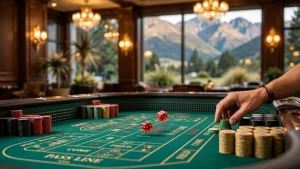
Read the exact game, not the label
Online casino menus can place games with similar names beside each other. The name alone may not show whether the natural pays 3:2 or 6:5, or whether the dealer’s soft-17 rule differs. The relevant information is usually in the game’s paytable or rules panel, but the wording and placement can vary. The details need to be checked for the specific table being considered.
This matters when comparing blackjack games in New Zealand, just as it matters in any market. A broad claim about the “best” blackjack casino cannot resolve a table-level difference. The actual conditions belong to the game, not merely to the operator’s general description. A casino may offer multiple blackjack tables, and the terms shown for one should not be assumed to apply to another.
The same care applies when rules are presented in compact form. A payout ratio may appear in a short line, while dealer behaviour or surrender terms require opening a separate information panel. If a condition is unclear, the sensible comparison is not to guess what the operator intended. It is to treat the wording as unresolved and avoid ranking that table on an assumption.
Why the natural payout changes the comparison
The 3:2 and 6:5 labels express different return ratios for a natural. They are not alternate names for the same payout, and the difference remains relevant even when the rest of the table looks familiar. A player who compares only the game title may overlook it; a player who checks the payout can make a more informed comparison.
It is also worth keeping the claim in proportion. A specialist review’s description is not proof that every casino, every table, or every blackjack game follows one pattern. Rules can vary, and details can change. The table information is therefore more useful than a broad statement about what blackjack “normally” pays. Precise language matters.
When I assess a blackjack listing, I look for the natural payout and the other stated conditions before treating it as comparable with another game. That approach avoids turning a recognisable game name into an assumption about the rules. Small print, not branding.
New Zealand’s Online Casino Framework
The regulatory position for online casino gambling in New Zealand has changed, but the change is not the same as a blanket endorsement of any blackjack site. A regulator’s role is to administer the rules and licensing process; it does not certify that a particular game is suitable, guarantee a player’s experience or recommend an operator. That distinction matters when a casino’s presentation uses regulatory language as a mark of quality.
The Online Casino Gambling Act 2026 came into force on 1 May 2026 and established New Zealand’s first domestic licensing regime for online casino gaming. The framework is being phased in. Providers that were already offering online casino services to people in New Zealand before that date may continue during the transition, subject to the Act’s transitional provisions. The transition runs until 1 December 2026. Providers that have not applied for a licence must stop conducting online casino gambling in New Zealand by that date. The full licensing regime is not expected to be fully operational until 2027.

That timeline explains why a statement about a casino’s status needs a date and context. A provider operating during the transition is not necessarily operating under a completed domestic licence. Conversely, the fact that the licensing system is still being brought into operation does not mean the new law has not taken effect. The distinction is procedural, but it is not cosmetic.
Two bodies, different responsibilities
The Department of Internal Affairs is New Zealand’s primary gambling regulator and oversees regulation of the online casino licensing framework. Its role sits at the level of the wider regulatory system: the department is responsible for oversight of gambling regulation, rather than deciding every individual licensing application.
The Gambling Commission has the adjudicative licensing role. It hears casino licensing applications and determines them. It is also responsible for issuing online casino licences and approving changes to licence conditions. Put plainly, the Commission makes decisions about applications and licence terms; the Department oversees the broader regulatory framework in which those decisions take place.
Those functions are related, but they should not be collapsed into one. A reference to the Department does not mean it has issued a particular licence. A reference to the Commission does not mean an application has been approved. The useful question is what decision has actually been made, by which body, and under what stage of the new regime.
For someone trying to understand blackjack availability in New Zealand, that institutional split is more useful than a badge or slogan on a casino page. The words “regulated” or “licensed” can sound definitive, but their meaning depends on the status being described. During a transition, a provider may be permitted to continue under transitional provisions without the full licensing regime yet being operational. That is a different position from holding a licence issued through the completed regime.
New Zealand Regulatory Bodies
The Department of Internal Affairs oversees the wider gambling regulation, while the Gambling Commission has the adjudicative licensing role, hearing applications and determining licence terms.
What changed for offshore services
Before the 2026 Act took effect, online casino gambling supplied from outside New Zealand was not licensed or supervised by a New Zealand regulator. A customer who wagered with an offshore website in that period had no domestic government recourse. The new Act creates a domestic licensing framework, but its staged introduction means the historical position and the transitional position should not be confused with the eventual licensed system.
The Gambling Act 2003 bars online casinos from being based in New Zealand, and domestic online casinos are prohibited. The later framework concerns licensing online casino gambling; it does not mean that New Zealand-based online casinos are now permitted to operate. The difference is between where an operator is based and the regulation of online services offered into the market.
During the transition, advertising online casino gambling to people in New Zealand is prohibited. This is another reason regulatory information should not be treated as marketing copy. A description of the law or of a regulator’s responsibilities is not an invitation to play, and it is not evidence that an advertisement or operator has been approved.
The same caution applies to pages presenting “best” blackjack casinos in New Zealand. A comparison or ranking is not itself a regulatory decision. Nor does mentioning the Department of Internal Affairs or the Gambling Commission establish that a named casino has a licence. The Commission’s authority to issue licences and determine applications describes its function; it does not settle the status of every provider that appears in a search or promotional article.

From the industry side, the distinction is familiar: a framework sets conditions, an authority applies them, and a licence decision concerns a specific applicant. Those are separate steps. A polished blackjack page can make them look like one. They are not.
For blackjack at casinos serving New Zealand, the regulatory framework therefore provides context rather than a recommendation. The Department oversees gambling regulation; the Gambling Commission hears and determines casino licensing applications, issues online casino licences and approves changes to licence conditions. The transition and the eventual licensing regime determine how providers may operate, while neither regulator’s role should be mistaken for an endorsement of a particular casino or game.
Winning at Blackjack: Decisions, Not Systems
The phrase “how to win” can make blackjack sound like a puzzle with a hidden solution. It is not. The player competes against the dealer, trying to finish closer to 21 without going over. That objective creates decisions, but no decision system can turn an uncertain game into a guaranteed source of profit.
From the operating side, I learned to separate a sound decision from a favourable result. A hand can be played sensibly and still lose; a poor choice can happen to win. One result says little about the quality of the decision that produced it. The distinction matters because short runs are persuasive: a streak can make a system feel proven before there is any reason to trust it. A win is not evidence of a formula.
A repeatable approach starts with understanding the situation at the table and making choices consistently, rather than reacting to frustration or excitement. Blackjack is not a contest against every other player at the table. The dealer is the opponent, and the outcome depends on how the player’s hand compares with the dealer’s under the game’s rules. The player cannot control which cards appear. That is the basic limit behind every claim of a reliable way to win.
What card counting does—and does not—mean
Card counting is often presented as though it were a secret technique that guarantees an edge. The more measured description is that it involves keeping track of card information through mental calculation and using that information to inform decisions. It does not remove chance, and it does not ensure that any particular hand or session will be profitable.
In New Zealand, using mental calculation to count cards is not illegal. That statement concerns the legality of the mental activity; it is not a promise about results, a recommendation to count, or an assurance about how any particular casino might respond. Legal and effective are different questions. A method can be lawful without being a dependable way to make money.
Nor does the phrase “card counting” describe a single shortcut that works in every setting. Its practical value depends on the circumstances of the game. Treating it as a universal answer skips that qualification—and turns a complicated subject into advertising. The label sounds decisive. The outcome is not.
Why systems cannot promise a win
Many systems focus on when to make a particular decision, or how to change a pattern of play after a loss or a win. A system may offer structure, but structure is not control over the cards. Changing the sequence or size of bets does not make an unfavourable hand disappear, and a previous result does not guarantee that the next one will go the other way.
That is why a “winning system” should be judged by what it actually claims. If it promises certain profit, it is promising control that the game does not provide. If it offers a framework for making decisions, it still cannot guarantee the result. The wording matters. “Strategy” can mean a set of choices; it should not be mistaken for a contract with the outcome.
The same caution applies to stories about the biggest blackjack wins. A headline result may be striking, but it does not show that the same approach will work for another player, at another table, or on another occasion. A reported win is an outcome, not proof of a repeatable method. Without reliable details about the circumstances, the number alone cannot explain how it happened or what the player risked.
Practical discipline is more useful than certainty
A disciplined approach begins before the first hand: set a budget and treat it as the limit for the session. If the budget is gone, chasing losses by continuing to play turns an uncertain result into greater exposure. A win does not make the next decision safer, either. The money already won can be lost in later play.
Do
- Set a budget before the session starts
- Check the specific table rules and payouts
- Treat the budget as a hard limit
Don't
- Chase losses by increasing stakes
- Assume one table's rules apply to another
- Rely on a winning system to guarantee profit
Promotions add another layer that systems cannot solve. Bonus terms can determine how blackjack contributes to wagering requirements, and maximum-bet rules may apply while those requirements are being met. Those conditions belong to the offer, not to the game’s strategy. Fine print can change what a promotion means in practice, so it should be checked on trustworthy sites and casino pages before real-money play.
Payment labels are also separate from playing decisions. A bitcoin option, where one is presented, would not by itself establish that a blackjack game offers better odds or a more reliable route to winning. The game’s result still turns on its play and rules, not on the name attached to a payment method. Claims about a payment method should not be confused with evidence about blackjack.
My conclusion is deliberately plain: decisions can be considered; outcomes cannot be promised. Card counting by mental calculation is not illegal under New Zealand law, but that fact should not be inflated into a guarantee of effectiveness or profit. Systems may organise a player’s choices, yet they do not make chance obedient. No shortcut.
Electronic and Live-Dealer Blackjack Play Differently
Electronic blackjack and live-dealer blackjack can present the same familiar table format, but the play does not feel the same. The key difference is how the cards are dealt: an RNG game uses software shuffles, while a live-dealer game uses actual cards and streams the table. That changes the pace and can affect the practical conditions of play.

With RNG blackjack, software handles the shuffle and deal, so hands can move more quickly than in a streamed game. There is no live table feed to wait for between decisions. In my view, that speed is the central attraction—and the main point to notice. A faster sequence of hands means decisions arrive more often; it does not improve the odds or turn the game into a more favourable one. Faster play, nothing more.
A live-dealer table has a different rhythm. The cards are real, and the action is shown through a stream, making it closer to the experience of sitting at a casino table. But the stream is also part of the process. It may introduce delays, and live games may require higher bets than electronic versions. A polished broadcast does not remove those conditions. The format has its own trade-off: visible dealing, with streaming and bet requirements to account for.
This distinction matters when a player is choosing between electronic blackjack at a casino and a live table. The label alone does not settle what the session will be like. “Live” describes the use of actual cards and a streamed game; it is not a promise of a better deal. “Electronic” describes software-based play and a quicker pace; it is not evidence that the game is easier to beat. Those are presentation and operating differences, not a winning system.
RNG Blackjack
Software handles the shuffle and deal, allowing for a faster pace of play.
Live-Dealer Blackjack
Uses actual cards and a live stream to mimic a casino environment, though it may involve delays.
I have seen speed mistaken for value. In electronic play, the shorter pauses can make a session feel efficient, but the game simply reaches the next hand sooner. In live play, pauses can be part of the streamed format, rather than a sign that something has gone wrong. Neither pace is inherently better. The useful comparison is whether the format suits the way a player wants the game to run, alongside the actual table conditions.
The distinction is also relevant when a casino advertises blackjack as “live.” That word should be read narrowly: actual cards are used, and a stream connects the table to remote players. It does not establish that every table has the same bet requirements, nor does it say anything about the quality of a particular operator. No venue can be judged on format alone.
Before playing for real money, the fine print and bonus conditions need checking on trustworthy casino sites. Blackjack may contribute differently to wagering requirements, and maximum-bet rules can apply while wagering. A budget should be set in advance, with losses not chased. Those safeguards matter in either format: the speed of an RNG game and the pauses in a live stream can shape how a session feels, but neither changes the need for limits.
For an electronic blackjack comparison, pace and software dealing are the defining features. For live-dealer blackjack, actual cards and streamed play define the experience, with possible delays and higher bet requirements. The mechanics are different. The discipline required is not.

High-Stakes Play Still Depends on Table Rules
A high-stakes label describes the scale of the bets a table accepts; it does not tell much about the game’s underlying conditions. In my experience, the label can draw attention to the size of play while leaving the rules that shape each hand in the fine print. Those rules matter at any stake.
A specialist review reports that games can differ in deck count, how the dealer handles soft 17, whether surrender is available and what a natural blackjack pays. That is a report of variation, not a guarantee that any particular table offers a particular combination. The practical point is to inspect the rules for the specific game rather than infer them from its high-stakes description.
Deck count is one part of the setup. Dealer action on soft 17 is another: the table’s rule determines whether the dealer takes a card or stops on that hand. Surrender, where offered, changes what a player may do with a hand. Payout terms affect the return on a natural blackjack. Taken together, these conditions distinguish one table from another, even when both are presented as high-limit play.
The word “premium” can sound like a quality claim. In practice, a larger betting ceiling does not establish more favourable payouts or more flexible rules. Nor does it show that the game suits a particular player. Read the table rules before treating the stake level as meaningful evidence. The label is not the specification.
I would separate the game’s conditions from any promotional terms attached to play. Bonus fine print can set wagering requirements, and blackjack may contribute differently toward them; maximum bet rules can also apply while wagering requirements are active. Those conditions are separate from the table’s blackjack rules, but they can affect the overall offer.
A budget should be set before play, with losses not chased by raising stakes. High-stakes play magnifies the consequences of a decision; it does not remove uncertainty or turn a table label into an advantage. Rules first. Stakes second.
The Card Values and Moves That Shape a Blackjack Hand
A blackjack hand is built from simple card values, but the ace makes the total flexible. Number cards count at face value; face cards count as ten. An ace can be worth one or eleven, with its value treated to keep the hand’s total useful without taking it over twenty-one. A hand containing an ace counted as eleven is often described as “soft”: the ace can instead count as one if another card would otherwise push the total beyond twenty-one.
That flexibility matters at the table. The same cards can produce a different working total after a hit, depending on how the ace is counted. With no ace, or when every ace must count as one, the total is “hard.” The terms describe the hand’s current options, not a promise that it is safe to draw again.
The player’s basic actions determine how the hand develops:
- Hit: Take another card. The total may improve, but it can also exceed twenty-one, which ends the hand as a bust.
- Stand: Take no more cards and keep the current total.
- Double down: Increase the wager under the table’s rules and take one additional card, then stand. The conditions for this move can vary, so its availability should not be assumed.
- Split: When the first two cards have the same value, separate them into two hands and play each hand on its own. Whether a particular pair qualifies, and what happens next, depends on the table rules.

These choices are not interchangeable. Hitting adds a card without necessarily ending the player’s options; standing fixes the total. Doubling down commits to a single further card, while splitting turns one starting hand into two separate decisions. In blackjack casino card games, knowing the names of the moves is only the beginning: the printed or displayed rules determine when each move is permitted.
I have seen players treat the action buttons as if they carry the same meaning at every table. They do not. A familiar label can conceal a different condition, especially for doubling down or splitting. Read the hand rules before play begins. Small print matters.
What the New Zealand Blackjack Query Can—and Can’t—Establish
A New Zealand casino label can suggest a local connection, but it does not establish that a particular venue or website offers blackjack. The same is true of a page that uses local wording: it may describe a market, an audience or a general category rather than a game that is currently available. Those distinctions matter. I have seen marketing language make a product sound more definite than the information beneath it.
The responsible conclusion is narrower: blackjack is a casino game, but a broad reference to New Zealand does not confirm where it can be played, which version is offered or whether a stated product is still accessible. Naming a casino without reliable, current evidence would turn an assumption into a recommendation. That is not useful.
Even when a blackjack table is identified, the label alone leaves important details open. Variants can use different rules, and those differences can affect both strategy and the house edge. A listing that says only “blackjack” does not settle the conditions of play. Nor does the word “classic” explain what happens at the table. Advertising shorthand. The rules do the work.
This is why claims about a “blackjack casino in New Zealand” need to be read as claims requiring particulars, not as proof by phrasing. A casino’s general presence in a market and the availability of a specific blackjack game are separate matters. A game catalogue, where one exists, also needs to be considered in context; the title of a game cannot tell the whole story about its rules.
I would keep the line clear between what a label implies and what it demonstrates. Without dependable information tying a named operator to a specific blackjack product, no particular New Zealand casino or game can responsibly be singled out here. That restraint is deliberate. A polished listing can sound precise while leaving the central point unanswered: what game is actually being offered, and under which rules?
Casino Blackjack Is a Dealer-Against-Player Game
Casino blackjack is a contest between each player and the dealer, not a competition among people seated at the same table. The aim is to finish with a hand closer to 21 than the dealer’s, while staying at or below that total. That simple structure is the game’s centre of gravity.
I find it useful to separate the table’s social appearance from its actual rules. Several players may act in view of one another, but their hands are judged against the dealer’s hand. Another player’s result does not make a hand better or worse. The dealer is the shared opponent; each player’s outcome is assessed individually.
The limit matters as much as the target. A hand that exceeds 21 is out of contention, even if the dealer later finishes with a total that would otherwise be beaten. So blackjack is not simply a race to reach 21. The objective is to get nearer to that mark than the dealer without crossing it.
That distinction explains why a smaller total can still be a successful result. If the dealer finishes farther from 21, a player need not reach the target exactly to finish ahead. Conversely, a hand that looks strong in isolation can fail if it goes over the limit. The comparison is relative, but the limit is absolute.
In casino settings, the dealer’s role gives the game its fixed point. Players make their own decisions, while the dealer represents the hand against which those decisions are measured. I have seen promotional language make blackjack sound like a broad test of skill or a direct contest between customers. The mechanics are more restrained: one hand against the dealer, with a clear target and a hard boundary.
That is the basic meaning of casino blackjack. It does not require every hand to reach 21, nor does it involve beating the other players at the table. It comes down to the final comparison with the dealer and whether either hand has exceeded the limit. Simple objective. No shared victory.
Blackjack Tips Start With the Rules, Not Insurance
The most useful casino blackjack tips begin with the table rules, not a betting pattern. I have seen players focus on their next decision while overlooking the conditions that shape every hand. Blackjack variants can change strategy and the house edge, so a game’s label alone does not tell the whole story.
Before play, check how many decks are used, whether the dealer hits or stands on soft 17, whether surrender is available, and what payout applies to a natural blackjack. These details are not decoration. A rule change can alter the value of a decision, even when the table looks familiar. Read the rules displayed for that specific game rather than relying on memory from another version.
Insurance deserves particular caution. It can sound like protection, but it is a separate wager, not a general safeguard against a poor run. Most players are better off avoiding it. The label is reassuring; the underlying bet still needs to make sense on its own. Usually, it does not.
I treat “systems” with the same restraint. A sequence of bets cannot remove the house edge, and no tip guarantees a win. The practical discipline is to make decisions with the rules in view, keep a fixed budget, and stop rather than chase losses. Boring, but useful.
Promotions add another layer of conditions. Before accepting one, check the fine print on a trustworthy site and the casino’s own terms. Blackjack may contribute differently to wagering requirements, and maximum-bet rules can apply while those requirements are being met. A bonus headline does not explain how the game is treated.
A sound routine is simple: identify the variant, read its rules, decide whether the conditions suit the intended style of play, and set a budget before starting. If the rules are unclear, the decision can wait. No edge in guessing.
How to Assess Casinos That Offer Blackjack
A casino’s blackjack page is only a starting point. The useful comparison is between the rules attached to each game and the way the game is dealt. In my experience, a familiar title can conceal different conditions; the label alone tells little.
A specialist review notes that games may differ in deck count, whether the dealer draws on soft 17, whether surrender is available and how a natural blackjack is paid. Those details belong to the individual table, not to blackjack as a whole. I would check the rules displayed for the specific game and confirm they match the version being opened. A general description elsewhere on a site may not settle the question.
The dealing format is another practical distinction. RNG blackjack uses software shuffles and supports faster play. That pace can make it easier for decisions to follow one another quickly, so session length and budget matter. Live-dealer blackjack uses physical cards and presents a table-based experience, but the stream can introduce pauses or the game can require higher bets. Neither format is automatically the better choice; the trade-off is between pace, presentation and the conditions attached to play.
Promotional language deserves the same scrutiny as the table rules. “Flexible” or “fast” describes little unless the terms explain what happens to blackjack wagers under wagering requirements and what maximum bet rules apply while those requirements are active. Blackjack may contribute differently from other games. Fine print matters.
I also separate game quality from an operator’s claims about it. A clear rules panel, consistent information and an identifiable live or RNG format make the game easier to assess; they do not establish that a particular outcome is favourable. I avoid treating a system or a streak as evidence of an edge. Set a budget before play and do not chase losses. A neat interface changes nothing about the rules.
Casino Games in New Zealand: Roulette, Blackjack & More
Content created by the «casinoguidenz.com» team